
Tuff Shed General Contractor in Long Beach: A Homeowner’s Guide
Tuff Shed will build you a shed. The City of Long Beach will want a permit for it. Those two facts don’t automatically solve each other, and that gap is where a lot of local homeowners get stuck holding two contracts and no clear owner of the problem. A general contractor in Long Beach bridges that gap: pulling the accessory structure permit, upgrading the foundation and site prep to code, and running electrical or plumbing when your Tuff Shed is headed toward workshop or ADU status. Tuff Shed builds the box. Someone else has to make it legal and useful.
If you’d rather not sort out the permit desk, the inspections and the sequencing yourself, call (833) 510-6967 and we’ll walk you through what your project actually needs.
Key Takeaways
- Tuff Shed’s crew handles delivery and assembly of the structure. Permits, foundation upgrades, electrical, plumbing and final site work typically belong to a licensed GC.
- In Long Beach, accessory structures generally need a permit once they cross a size and height threshold, and a shed used as a dwelling triggers a completely different ADU review path.
- Sequencing matters: most GC work happens before delivery and after assembly. Get the order wrong and you pay for rework.
- Ask for a written, line-item quote that names what’s included and what isn’t. Verbal ballparks are how sheds end up sitting on blocks for a season.
What Does Tuff Shed Actually Install, and Where Does the GC Step In?
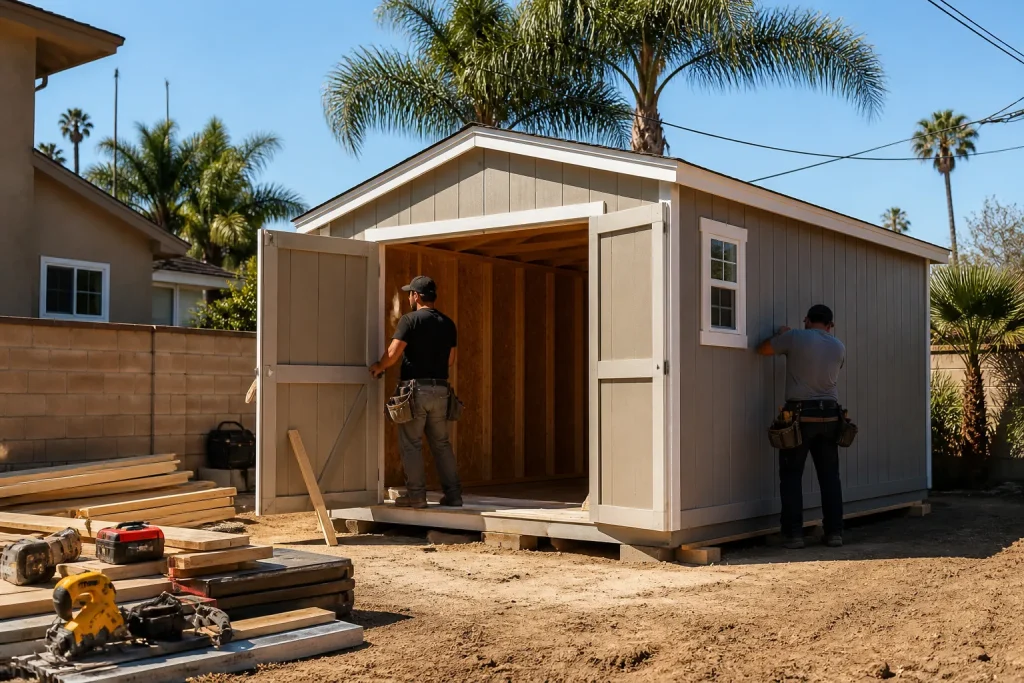
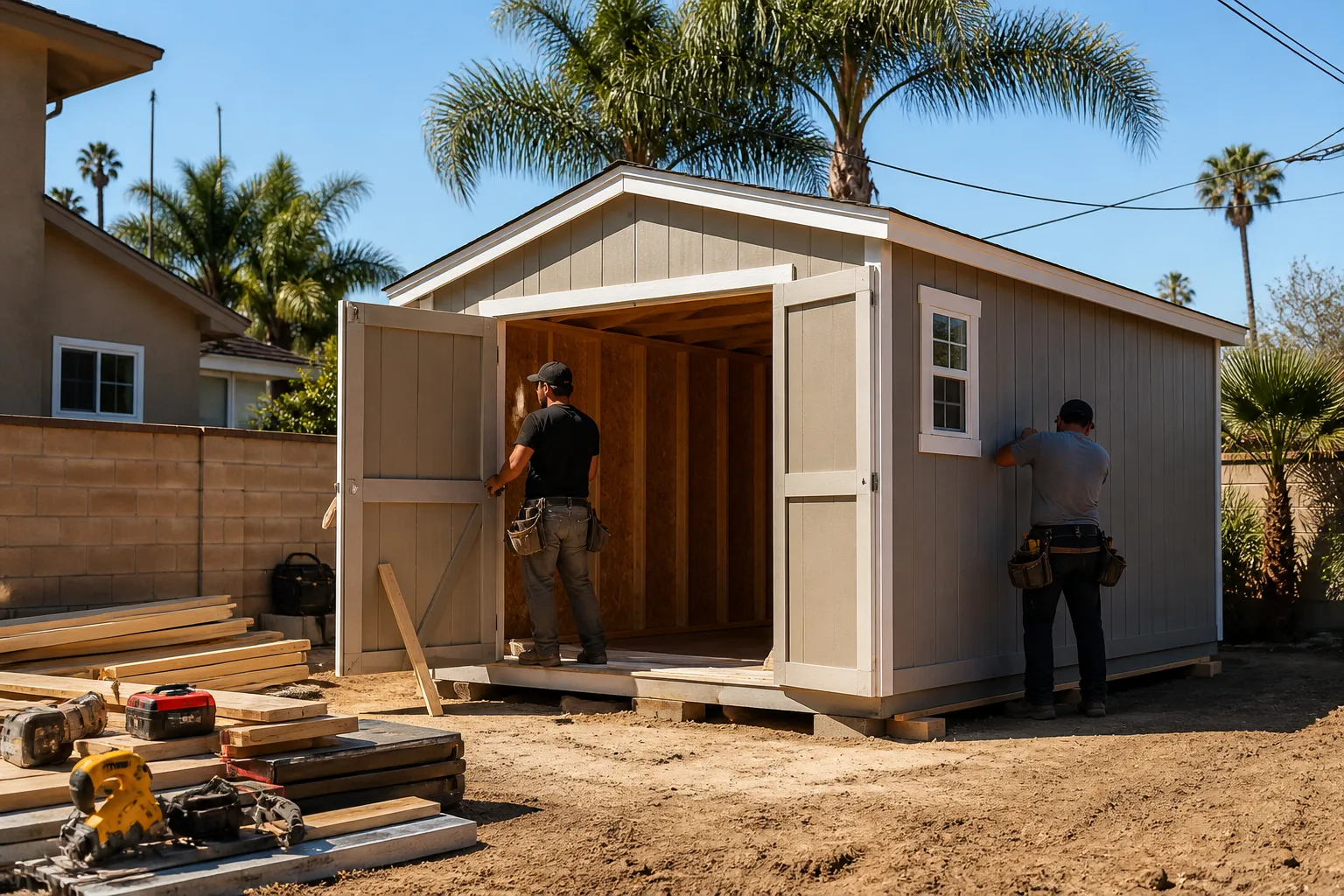
Tuff Shed builds and assembles the structure itself – the walls, roof, siding, doors and the base floor system. What its crew generally does not do is obtain your building permit, engineer a foundation for a heavier use case, run electrical circuits back to your panel, run a gas or water line, or finish the interior. Those pieces are licensed-contractor territory in Long Beach, and they’re the reason a “shed” quote and a finished, inspected, wired backyard building can be two very different numbers.
Here’s how the work usually splits:
- Tuff Shed’s scope: structure design selection, delivery, on-site assembly, the standard floor system, doors and windows as ordered.
- General contractor scope: permit application and inspections, site prep and leveling, concrete or pier foundation upgrades, trenching, electrical service and subpanel work, plumbing for a sink or workshop, insulation and interior finish, and hauling away spoils.
We’ve seen this trip people up in the Wrigley neighborhood, where a homeowner bought a 12×16 unit and then discovered the panel had no spare capacity for the lighting and outlets they wanted. That’s a GC conversation, not a shed conversation. The structure is fine. The infrastructure around it needed a plan first.
Our technicians have up to 22 years of experience with exactly this kind of scope split, and our General Contractor in Long Beach page covers how we sequence it from day one.
Do You Need a Permit for a Tuff Shed in Long Beach?
Usually yes, and often sooner than homeowners expect. In Long Beach, a detached accessory structure typically requires a building permit once it exceeds a modest footprint or roof height, and the exact trigger depends on the zoning of your lot and how the structure is anchored and used. Small, low, unpowered storage units sometimes fall under an exemption; anything wired, anything plumbed, anything tall, and anything on a permanent foundation almost never does.
What to check before you order:
- Size and height thresholds for your specific zone. These vary across Long Beach, and a lot zoned for single-family in North Long Beach can carry different limits than a corner parcel near Belmont Shore.
- Setback requirements from your property lines and from the main house. A shed that fits the yard can still fail the setback.
- Whether the structure is anchored to a permanent foundation. Permanent anchoring changes the review path.
- Whether you plan to power, plumb or insulate it. Each of those pulls in additional permits and inspections.
The detailed accessory structure rules are published by the City of Long Beach’s planning and building departments and are worth reading directly, because the thresholds are specific and the code is not forgiving. Where homeowners get burned is ordering the unit first and asking about the permit second. Pull the permit question forward and the whole project gets simpler.
When Does a Tuff Shed Cross Into ADU Territory in Long Beach?
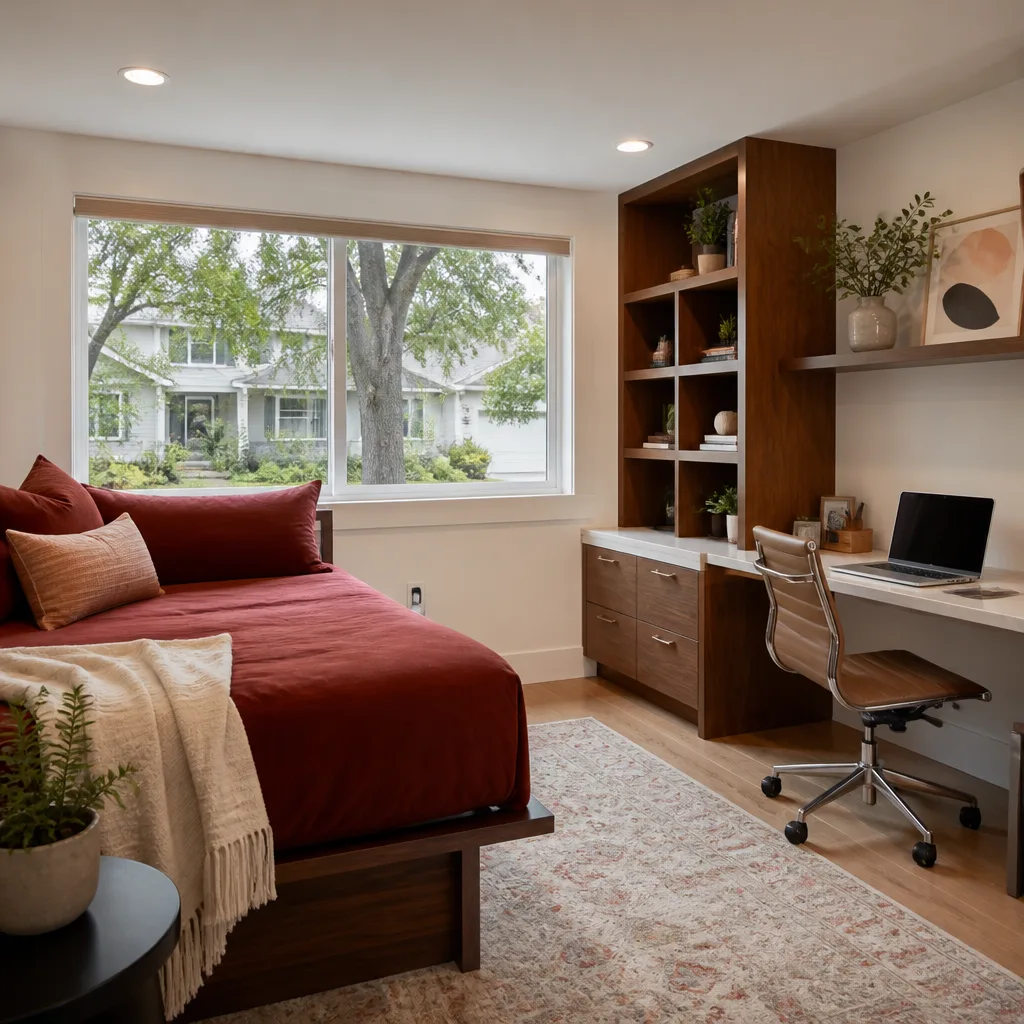
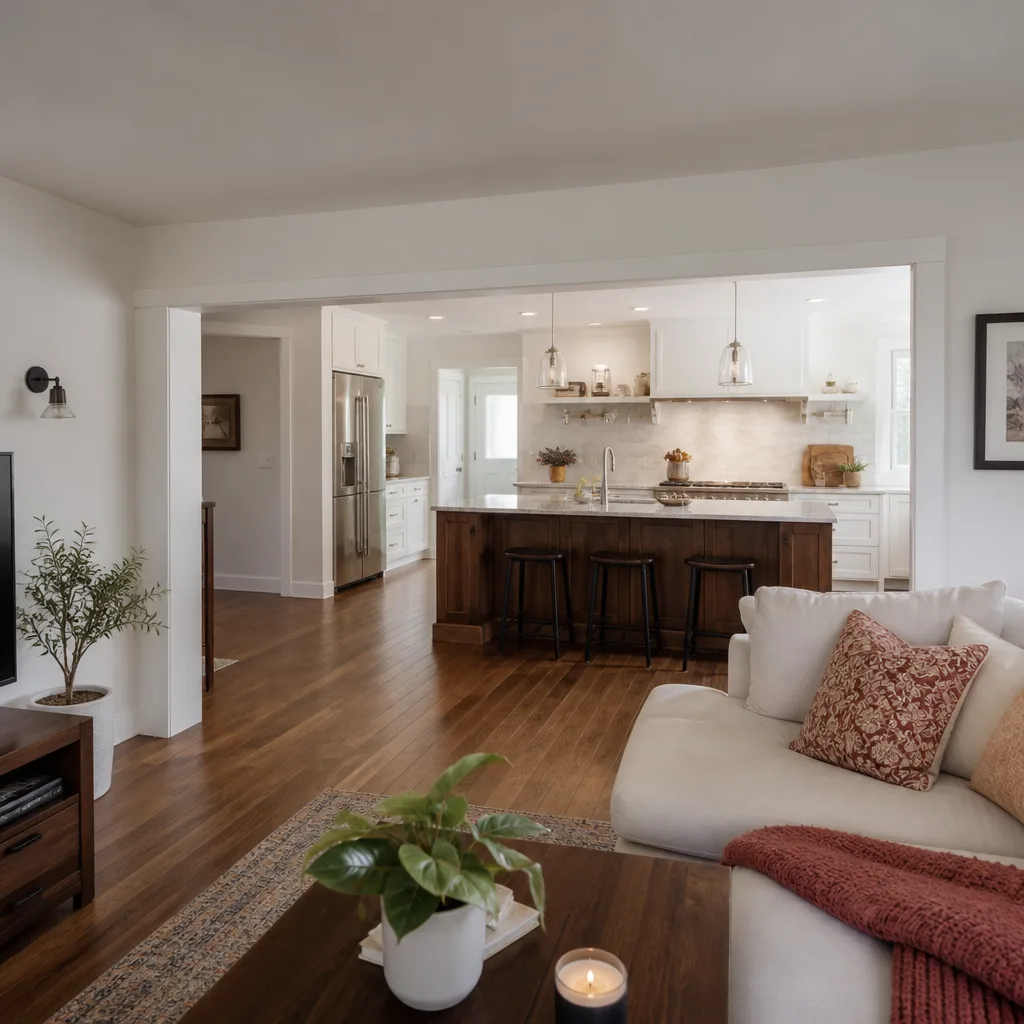
A shed becomes a regulated accessory dwelling unit the moment it’s set up for living – sleeping, cooking, a full bathroom, a permanent heat source, a separate entrance. In Long Beach, the ADU review path is a different animal: it involves zoning review, a full plan set, code compliance for egress, insulation, ventilation, and separate utility connections, and it takes longer than a standard accessory structure permit.
If you’re eyeing a Tuff Shed as a backyard office, a rental unit for a family member, or a long-term rental, get honest with yourself about which category you’re in. A workshop with a bench and a few outlets is one project. A studio with a shower, a stove and a bed is another. The structure may look similar. The review, the plan set, the inspections and the cost are not.
We get asked about this constantly in Long Beach, and the answer is almost always the same: decide the end use first, then choose the structure, then design the utility and foundation scope around it. Anyone who quotes you a turn-key backyard unit without asking about your plan set hasn’t done this before. Your plan set is the whole game.
The Sequencing Problem: Before Delivery and After Assembly
This is where money gets wasted. Tuff Shed’s build process has a delivery and assembly window, and GC work has to happen around it – not in the middle of it. Get the order right and the project runs clean. Get it wrong and you’re paying twice for the same dirt.
The order that works:
- Permit pulled and site plan approved. Do this before you schedule anything.
- Site prep by the GC: clearing, grading, leveling, and any retaining or drainage work the lot needs.
- Foundation work: concrete pad, pier system or engineered base as the permit requires for the intended use.
- Tuff Shed delivery and assembly.
- Post-assembly GC work: trenching and electrical, plumbing, insulation, interior finish, exterior tie-ins, final landscaping and cleanup.
- Inspections and sign-off.
Occasionally a homeowner gets the trenching done first, before the pad is placed, and then discovers the pad pour will bury the conduit run. That’s a rework bill. On one job a while back, a family in the Cal Heights area had already run conduit to a spot two feet off from where the pad ended up. We caught it before the pour. They didn’t pay the digging twice, but that was luck more than planning.
If you’d rather have a written scope that spells out the order in advance, our team handles that. Related services in Long Beach that often run alongside shed and backyard projects: Kitchen Remodeling in Long Beach and Bathroom Remodeling in Long Beach, since ADU conversions tend to pull in a kitchenette or a full bath.
HOA and Neighborhood Considerations Specific to Long Beach
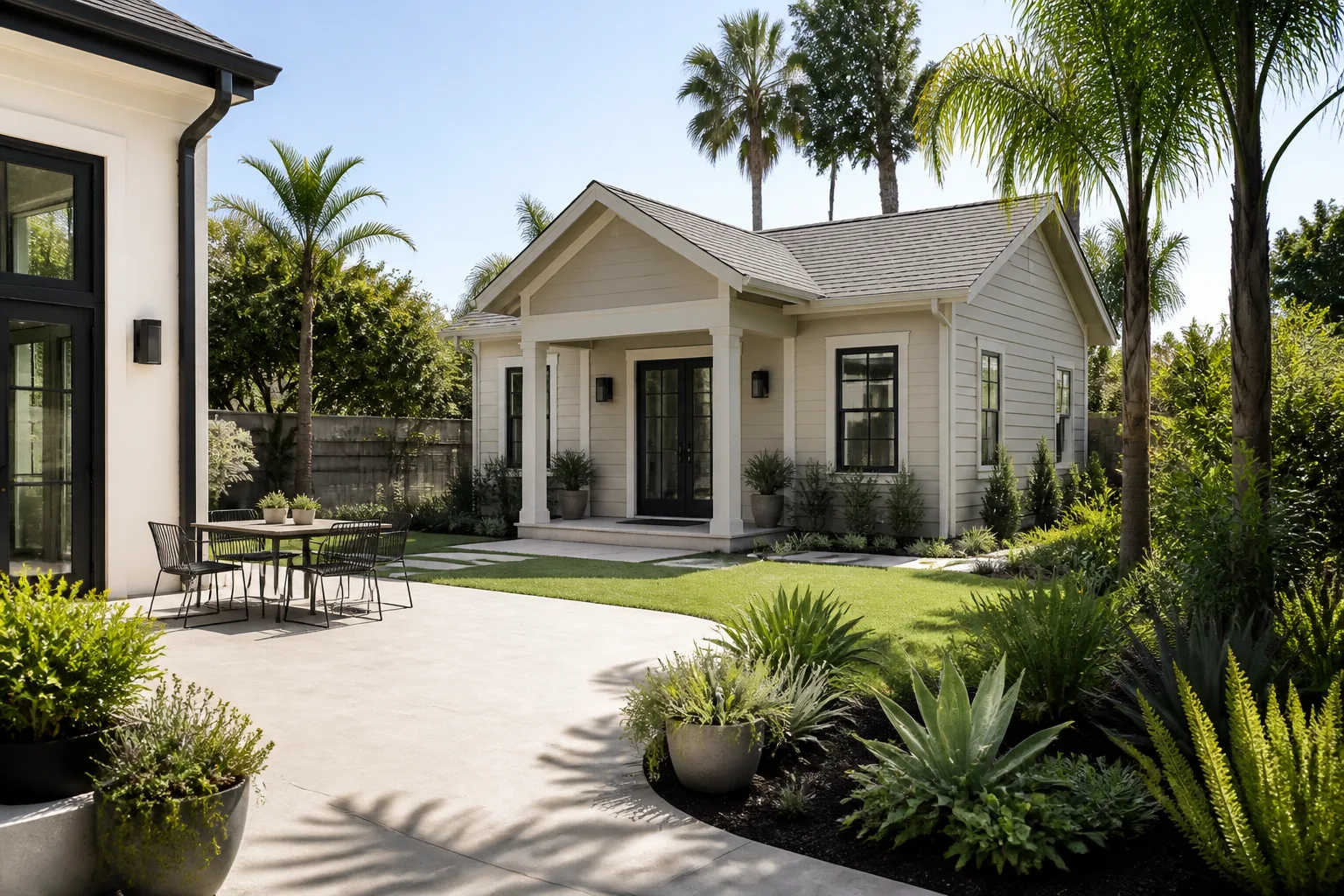
Long Beach has a lot of planned developments and condominium associations where a backyard structure needs architectural review approval before the city permit is even filed. Before you order anything, read your CC&Rs (the covenants, conditions and restrictions that govern your association) for language about accessory structures, exterior materials and maximum square footage.
Specific things to check:
- Approved materials and colors. Some associations require the shed to match the house siding or roof, which is exactly the kind of detail that gets caught after delivery if you don’t plan for it.
- Fencing and screening requirements. In some Long Beach neighborhoods the shed has to be screened from the street or from neighboring properties above a certain height. If your structure needs a fence for screening, that’s a project line item – we’d typically look at a Bufftech vinyl fence for low maintenance or an Ameristar ornamental steel fence where the association wants something more decorative than a privacy panel.
- Maximum footprint and height. Associations routinely set limits tighter than the city’s.
- Approval timelines. Architectural review can take weeks. Build that into your schedule.
If you’re in a neighborhood where the association is active on backyard structures – and plenty in Long Beach are – get the approval in writing, keep a copy, and hand it to your contractor. That one document prevents a lot of awkward conversations at the final inspection.
What Site-Prep Does a GC Handle That Tuff Shed Won’t?
This is the part most homeowners underestimate. Before a shed is assembled, the site has to be ready in a way that satisfies both the permit and the structure’s requirements. After it’s assembled, the site has to be finished in a way that drains properly and doesn’t undermine the structure. Here’s what a GC typically takes on:
- Grading and drainage. Long Beach lots are often flat and small, and a shed placed on a low spot holds water. We regrade and add drainage before the base goes in.
- Leveling and base prep. A pad that isn’t genuinely level causes doors to stick and frames to rack over a season. This is where a real base matters.
- Foundation upgrade. Concrete, piers, or an engineered base, depending on use and permit.
- Electrical service from the panel. New circuits, a subpanel, GFCI protection, and trenching to the structure.
- Plumbing tie-in where the structure is used as a workshop with a sink or as part of an ADU conversion.
- Spoil removal and cleanup. Hauling dirt, packaging and leftover materials off-site.
If you’re going to be trenching through your yard anyway, that’s the same moment to think about any exterior updates you’ve been meaning to do near that line. We’ve had homeowners in Long Beach add a short run of Bufftech fencing while the yard was already torn up, which saves a separate mobilization.
If the trenching, panel work or plumbing is beyond what you want to self-manage, our team handles it under a written scope with our 365-Day Done Right Promise behind the work: if something we installed fails inside the guarantee period, we come back and fix it at no charge, and the terms are in writing on the project.
The Written-Quote Checklist for This Project Type
Before you agree to any scope on a shed or backyard-structure project in Long Beach, get these answers in writing. A written quote that leaves these out isn’t a quote – it’s a conversation that will get re-priced later.
- Is the permit application included? Who files it, who pays the city fees, and who meets the inspector.
- What does the foundation scope include? Concrete, piers, engineered base – and who buys the materials.
- Is trenching included, and for how many linear feet? Trenching is frequently undercounted.
- What’s the electrical scope? Number of circuits, subpanel, outlets, lighting, GFCI, and whether the work is permitted.
- What’s excluded? Ask specifically for the exclusion list. This is the most important line on any quote.
- What’s the cleanup scope? Spoil removal, packaging, and yard restoration.
- What’s the guarantee? How long it lasts, what it covers, and exactly what happens if a repair fails.
- What are the payment milestones? Deposits, progress payments and final payment upon inspection sign-off.
- Is the crew background-checked and uniformed? The people walking into your yard should be vetted, every time.
We give every homeowner a written price before any work starts, plus a defined arrival window and a written guarantee. Day-one number, invoice number. That’s the standard, and any contractor who won’t hand you one in writing is telling you something.
When to Call a Pro
Call a licensed general contractor when your Tuff Shed project involves any of the following: a permit application, a foundation upgrade, electrical or plumbing work, an ADU conversion, an active HOA with architectural review, or a site that needs grading, drainage or retaining work. Those are all genuinely dangerous or permit-critical components – miswired panels and buried utility runs are not a weekend project, and we don’t recommend treating them like one. The structure assembly is Tuff Shed’s scope. Everything around it is where a licensed GC earns the fee.
The Bottom Line
A Tuff Shed in Long Beach is a two-company project, and the smoothest version is the one where each company knows its scope before work starts. Pull the permit early. Decide your end use before you order. Do site prep and foundation work before delivery, utility and finish work after assembly. Get a written quote that spells out scope and exclusions, and don’t accept a verbal ballpark on a job that involves trenching, panel work or a permit.
If you’re in Long Beach and need help sorting out the contractor side of a Tuff Shed or backyard structure project, Penhallow Remodeling Long Beach offers free estimates – call (833) 510-6967. You’ll get a written price, a real arrival window and a written guarantee before a single shovel goes in the ground. You can also start at our Penhallow Remodeling Long Beach home page to see the full scope of what we handle.
Frequently Asked Questions
Not usually. Tuff Shed handles delivery and assembly of the structure itself; obtaining the building permit, meeting the inspector and doing foundation, electrical or plumbing work typically requires a licensed general contractor. Check your specific project scope in writing before ordering. Call (833) 510-6967 for a free estimate on the contractor side of your project – estimates are free.
It depends heavily on whether the project involves just site prep or full utility work. Site prep, leveling and a concrete pad typically land in the low thousands; adding an electrical subpanel, trenching, plumbing and interior finish can push the contractor side into five figures. ADU conversions run considerably higher because the plan set, inspections and code compliance are more involved. Get a written, line-item quote so the number is comparable across bids. Call (833) 510-6967 for an exact quote – estimates are free.
Accessory structure permits in Long Beach typically take a few weeks to review, and scheduling with Tuff Shed adds time on top of that. Electrical, plumbing and ADU reviews run longer. The GC side usually completes within a couple of weeks of the structure being assembled, but the total timeline depends on the permit review and any HOA architectural approval. Ask for a written schedule before you sign. Call (833) 510-6967 to talk through your timeline – estimates are free.
It shouldn’t, and with us it doesn’t – we give you a written price before any work begins, and the number on day one is the number on the invoice. If something is discovered after demo or digging that genuinely wasn’t visible before, we stop, explain it, put any change in writing, and wait for your approval before doing it. Any contractor who won’t commit to a written price up front, or who quotes you a verbal ballpark that “might change,” is handing you a future headache. Call (833) 510-6967 to schedule your free estimate.
Written by the team at Penhallow Remodeling Long Beach.
Need Construction Help?
Call Penhallow Remodeling Long Beach - licensed & insured, here with fast after-hours help in Long Beach.
(833) 510-6967