
Free written scope consultation - allowances, timeline, and change-order rules on paper before a single trade is scheduled
Delta Roofing: The Long Beach Owner’s Guide
Delta-compatible roofing installed on a Long Beach home typically runs $8,000 – $20,000 for a full roof replacement, with spot repairs landing between $400 and $1,800. Tile work sits in its own bracket at $600 – $2,500, and metal systems run $15,000 – $40,000 depending on panel type and pitch. We quote from the roof itself, not from a phone description, so the number you get is the number that holds.
Owners usually discover the failure the same way: a rust-colored stain blooming on a ceiling in Belmont Shore after the first real rain, or granules collecting in the gutter downspout in Bixby Knolls like coarse sand. Sometimes it’s quieter. A soft spot underfoot on the patio cover, or shingles lifting at the ridge after a Santa Ana wind event pushes through. Long Beach sits close enough to the coast that salt air and marine layer moisture work on roofing year-round, which is why failures here often show up as corrosion and algae before they show up as a leak.
Which Delta Models This Applies To
Delta roofing products show up across a wide span of Long Beach housing stock, from mid-century tracts in Lakewood-adjacent blocks to newer builds near the waterfront. Identifying the right replacement part starts with the product label: most Delta roofing components carry a series designation and a profile or panel code stamped on the material itself or printed on the original installation paperwork. If the label is gone, we measure the exposed panel width in inches, the seam spacing, and the fastener gauge, then match those against the profile rather than guessing from a photo.
The OEM-versus-aftermarket decision matters more with roofing than with fixtures. A factory Delta component matches the original profile exactly, which keeps water shedding the way the system was engineered. Quality aftermarket equivalents can work well for flat-lying field material where the profile is simple, but on interlocking panels, custom trim, and anything at the ridge or valley, a mismatched profile creates a lap that doesn’t seat, and that lap is where water gets in. We check the exact series before anyone orders a part. We’re an independent service provider, not affiliated with Delta.
Styles & brands we work with
- Kitchen remodeling
- Bathroom remodeling
- Home additions & ADU
- Roofing
- Windows & doors
- Driveway & pavers
- Fence
Signs Your Delta Roofing Is Failing
Each symptom below points to a different underlying cause, and the cause decides whether you’re looking at a repair or a replacement.
- Granules in the gutters or at the downspout base. The mineral surface is shedding, which means the asphalt layer underneath is now exposed to Long Beach’s coastal UV. Once granules are steadily collecting, the mat is aging faster than the surface suggests.
- Rust-colored stains on ceilings or exterior walls. Water is getting past the roofing layer and tracking along framing before it drips. In Long Beach, this is often a fastener that has corroded through from salt air, not a hole in the panel itself.
- Curling, lifting, or rattling panels and shingles. Adhesive or fastener hold is failing, frequently after wind exposure or thermal cycling. Lifted edges catch the next gust and peel further, so this tends to compound quickly.
- Dark streaks or green-black algae bloom on north-facing slopes. Marine layer moisture lingers on shaded planes here, feeding algae that shortens surface life. Streaking alone doesn’t mean failure, but combined with granule loss it usually does.
- Soft spots when you press the fascia or walk the flat sections. Decking or substrate underneath has taken on moisture and started to break down. This one is found by feel and by probing, not by looking.
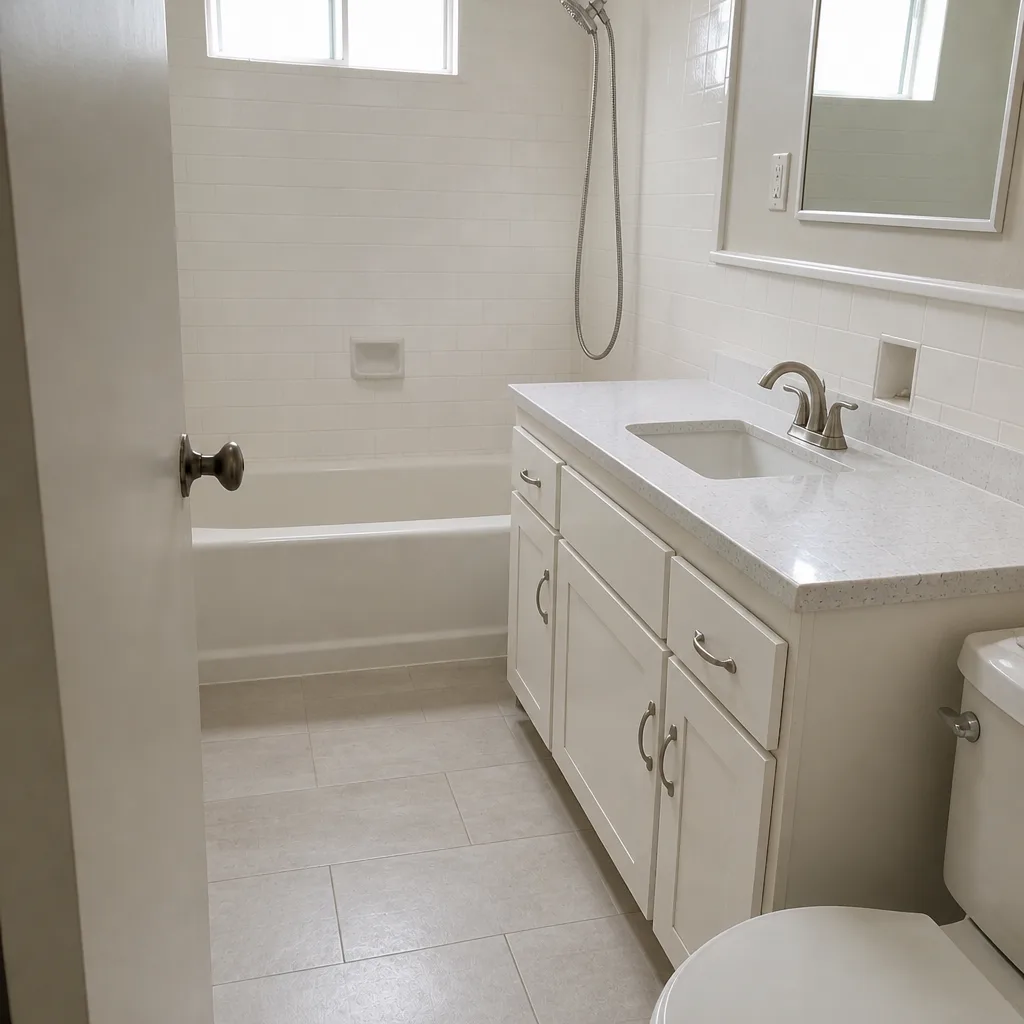
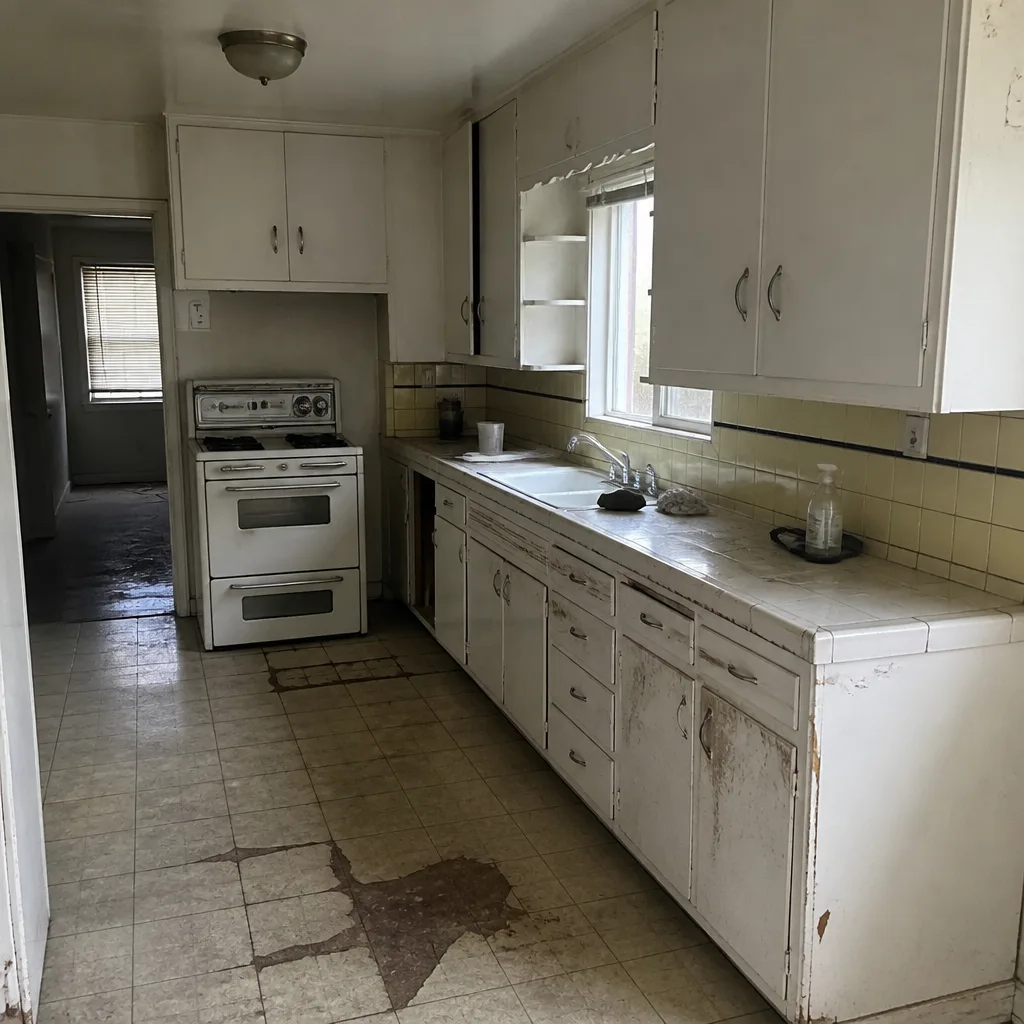
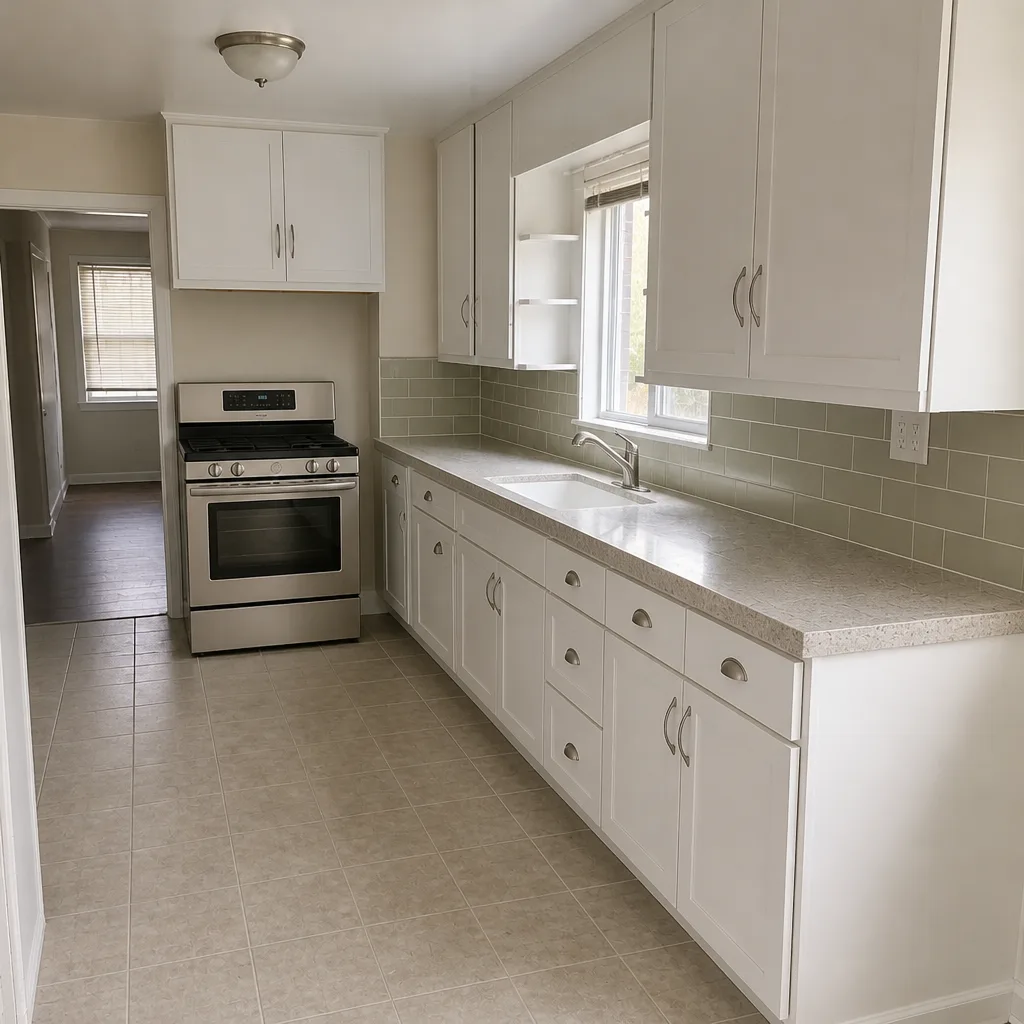
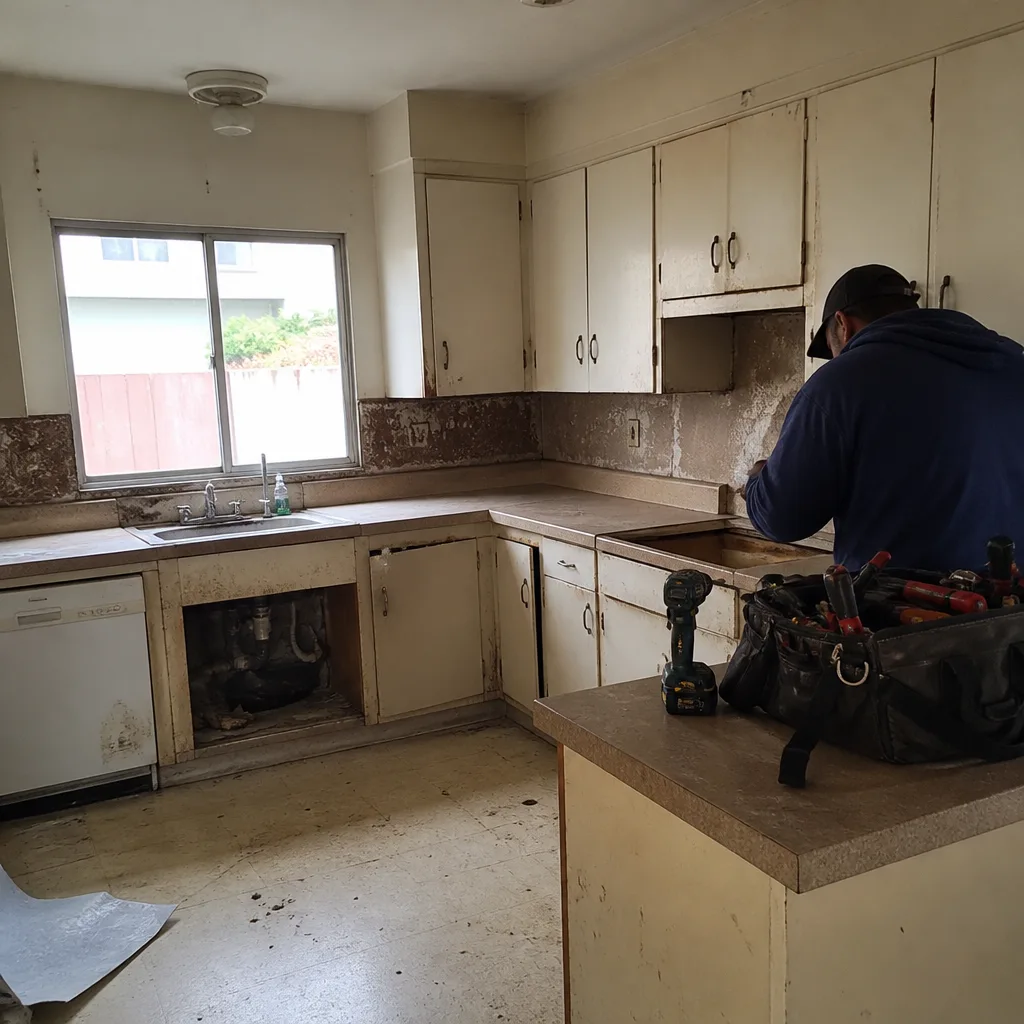
See the difference
 Before
 After
 Before
 After
 Before
 After
Replacement Cost & What’s Included
Installed pricing for Long Beach breaks down by scope. A targeted repair, replacing failed components and resealing the surrounding field, runs $400 – $1,800. Tile roof repair sits at $600 – $2,500 because tile removal and reset adds labor and breakage risk. A full replacement runs $8,000 – $20,000 for standard systems, and metal installation runs $15,000 – $40,000 for the panel types and pitches that hold up to coastal conditions here.
What drives the range: roof square footage, number of planes and valleys, pitch (steeper means slower and safer labor), whether decking needs replacement, and how much existing material has to come off first. We hand you a written price before any work starts, itemized with materials and labor separated, so parts cost is visible and not buried. Every project carries our written guarantee, and if the work fails inside the 365-Day Done Right Promise period, we come back and fix it at no charge. There’s also a free return visit if a repair fails, no service call fee.
DIY or Call Us?
Walking the roof is where this gets dangerous, and we say that plainly. Falls from height are the leading cause of serious injury in residential work, and a wet or mossy coastal roof in Long Beach is slick even for someone who’s comfortable up there. Add a marine layer that keeps surfaces damp into mid-morning, and the risk climbs.
What you can safely check from the ground: granules in the gutters, staining on ceilings and exterior walls, visible lifting or curling from the yard with binoculars, and soft spots on the fascia you can reach by hand. What should go to a trained professional: any fastener work, panel or tile replacement, flashing, and the ridge and valley areas that fail most often when handled by someone without the right tooling. Roof work at height isn’t a DIY project, and we’d rather tell you that than let you find out. Call (833) 510-6967 and we’ll walk the roof for you.
FAQs
A properly installed system typically gives 20 – 30 years here, though coastal salt air and marine layer moisture can shorten that on unprotected fasteners and north-facing slopes. Granule loss and staining are the early warning signs to watch, and we’ll tell you honestly at inspection whether you’re near the end of the service life. Call (833) 510-6967 for an exact quote – estimates are free.
Often, yes, as long as the failure is localized and the decking underneath is sound. A single failed component, a corroded fastener run, or a flashing issue is repairable for $400 – $1,800, well short of a full replacement. If moisture has spread under the field or the mat is aging broadly, a patch won’t hold and we’ll say so. Call (833) 510-6967 for an exact quote – estimates are free.
A targeted repair is usually finished in a single day, while a full replacement for a typical Long Beach home takes two to four working days depending on roof size, pitch, and how much decking needs replacing. Weather can add a day; we give you a real arrival window and hold to it. Call (833) 510-6967 for an exact quote – estimates are free.
We match the exact Delta series and profile from the material label or from on-site measurements, then order from recognized trade suppliers rather than substituting whatever is closest on a shelf. We don’t stock parts or carry them on a truck, so the right component is ordered for your roof, not approximated. Call (833) 510-6967 for an exact quote – estimates are free.
We also work with KraftMaid, Cambria, and Silestone on the interior side of our remodeling projects, which means one team can coordinate across a job when your roof work overlaps with a bigger renovation. Background-checked, uniformed technicians arrive on every job, and a live person answers the phone 24/7, not a voicemail prompt. Call (833) 510-6967 to schedule your free estimate on your Delta-compatible roofing in Long Beach.
Written by the team at Penhallow Remodeling Long Beach, serving Long Beach and nearby areas.