
Free written scope consultation - allowances, timeline, and change-order rules on paper before a single trade is scheduled
Techo-Bloc Home Additions & ADU: The Long Beach Owner’s Guide
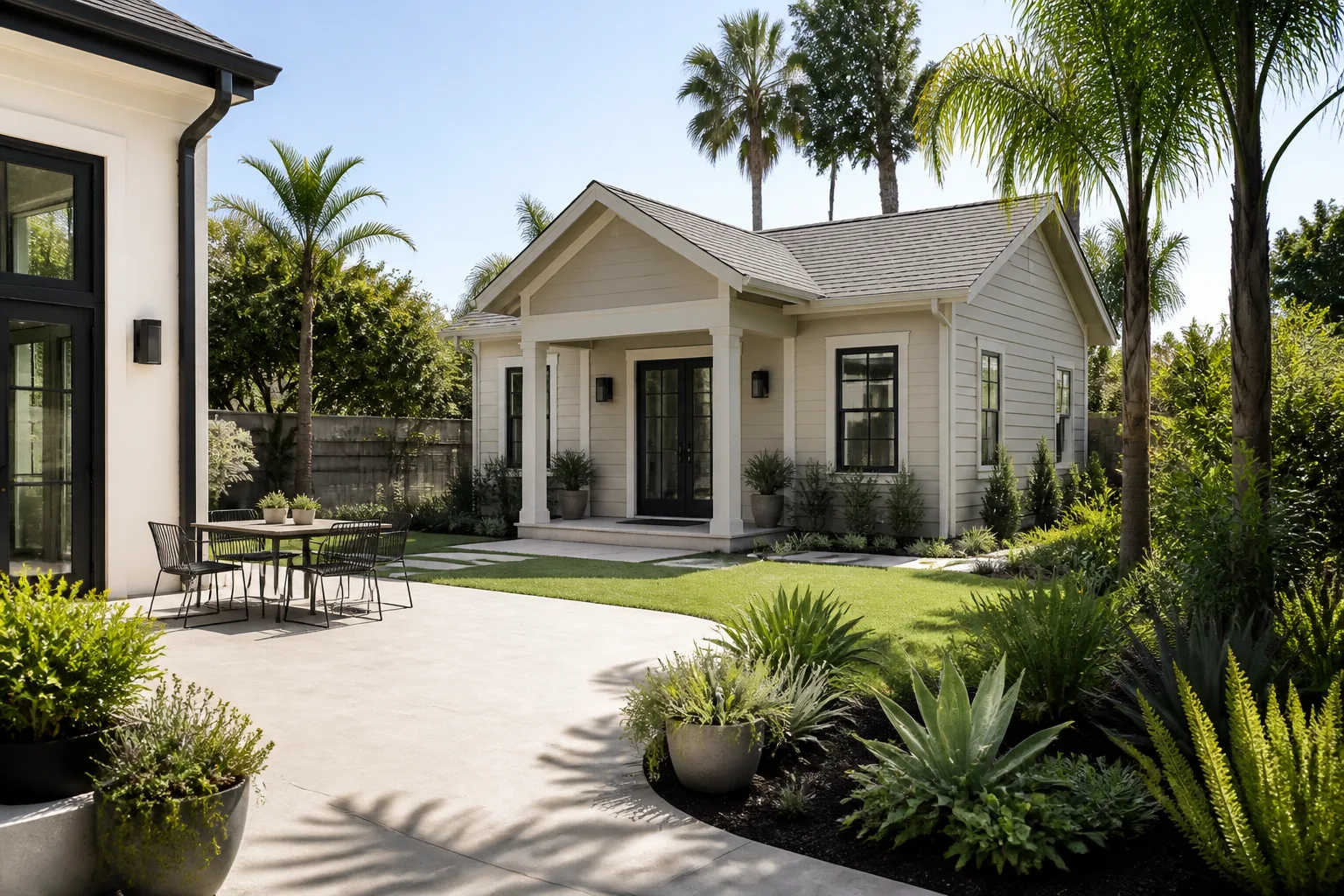
If you’re planning a home addition or ADU on a Long Beach property that already uses Techo-Bloc hardscape, the structure itself is brand-agnostic: an addition typically runs $45,000 – $130,000 and an ADU $90,000 – $220,000, installed. Techo-Bloc doesn’t manufacture walls, roofs or foundations, so what matters is matching your new addition to the Techo-Bloc retaining walls, steps and pavers already on the lot so the finished home reads as one design, not two eras stapled together. We build to that alignment and put the number in writing before we start.
In Long Beach, the connection between a Techo-Bloc install and an addition usually surfaces years later. A homeowner wants a primary suite over the back patio, or a detached ADU behind a Techo-Bloc retaining wall in Belmont Shore, and the plan reviewer or structural engineer flags that the wall, footings or drainage the pavers tie into won’t carry the new load. That’s the moment this page becomes useful. The part that “failed” is rarely a paver. It’s the planning assumption that the hardscape could be built around rather than built to.
We install additions and ADUs on Long Beach lots that already carry Techo-Bloc hardscape, and we do it with a written price, a real arrival window, and a 365-Day Done Right Promise behind the work. Call (833) 510-6967 for a free estimate. We’re an independent remodeling company, not affiliated with Techo-Bloc.
Key Takeaways
- Additions in Long Beach run $45,000 – $130,000; ADUs run $90,000 – $220,000. Techo-Bloc is the hardscape brand on your lot, not a structural component.
- Long Beach lots in Belmont Shore, Bluff Park and Naples sit on high water tables and bay-adjacent soils, so drainage and footing assumptions get tested the moment you add weight.
- The failure isn’t the paver. It’s the wall, footing or drainage the paver sits on.
- Permits from the Long Beach Development Services department are pulled and inspected as part of the job.
Which Techo-Bloc Models This Applies To
Techo-Bloc makes hardscape products, not addition framing, so “which model” means which Techo-Bloc system your lot already has and how the new structure ties into it. The lines you’ll most often see on Long Beach properties are the Blu 60mm and Blu 80mm pavers, Para and Villagio retaining wall blocks, Mini-Creta and Semma wall systems, and U-Cara modular wall facing. Each has a different face dimension, block depth and load bearing behavior, and those determine how deep the new footings need to go and whether the existing wall can stay.
To identify what you have, pull the original landscape plans if the previous owner kept them, or measure a few pavers and wall blocks and match them against Techo-Bloc’s published dimensions. The Blu 60mm runs 2⅜ inches thick, the Blu 80mm runs 3⅛ inches, and U-Cara panels are 6 inches thick by design. Those numbers are your fingerprint.
There’s no OEM-versus-aftermarket decision here the way there is for a garage spring or a window sash. What you’re matching is design continuity, and the honest trade answer is this: if you want the addition to sit visually on the existing hardscape, the correct move is to bring a sample of the existing paver or wall block to the new build and select cladding, siding and step materials that pick up its color and texture. James Hardie siding in a warm tone pairs well with Para in Chestnut Brown. KraftMaid cabinetry inside can echo the same palette if you want the interior and exterior to read as one home.
Styles & brands we work with
- Kitchen remodeling
- Bathroom remodeling
- Home additions & ADU
- Roofing
- Windows & doors
- Driveway & pavers
- Fence
Signs Your Techo-Bloc Home Additions & ADU Is Failing
You’ll almost never get a phone call that says “my Techo-Bloc failed.” You get a phone call that says the patio has a hump, or the wall lean started after the last rain, and now you’re wondering whether the addition is even possible. Here are the five symptoms we see on Long Beach properties and what’s underneath each one:
- Retaining wall face blocks separating or leaning. Usually a drainage failure: the wall’s drain rock or weep system couldn’t move the water fast enough during El Niño rain, and hydrostatic pressure pushed the face out. The wall isn’t the problem. The water path behind it is.
- Pavers heaving, dipping or settling near the foundation. Compacted base failure or a soil issue introduced during the original install. Long Beach’s high water table in areas like Belmont Shore and the Alamitos Bay edge does this more aggressively than inland lots.
- Pooling water against the house after a storm. Grading that was correct for a patio is often wrong for a structure. The addition changes how rain runs off the roof and over the hardscape, and the original slope can work against you.
- Wall block or paver cracks following a line. Look along the crack. If it runs parallel to a footing edge or a wall unit joint, your structural engineer will want to know before the addition loads the same soil.
- A past step or patio edge that no longer sits flush. Sometimes this is freeze-thaw, but in Long Beach it’s usually root intrusion from a ficus or eucalyptus, which moves soil and surfaces over time.
None of these are reasons your project is dead. They are reasons we plan the footing and drainage work before the framing starts, not after.
Home Addition & ADU Cost in Long Beach
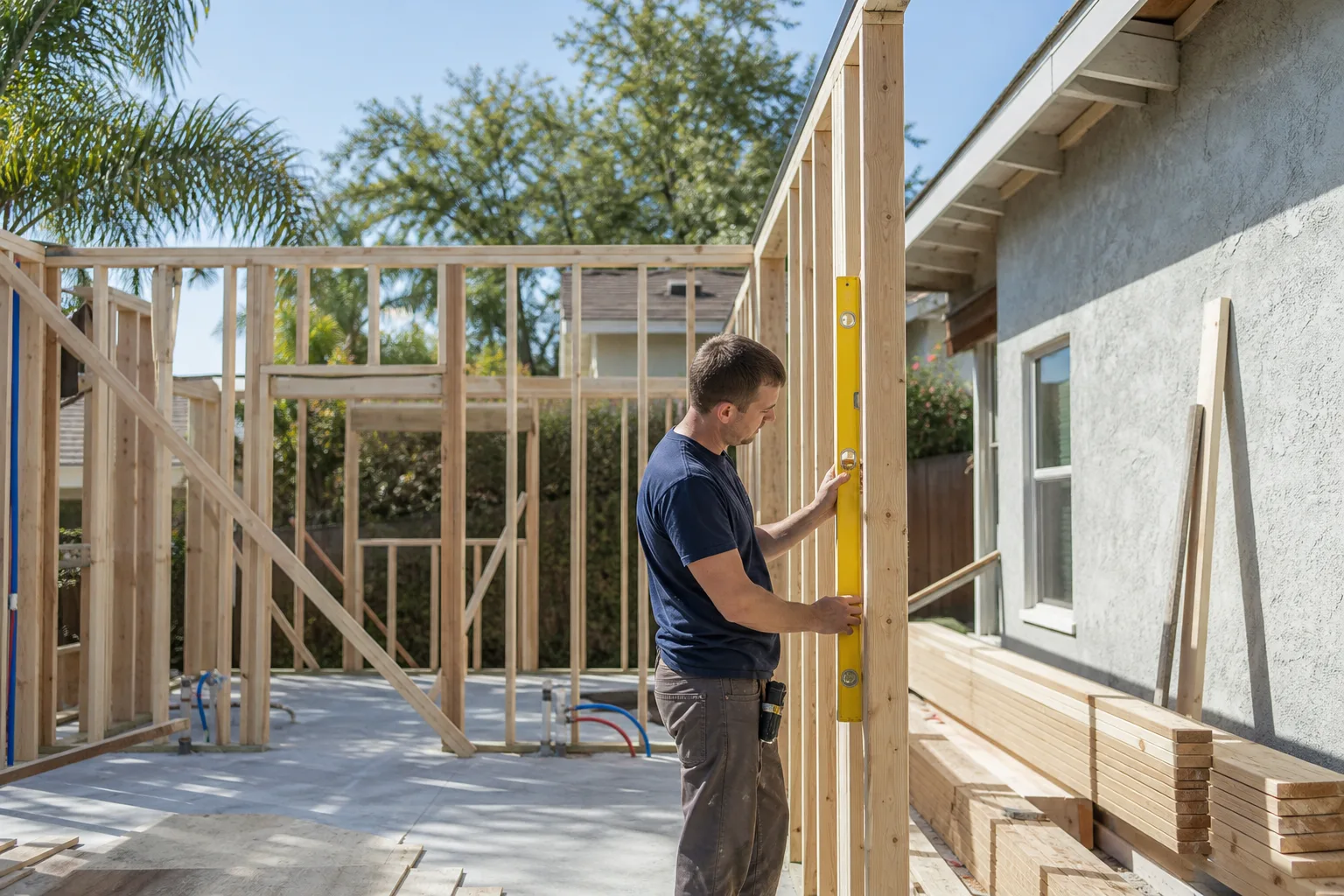
Here’s the honest range you’re working with, calibrated to the Long Beach market:
| Project | Typical Installed Range | What Drives the Number |
|---|---|---|
| Home Addition | $45,000 – $130,000 | Square footage, foundation type, whether the existing Techo-Bloc wall stays or is rebuilt |
| ADU Construction | $90,000 – $220,000 | Detached vs attached, utility runs, Long Beach parking and setback requirements |
| Garage Conversion | $30,000 – $80,000 | Structural retrofits, kitchenette and bath tie-ins, egress requirements |
The range is wide because the job is wide. A 400-square-foot primary suite over an existing Techo-Bloc patio is a different project than a 900-square-foot detached ADU behind a Villagio wall that needs replacement. What drives the price up: foundation depth on high water table lots, drainage rework, structural upgrades to tie into an existing wall, and utility relocation. What drives it down: reusing a wall that passes engineering review and keeping the addition’s footprint tight.
Every Penhallow job gets a written price before any work starts. That means a line-item number you can hold us to, not a range that moves on demo day. If it changes during construction, it changes because you approved it in writing.
See the difference
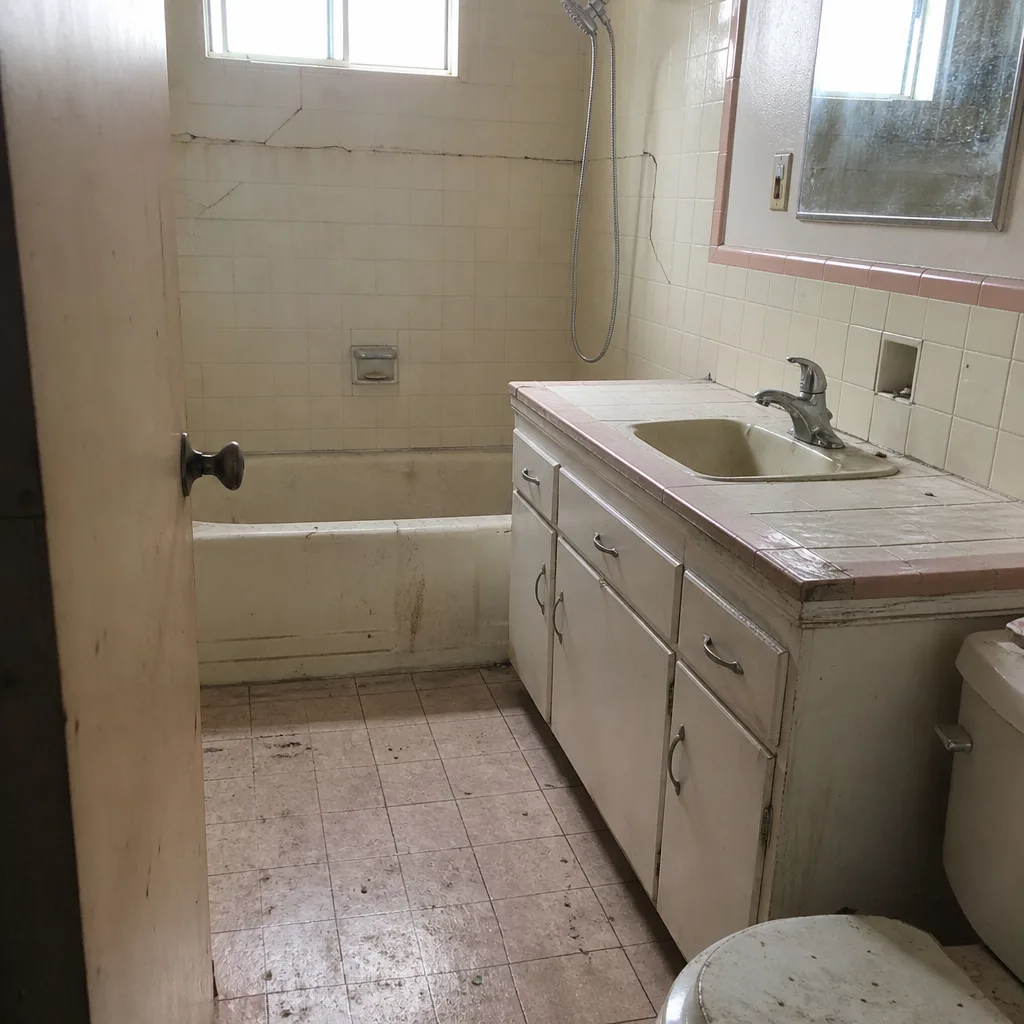 Before
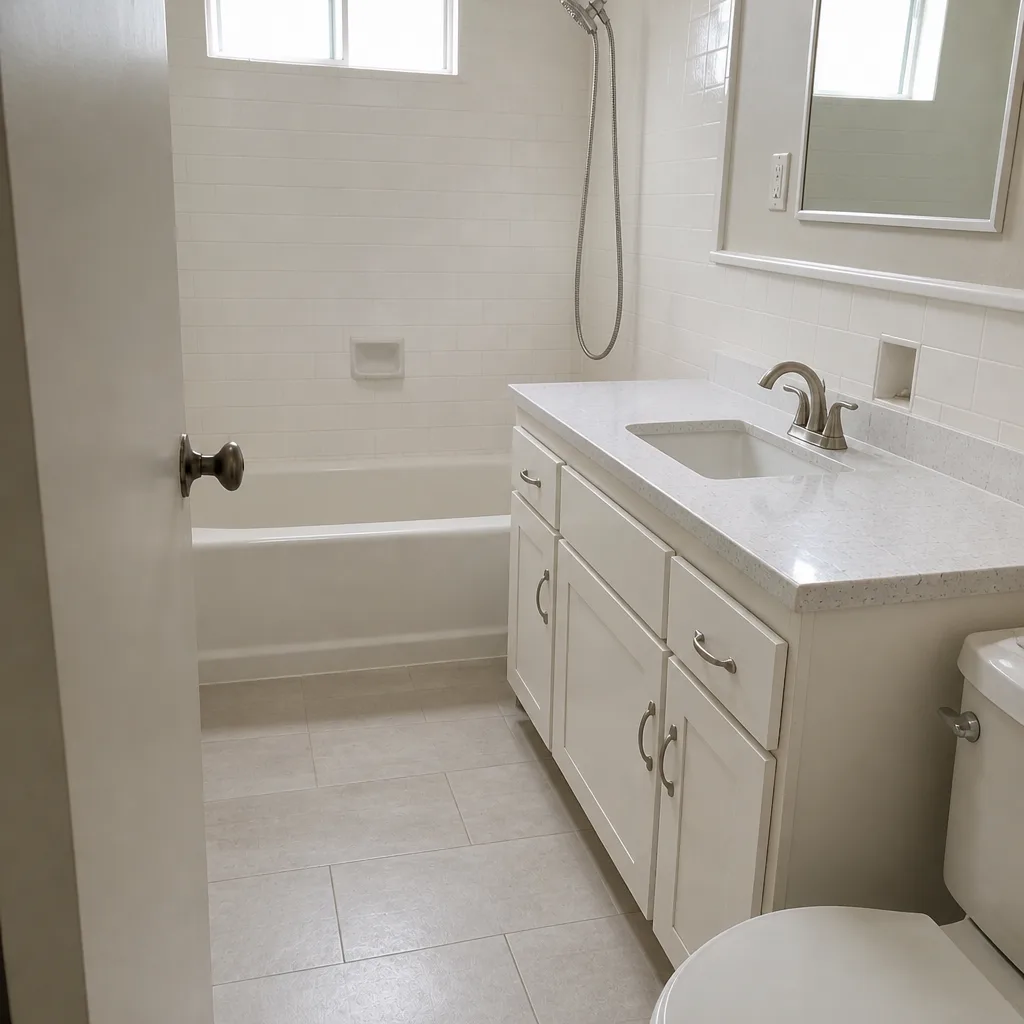 After
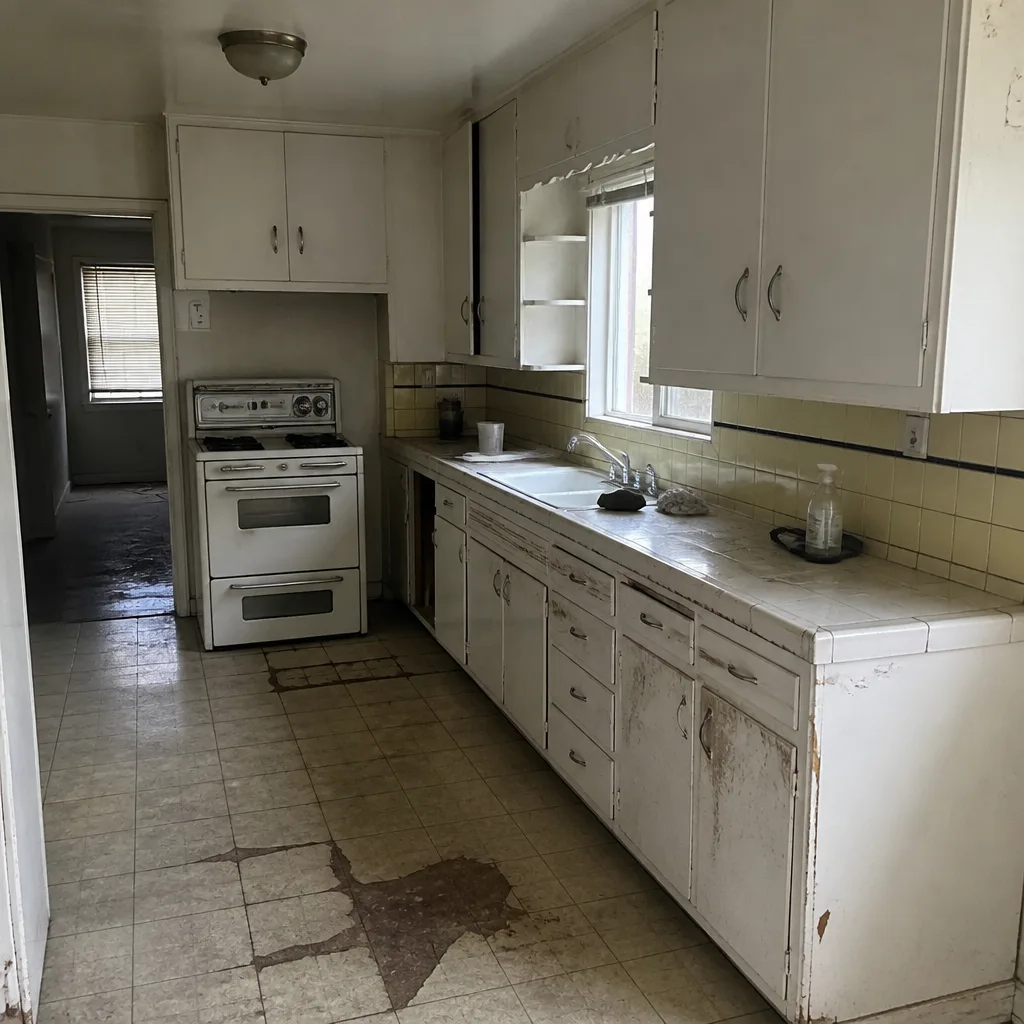 Before
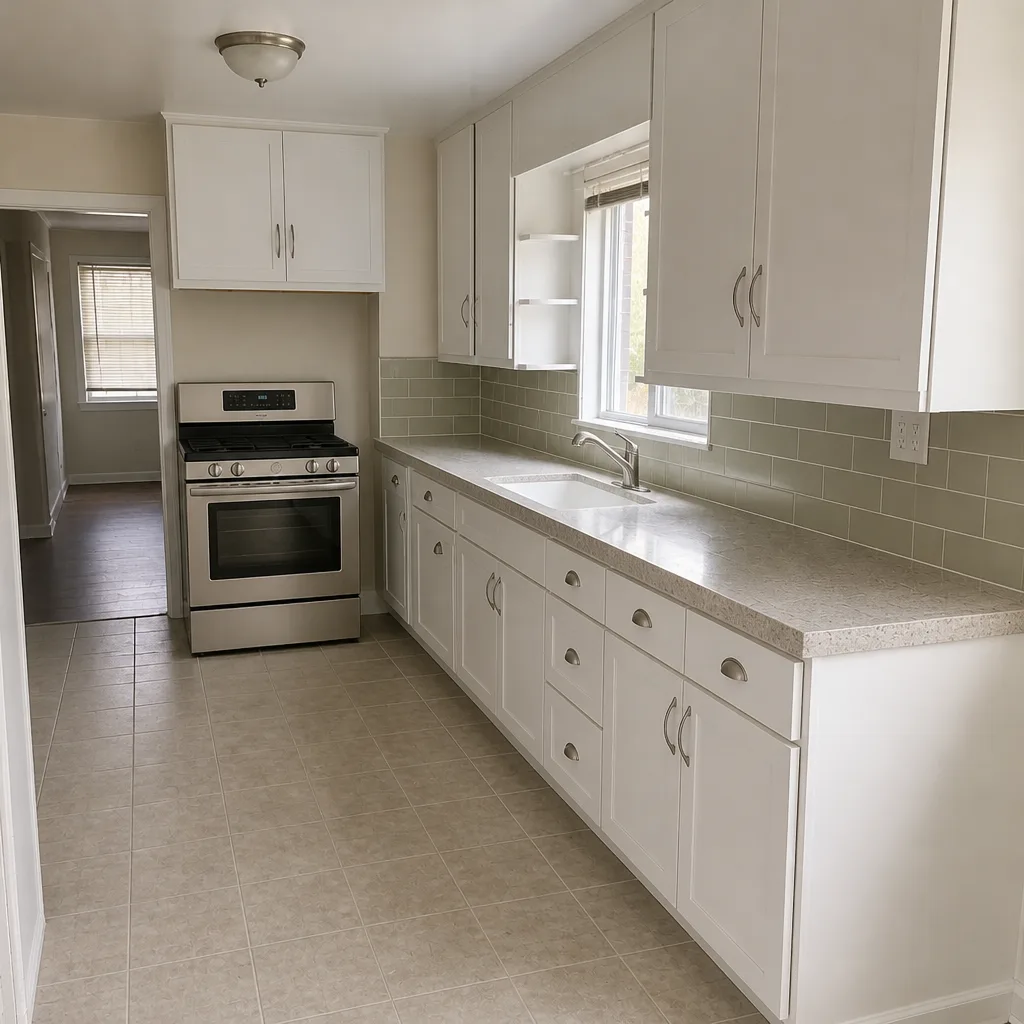 After
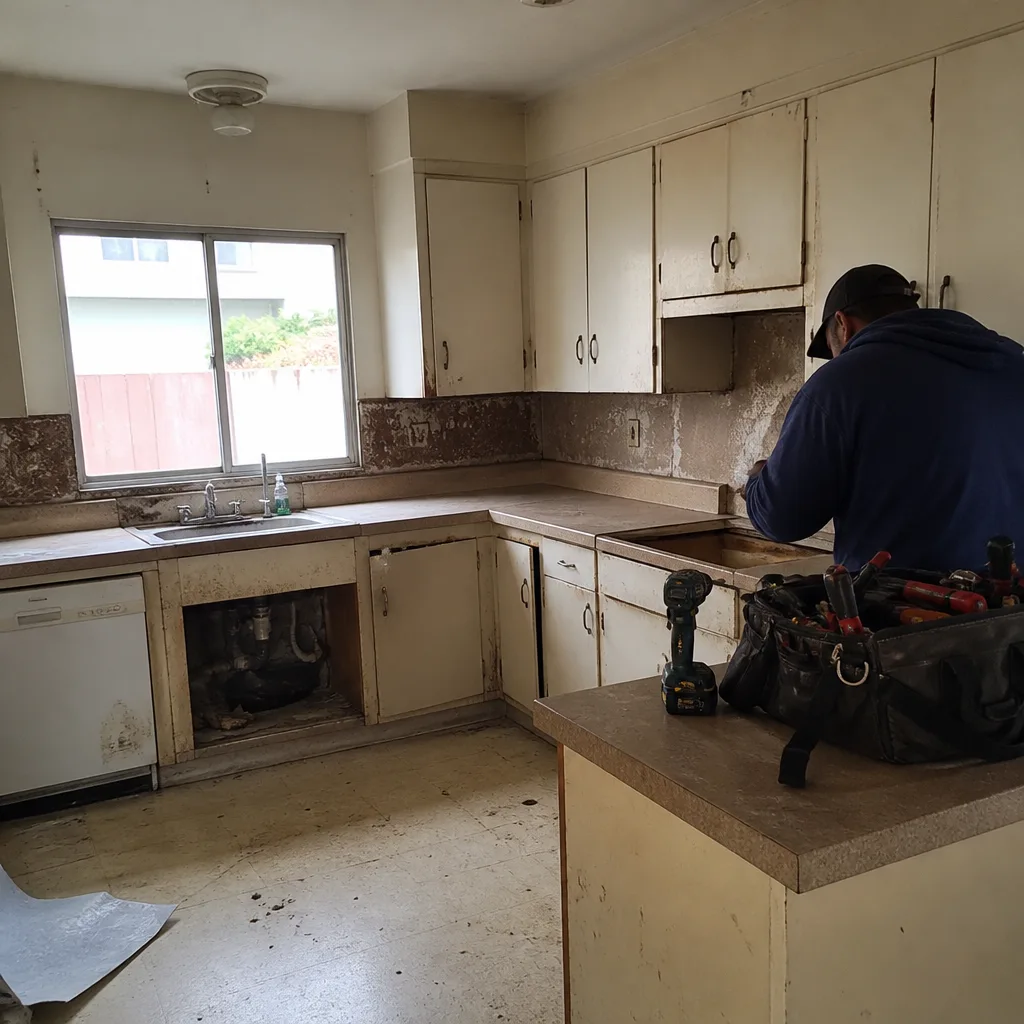 Before
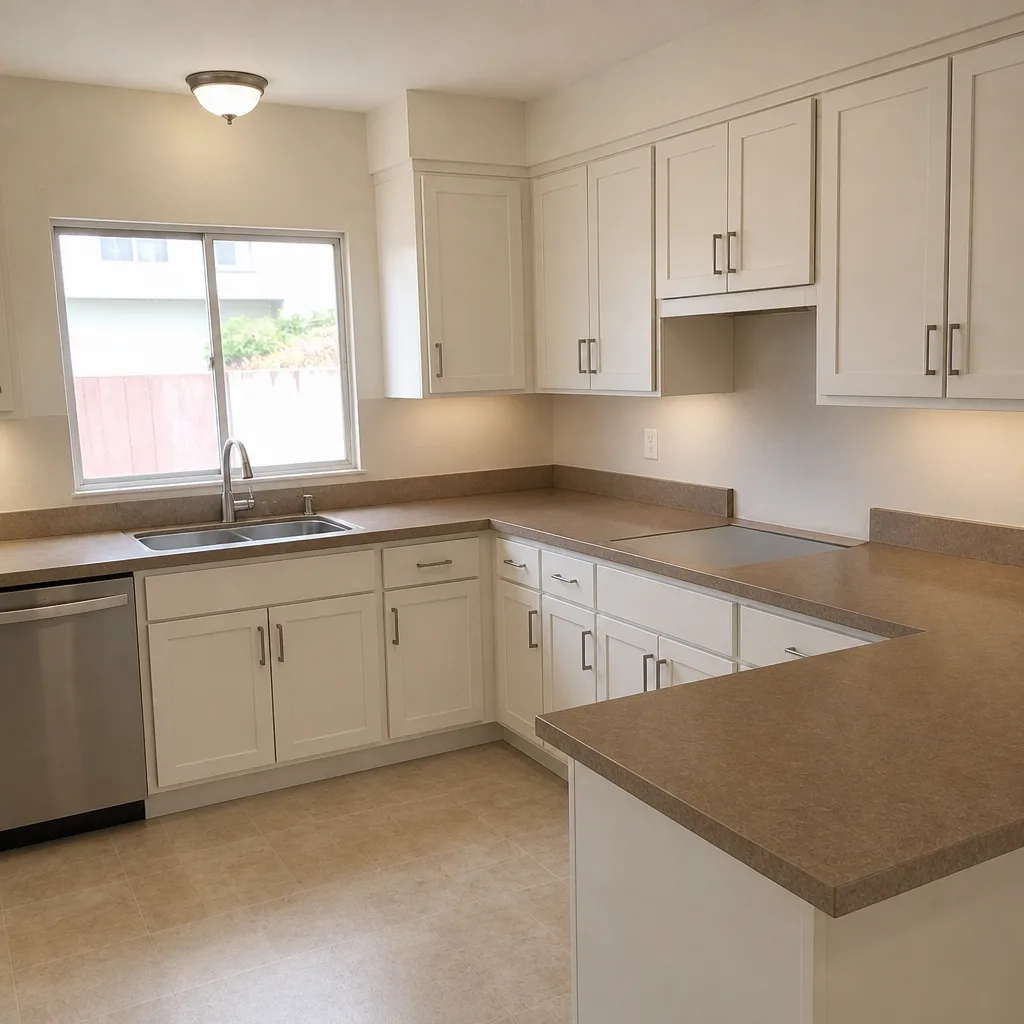 After
What’s Included in a Techo-Bloc-Aligned Addition
When we build an addition or ADU on a Long Beach lot that already has Techo-Bloc hardscape, the scope includes design continuity as a first-class deliverable, not an afterthought. That means:
- Structural engineering review of existing Techo-Bloc retaining walls and pavers where they’ll be loaded by the new structure
- Drainage plan that accounts for the original hardscape and the new roof runoff together
- Footing design that respects the underlying soil conditions and water table
- Long Beach permits pulled and inspections passed as part of the job
- Materials sourced from recognized trade brands: James Hardie siding, Therma-Tru doors, and interior finishes you’d recognize from the brands listed below
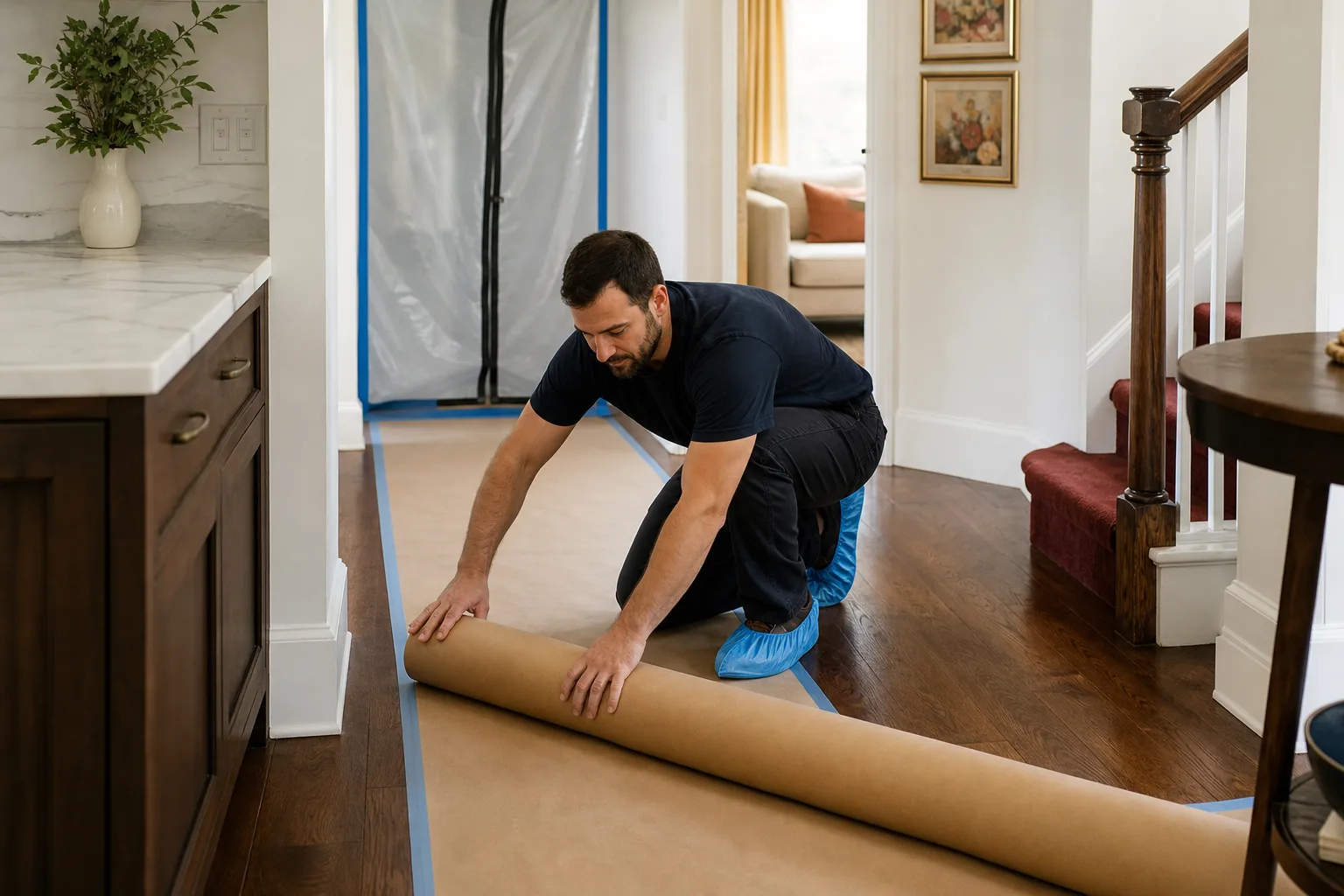
- Clean job site at every phase, and a 365-Day Done Right Promise on the finished work
We install KraftMaid and Wellborn cabinetry, Cambria, Silestone and Caesarstone countertops, and Kohler and Moen fixtures in the interior portion of every job where those finishes are specified. Those brands each carry their own manufacturer warranty behind our written guarantee, so the work has layers of protection, not one.
DIY or Call Us?
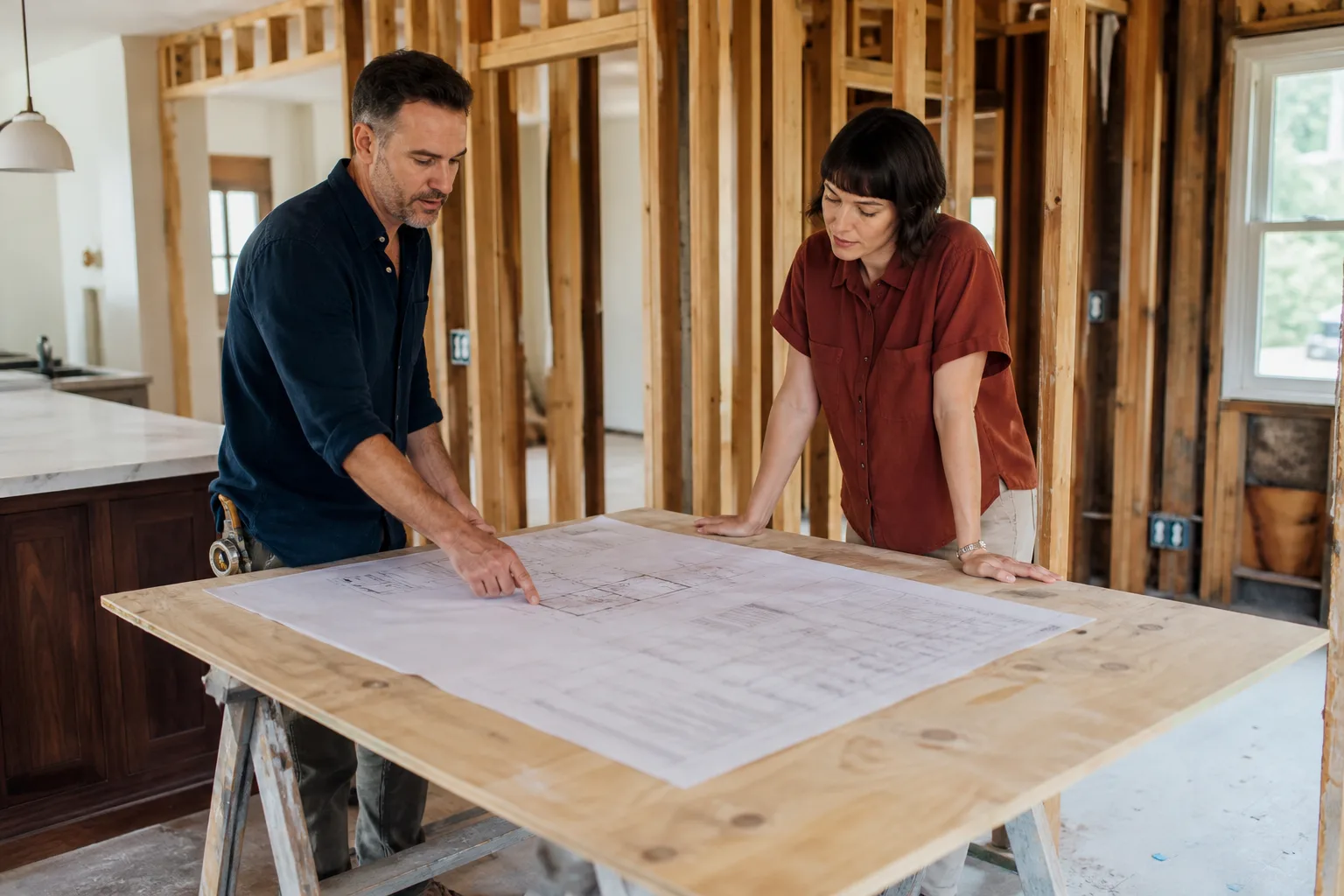
For a home addition or ADU, DIY doesn’t apply at the structural level, and we’re not going to pretend it does. An addition pulls a building permit. The permit requires structural engineering. The engineering has to answer the soil, the water table and the existing Techo-Bloc hardscape. There’s no version of that work that happens safely without a licensed contractor and a signed plan set.
What an owner can safely do is inspect and document. Walk the perimeter of the existing Techo-Bloc wall and note where the blocks are leaning, where pavers have sunk, and where water pools after a storm. Photograph the cracks. Find the landscape plans if the previous owner kept them. Then call us with those notes in hand, because they shorten the estimate by a visit.
What an owner should never do is dig near a foundation footing, remove a wall unit to “see what’s behind it,” or shore up an existing retaining wall with concrete blocks to make the addition work. Retaining walls carry hundreds of pounds of soil pressure per foot, and the failure mode is sudden. A Long Beach homeowner who tries to demo a wall to plan around it is one bad move from a slope failure.
For a professional walk-through and a written number, call (833) 510-6967. Estimates are free.
FAQs
Structurally, a properly permitted Long Beach addition lasts the life of the home, 50 to 100 years, because the framing and foundation are built to modern code. The Techo-Bloc hardscape that ties into it has its own lifespan: pavers with a proper base typically hold up 25 to 30 years, and retaining walls 30 to 50 if the drainage was built right. When people say their Techo-Bloc “failed” after 15 years, the wall almost always failed before the pavers did, and drainage was the cause. Call (833) 510-6967 for a site assessment.
Sometimes, yes. If the wall is Para or U-Cara and the failure is limited to drainage, we can remove the face blocks, rebuild the drain rock and weep system, and re-set the wall, which is far cheaper than a full replacement. If the wall has structural movement or the new addition loads it beyond what it was engineered to carry, it has to come down and be rebuilt to add load. A structural engineer’s report on the existing wall tells you which path you’re on before you commit a dollar. We do that assessment as part of the estimate.
An addition in Long Beach typically runs 4 to 8 months from permit issuance to final inspection, and an ADU 6 to 10 months, depending on size and whether utilities need to be run across the lot. The pre-construction phase, which includes drawing, engineering review, structural report on the existing Techo-Bloc wall and permit review with Long Beach Development Services, runs 8 to 16 weeks before a shovel hits the ground. We give you a written arrival window at each phase, and a live person answers the phone 24/7 if something shifts.
We source Techo-Bloc products through authorized landscape supply channels, not from a big-box shelf, which matters because the block dimensions and colors between product lines don’t interchange and “close enough” shows up as a visible color break at the joint. For the addition’s structural and finish materials, we pull from recognized trade brands: James Hardie for siding, Therma-Tru for doors, KraftMaid and Wellborn for cabinetry, and Cambria, Silestone and Caesarstone for counters. If you want the new build to visually tie into an existing Techo-Bloc wall in a specific colorway, bring us a sample of the original block and we’ll match from there. Call (833) 510-6967 to schedule the estimate.
Ready to Plan Your Long Beach Addition?
A home addition or ADU is a five-figure to six-figure decision, and the number on day one should be the number on the invoice. That’s what a written price looks like: not a verbal ballpark, not a range that stretches after demo. We match the new build to your existing Techo-Bloc hardscape, pull the Long Beach permits, pass the inspections, and back the finished work with a 365-Day Done Right Promise in writing. If something fails inside the guarantee period, we come back and fix it at no charge. No service call, no re-inspection fee. Our technicians have up to 22 years of experience, arrive background-checked and in uniform, and a live person picks up the phone whenever you call, day or night.
Call Penhallow Remodeling Long Beach at (833) 510-6967 to schedule your free estimate. We’ll walk the lot, look at the existing Techo-Bloc, explain what stays and what has to change, and put a written number in front of you before any work begins.
Written by the team at Penhallow Remodeling Long Beach, serving Long Beach and nearby areas.