Last updated November 17, 2026








Free written scope consultation - allowances, timeline, and change-order rules on paper before a single trade is scheduled
General Contractor Warning Signs Every Homeowner Should Know
Here’s the uncomfortable truth we’ve learned after years of walking into half-finished Long Beach kitchens: the damage rarely shows up in a contractor’s website photos. It shows up in the answers they give you at the first kitchen-table meeting. A contractor who hands you a verbal estimate and says, “we’ll firm the number up once we get started,” has just described the exact billing method behind most of the contractor fraud complaints filed in California each year. In this guide, we’ll show you the four questions to ask before you sign anything, the specific answers that should make you pause, and how to check a contractor’s license, bond and complaint history in under three minutes. If you’re about to remodel in Long Beach, read this before you pick up a pen.
Quick Answer
The biggest warning signs to watch for are a contractor who won’t put a price in writing before work starts, one who discourages you from pulling permits, one who gives a timeline so short it can’t be real, and one who won’t explain what their guarantee covers. If you catch any of those four, slow down. These are red flags you can spot in a single conversation, before you ever sign a contract or hand over a deposit.
Styles & brands we work with
- Kitchen remodeling
- Bathroom remodeling
- Home additions & ADU
- Roofing
- Windows & doors
- Driveway & pavers
- Fence
Table of Contents
- The Four Questions to Ask Any Contractor Before You Sign
- Why “We Don’t Do Written Contracts for Small Jobs” Is a Real Liability
- How to Check a CSLB License, Bond and Complaint History in Three Minutes
- What a Suspiciously Low Bid Actually Signals
- Why “We’ll Handle Permits Later” Should Worry You
- The Timeline Answers That Reveal a Contractor’s Real Workload
- What a Guarantee Should Actually Say
- What to Do If the Problem Shows Up After Work Begins
The Four Questions to Ask Any Contractor Before You Sign
You don’t need to be an expert in construction to screen a general contractor. You need four questions and the patience to listen to how they answer. The answers tell you more than any glossy gallery of finished remodels ever could.
- “Can I have the price in writing before work starts?” A serious contractor says yes, immediately, and hands you a line-item breakdown. A warning sign is any version of “we’ll do a proper estimate after demo” or “I’ll ballpark it for now.”
- “Who pulls the permits, and will you give me the number and inspection schedule?” A licensed contractor names the permit and knows the inspection sequence. If they wave the question away or say permits are “a formality,” walk.
- “How long will it take, and what could push that number out?” You want a real window and honest dependencies – material lead times, inspection schedules. A contractor who promises a three-week kitchen remodel without blinking hasn’t thought it through.
- “What does your guarantee cover, in writing?” The right answer names the length, what’s covered, and exactly what happens if something fails. “We stand behind our work” isn’t a guarantee; it’s a feeling.
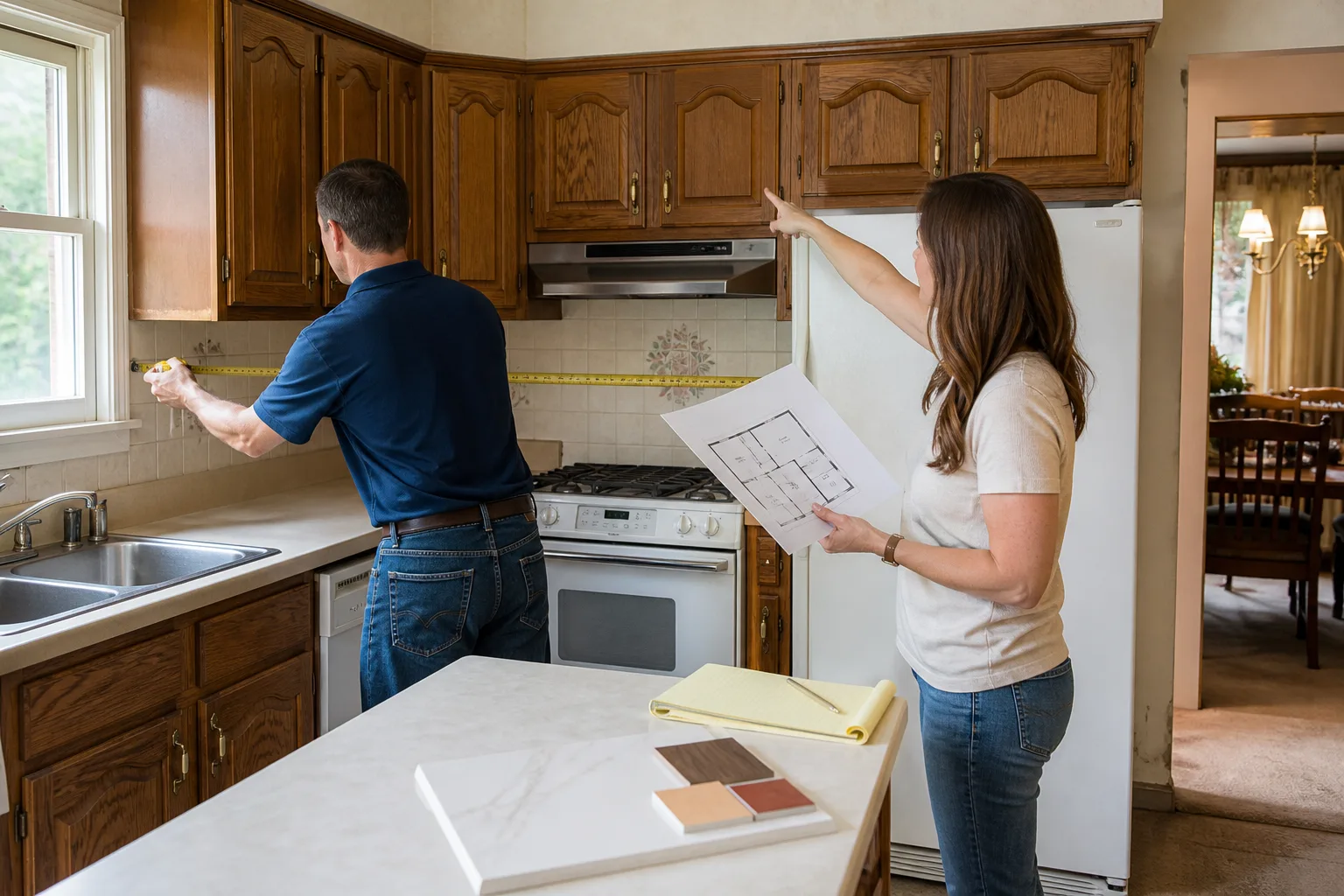
Ask all four at the first visit and write down the answers. When we sit down with a homeowner in Long Beach, those four answers are on the table before a single cabinet is discussed, because the price and the guarantee belong in writing before demo day, not after. If you want to see how this plays out for a full project, our General Contractor in Long Beach page walks through the process step by step.
Why “We Don’t Do Written Contracts for Small Jobs” Is a Real Liability
“It’s a small job – we don’t bother with a contract.” It sounds casual and friendly. It’s also the single fastest way to lose your leverage when something goes sideways.
In California, a written contract protects you in ways a handshake never will. It fixes the scope, the price, the payment schedule, and the definition of “done.” Without it, if the contractor decides your bathroom remodel now includes a surprise $2,600 for demo they “forgot” to quote, you have no document to point at. If they install the wrong tile and claim that’s what you agreed to, the argument becomes your word against theirs.
Worse, some homeowners assume a small job doesn’t need a paper trail because the stakes seem low. But a $4,000 job that goes wrong is still $4,000. And a contractor who won’t formalize a small job is usually the same one who won’t formalize a large one – they just haven’t been tested yet.
- A written scope tells everyone what’s included and what’s not. It ends “but I thought you were throwing that in.”
- A written price is a number you can hold them to when the invoice arrives. This is the core of any fair agreement.
- A written guarantee spells out how long the coverage lasts and exactly what happens if something fails.
- A payment schedule tied to milestones keeps your money moving only as work gets done – never a large lump sum up front.
If a contractor resists any of this for a “small job,” that’s your answer. The size of the paperwork should match the size of the risk, and a professional who’s been doing this for years knows it.
How to Check a CSLB License, Bond and Complaint History in Three Minutes
The Contractors State License Board (CSLB) runs a free public lookup, and three minutes on it will tell you more than an hour of conversation. Here’s exactly what to check.
- Search the license number or business name on the CSLB website. Every legitimate contractor has a license number you can look up.
- Confirm the status says “Active.” A suspended or expired license means they can’t legally take your project right now.
- Check the trade classification. Make sure the classification matches the work – general building work for a remodel, not a specialty license doing work outside their scope.
- Look at the bond amount. The CSLB lists whether the required contractor’s bond is current. This bond is what protects you if the work goes wrong and the contractor won’t fix it.
- Read the complaint history. You’re not looking for zero complaints – even good contractors get the odd dispute. You’re looking for patterns: multiple unresolved complaints, arbitration awards against them, or a disciplinary record.
Do this before you sign, and cross-check the name on the license against the name on the contract. Someone working under another contractor’s license is called “license borrowing,” and it leaves you with zero protection. If you’re remodeling in Long Beach and want a place to compare notes, our Penhallow Remodeling Long Beach home page outlines how we handle licensing and documentation on every project.
What a Suspiciously Low Bid Actually Signals
When one bid comes in thousands below the others, it’s tempting to book it before someone else does. Resist. A bid that’s much lower than the rest almost always means something is missing, and the missing piece usually gets added back to your invoice later – or paid for in quality.
Here’s what a rock-bottom bid typically signals:
- Scope omissions. The price doesn’t include demo, disposal, or finishing work that a complete quote would carry. You find out at the invoice.
- Cheap materials dressed up as standard. The quote says “quartz countertop” but means the lowest grade available – not a Cambria or Silestone slab with its own warranty behind it.
- Subcontractor shortcuts. To hit that price, the contractor may be hiring the cheapest subs available, which is where sloppy tile work, poor waterproofing and cracked grout six weeks later come from.
- A change-order strategy. Some contractors bid low to win the job, then bill aggressively for every small change once you’re committed.
For a kitchen in Long Beach, a fair remodel typically lands somewhere between $18,000 and $55,000 depending on layout, cabinet line and countertop material. A bid far below that range isn’t a bargain; it’s a warning that either scope or quality is going to give. The right move is to ask the low bidder what their number leaves out, and see if they’ll put the answer in writing.
Why “We’ll Handle Permits Later” Should Worry You
Permits exist for a reason: they trigger inspections that confirm the structural, electrical and plumbing work behind your walls is actually safe. A contractor who wants to skip them, or “handle it later,” is putting your home and your resale value on the line.
Unpermitted work becomes your problem, not theirs. When you sell a Long Beach home, a buyer’s inspector can flag unpermitted additions and remodels, and you may be required to tear out work or pay to have it permitted and inspected retroactively. Insurance companies can also decline claims on unpermitted work.
A straightforward contractor will:
- Name the permit before work starts
- Give you the inspection schedule – rough framing, rough electrical, rough plumbing, final inspection
- Show you the permit number, not just say “it’s handled”
If your contractor can’t tell you the permit number or the inspection schedule after work has started, that’s a problem you can still address. Ask for it in writing, and if they can’t produce it, pause payments until they do. Our Bathroom Remodeling in Long Beach page shows how inspections fit into a real remodel schedule.
The Timeline Answers That Reveal a Contractor’s Real Workload
Timelines are where a lot of honest contractors and dishonest ones separate. Asking “how long will this take?” isn’t enough – ask “what could push this timeline out, and how would you tell me?”
A good contractor gives you a realistic window and names the real dependencies: material lead times, when custom cabinetry is ready, the inspection schedule. A bad one gives you a number so optimistic it can’t survive contact with reality. Anyone promising a full kitchen in ten days on a house that needs new electrical and moved plumbing hasn’t finished the math in their head.
Watch for these timeline red flags:
- No start date. “We’ll start soon” isn’t a date. You should have a defined arrival window in writing, not a promise to reach out later.
- A start date sooner than the permits allow. Permits and inspections take time. A contractor ready to break ground before the permit is issued is skipping the permit.
- Rushing the schedule. If it’s too fast to be true, they’re either cutting corners or planning to leave you waiting once the job starts.
- No communication plan. A good contractor tells you how and when they’ll update you when something changes.
In Long Beach, older homes often carry surprises under the surface – outdated wiring, old plumbing, sometimes a wall that isn’t quite where the plans say it is. A realistic timeline builds in room for that. A fantasy timeline doesn’t.
What a Guarantee Should Actually Say
The word “guarantee” gets thrown around a lot. “We stand behind our work” is not a guarantee – it’s a slogan. A real guarantee is a written document with a defined coverage period and a clear process for what happens if something fails.
When you compare contractors, ask each one for their guarantee in writing, and compare what they actually promise:
- The length of coverage. How long does the guarantee last after the work is complete?
- What’s covered. Is it the labor, the materials, or both? A good guarantee explains exactly what happens if a repair fails.
- Who pays if it fails. If something goes wrong, does the fix come back at no cost to you, or is there a trip charge waiting?
- How you file a claim. Is there a phone number, a form, a process? A guarantee that can’t be exercised isn’t real coverage.
Look also at the products behind the work. When a contractor installs Cambria quartz or a Kohler fixture, those materials carry their own manufacturer warranty – and a professional who stands behind their work should be able to explain how their guarantee stacks on top of the manufacturer’s. If you want to see how this plays out for a full kitchen, our Kitchen Remodeling in Long Beach page lays out the materials and coverage we stand behind.
What to Do If the Problem Shows Up After Work Begins
The bad news is that some problems only reveal themselves once the job is underway. The good news is that many of them are still fixable if you act quickly and put everything in writing.
- Stop the money, not the work. Pause any payment that isn’t tied to a completed milestone until you have answers in writing.
- Ask for documents. Request the permit number, the inspection schedule, and a written breakdown of any new cost. Put the request in writing so there’s a record.
- Get everything in the contract you originally signed. Any verbal agreement made after demo day needs to be amended into the contract in writing.
- Check the CSLB again. If the contractor suddenly can’t produce a license number, or their status has changed, that’s reason to escalate.
- Talk to the contractor directly before going over their head. Many issues get resolved when a homeowner asks calmly for the documents a professional should already have.
If it doesn’t resolve, the CSLB has a process for filing a complaint, and the contractor’s bond is there to help make repairs right. But the best protection is prevention – a written price, a named permit, and a written guarantee signed before work starts.
Common Mistakes to Avoid
- Accepting a verbal estimate to “firm up later.” The number you hear at the visit means nothing if it can’t survive the invoice. Get it in writing.
- Skipping the CSLB lookup. Three minutes could save you five figures. Check the license status, the bond, and the complaint history before you pay a deposit.
- Picking the lowest bid. A bid far below the rest usually means missing scope or cheap materials – and in a Long Beach market where kitchen remodels run $18,000 to $55,000, an outlier price is a warning.
- Letting the contractor talk you out of permits. Unpermitted work follows the house, not the contractor. It becomes your problem at sale or at claim time.
- Paying a big lump sum up front. A reasonable payment schedule follows milestones, not a large deposit before any work is done.
- Not asking for the guarantee in writing. “We stand behind our work” isn’t coverage. You want the coverage period, the process, and what happens if the repair fails.
- Hiring whoever answers the phone first. A contractor who picks up, shows up in the window they gave you, and puts everything in writing is the one you want – not the one who’s simply available.
See the difference
 Before
 After
 Before
 After
 Before
 After
When to Call a Professional
Some of these red flags are worth addressing on your own with a contractor you’ve already hired. Others are the point where it’s worth bringing in a second, experienced opinion before you commit more money or more time. If you’ve been handed a verbal estimate, if the permit number is still missing after demo started, or if a low bid has you worried about scope, that’s the moment to get clarity. A written price and a written guarantee change the whole conversation.
Penhallow Remodeling Long Beach offers free estimates in Long Beach – call (833) 510-6967 to schedule yours. Our technicians have up to 22 years of experience, we’re background-checked and uniformed on every job, and a live person answers the phone at any hour. Every project comes with a written price before work starts and our 365-Day Done Right Promise, in writing, so the number on day one is the number on the invoice.
Frequently Asked Questions

A contractor who won’t put the price in writing before work starts. That single refusal is the strongest predictor of a bad experience, because it leaves you with no document to hold them to when the invoice arrives higher than the verbal estimate. If they resist a written agreement, treat it as a stop sign and consider other bids.
Look up the license number on the Contractors State License Board (CSLB) website. Confirm the status is “Active,” that the trade classification matches your project, that the required bond is current, and that the complaint history doesn’t reveal unresolved patterns. It takes about three minutes and it’s free. Do it before you sign anything.
A verbal estimate is very hard to enforce and gives you little protection. For most home improvement projects in California, a written contract is required, with a defined scope, price and payment schedule. If a contractor offers only a verbal estimate, ask for a written one – and take the hesitation as information about how the rest of the job will go.
Yes. A bid that comes in far below the rest usually means something is missing – scope, materials, or subcontractor quality. Kitchens in Long Beach typically run $18,000 to $55,000 depending on layout, cabinet line and countertop, so an outlier price on either end deserves scrutiny. Ask what the low bid excludes, and get the answer in writing.
Pause payments not tied to a completed milestone and request the permit number and inspection schedule in writing. A professional contractor should be able to produce both immediately. If they can’t, that’s a problem you can still address by escalating to the CSLB if it doesn’t resolve quickly.
Yes. Permits and inspections are part of how we run a remodel – you’ll have the permit number and the inspection schedule, not a promise to “handle it later.” Call (833) 510-6967 for a free estimate and a written price before any work starts.
The Bottom Line
The warning signs that matter most are the ones you can see before you sign: a contractor who won’t put the price in writing, who wants to skip permits, who promises a timeline that can’t be real, or who can’t explain their guarantee. Run the CSLB lookup, compare those four answers across bids, and treat a rock-bottom price as a question rather than a bargain. A written price, a named permit, and a written guarantee before work starts are what separate a smooth remodel from a stressful one. That’s the standard we hold ourselves to on every Long Beach project – and it’s the standard to hold anyone to before you hand over a deposit.
Call Penhallow Remodeling Long Beach at (833) 510-6967 for a free estimate. We’ll give you a written price, a real arrival window, and the 365-Day Done Right Promise in writing before a single cabinet is pulled.
Written by the team at Penhallow Remodeling Long Beach.