Last updated November 17, 2026






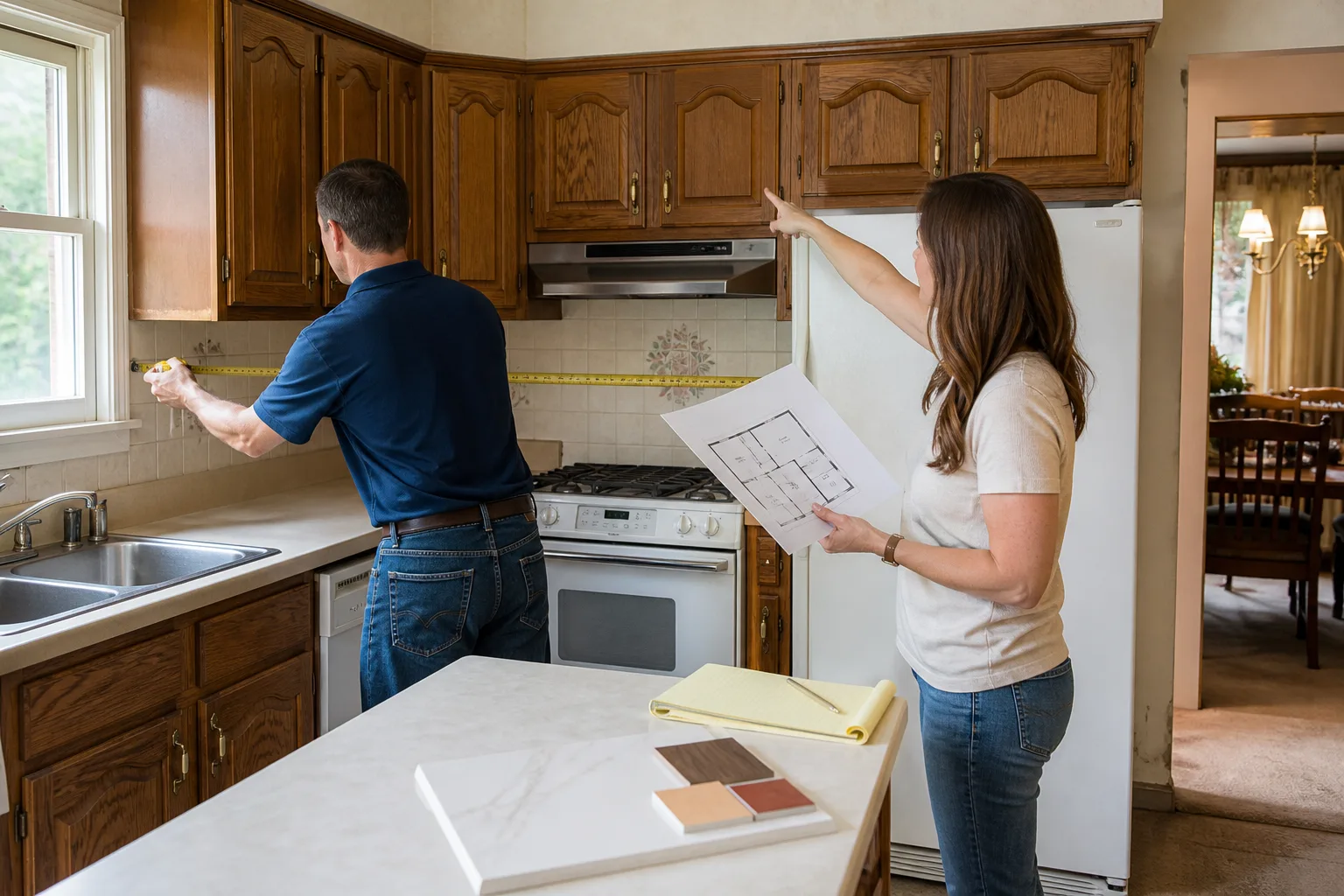
Free written scope consultation - allowances, timeline, and change-order rules on paper before a single trade is scheduled
Construction Warning Signs: A Long Beach Homeowner’s Reference Guide
If a contractor in Long Beach won’t give you a written price before demo day, that’s not a personality quirk – it’s a business model. The numbers back it up: home improvement consistently ranks among the top categories of consumer complaints in California year after year, and contractors working without a license are the single most common thread in those complaints. What makes Long Beach different from the next city over is the pressure. Between the ADU gold rush on lots that once held a single bungalow, a housing stock that runs from 1920s Craftsman to 1960s stucco, and a market where the unlicensed have learned to dress the part, the warning signs here have a local accent. This guide covers those, in plain language, so you can read a bid, a contract, and a contractor before either of you picks up a tool.
Quick Answer
The warning signs that matter most in Long Beach are: no written price before work starts, unusually fast permit promises, vague product language in the contract, “we’ll sort out the details later” scheduling talk, and a guarantee that won’t survive a second read. Any one of these on its own deserves a question. Two or three together mean you walk away. A legitimate contractor gives you a real number, in writing, before demo – and a written guarantee that actually covers the work.
Styles & brands we work with
- Kitchen remodeling
- Bathroom remodeling
- Home additions & ADU
- Roofing
- Windows & doors
- Driveway & pavers
- Fence
Table of Contents
- The verbal patterns that predict a price change
- Why a fast permit promise should slow you down
- How to spot materials substitution before it happens
- “Too busy” versus overcommitted: what both mean for your timeline
- What a real workmanship guarantee covers – and what it doesn’t
- Licensing, insurance, and the paperwork you can actually check
- Long Beach-specific red flags: ADU demand and aging homes
- How to review a contract in under an hour
The verbal patterns that predict a price change after demo
Price changes rarely arrive without warning. They arrive as a sentence that sounds reasonable, said in a friendly tone, at the kitchen table. Our technicians have up to 22 years of experience, and the pattern is old: the phrase is designed to leave wiggle room the moment walls come down.
Here are the phrases to listen for – and what they usually actually mean:
- “It’ll depend on what we find behind the wall.” On a bathroom or kitchen tear-out in Long Beach, some of this is real: galvanized plumbing or knob-and-tube wiring in a pre-war home can genuinely surprise you. But a contractor who says this as the entire price is telling you there is no price yet. Ask for a written number and a written description of how a hidden condition would be priced, before you sign.
- “We’ll figure out the finishes as we go.” This sounds flexible. It usually means the bid was priced on cheap materials and every upgrade happens at a change-order markup. Finishes should be chosen and priced before demo.
- “That’s a ballpark, we’ll square up at the end.” No. You square up at the contract, not the invoice.
- “Trust me, this is a friend-of-a-friend deal.” The discount is the bait. What’s missing is a written contract, which is what you actually need if the job goes sideways.
- “The price includes everything.” If it doesn’t say what everything is, in writing, it includes exactly as much as the contractor feels like.
The point isn’t to interrogate a contractor’s word choices. It’s to notice that the entire business model – verbal pricing, loose finish language, “we’ll see” – only functions if you don’t have a written number to hold anyone to. A written price before any work starts eliminates about nine-tenths of the arguments you’ll have otherwise.
Why an unusually fast permit promise is a warning sign, not a selling point
Permits in Long Beach run through the city’s Development Services, and they take time. A typical bathroom remodel permit moves at a certain pace. A kitchen remodel that touches structural walls, plumbing or electrical moves slower. An ADU – and the city has been approving a lot of them – can involve multiple review steps depending on the lot, the utility connections, and whether a garage is being converted.
So when a contractor promises you a permit in a week or two, one of two things is true: either they don’t pull permits, or they don’t understand the process well enough to be honest with you. Neither is a selling point. An unpermitted job in Long Beach is a long-term problem: it can trip up a future sale, cause issues with your insurer, and leave you on the hook if a later owner or inspector catches the work. A contractor who tells you the honest timeline and then meets it is the one to hire.
If you want a straight answer on permits and timelines from a local team, the general contractor in Long Beach page covers how a real project runs from first visit to final inspection.
A few reality checks:
- Ask directly: “Will you pull the permits, or will I?” If it’s not the first option, keep looking.
- Ask: “Who closes the permits when the work is done?” A permit that’s pulled but never finalized is worse than no permit at all – it shows up on the title report.
- Ask for the DBS permit number, or a copy of the building permit, once it’s issued. A legitimate contractor will give it to you without blinking.
How to spot materials substitution before it happens
Materials substitution is the quiet tax on a remodel. The bid says one brand, the installers show up with another, and by the time you notice the difference the tile is on the wall and the cabinets are hung. It’s the single easiest place for a contractor to make up margin – or, more often, the place where a too-low bid gets clawed back.
Here’s what a contract that protects you actually contains:
- Brand and product line named specifically. Not just “quartz countertops” but “Cambria quartz, [model name]” – not “cabinets” but “KraftMaid [line].” We install KraftMaid and Wellborn cabinetry, Cambria, Silestone and Caesarstone countertops, and Kohler and Moen fixtures, and those names go in the contract, not just the brochure.
- A written substitution clause. If the specified product is discontinued or back-ordered, the contract should say what happens: written approval from you, and any price difference settled in writing before the order is placed.
- Allowances spelled out. An allowance is a placeholder dollar amount for a specific item – “tile allowance: $X per square foot.” If the final choice runs higher, you pay the difference; if lower, you should get the credit back. An allowance without a number is not an allowance.
- Delivery dates and who accepts the delivery. Materials show up on the job site. Somebody signs for them. Find out who.
Windows are an area where substitution is especially common – PGT, CGI, CWS and ES Windows all sell legitimate products, but they don’t sell interchangeable ones. A window package bid on one brand and installed with another changes your energy performance, your warranty coverage, and your resale documentation. Whatever brand is specified, the contract should name it.
“Too busy” versus overcommitted: what both mean for your timeline
There’s a version of “too busy” that’s good news – a contractor with a full calendar is a contractor whose work gets referred. And there’s a version that’s not. The differences are worth knowing before you hand over a deposit.
A contractor who’s “too busy” tells you: “I can start in six weeks, and I want a signed contract and a deposit now so I can put you in the schedule.” They name the start date. They name the reason. They call you back if something opens up earlier.
A contractor who’s overcommitted tells you: “We can start Monday.” Then Monday comes and goes. The crew is on another job. Then another. What you’re seeing isn’t scheduling – it’s a contractor selling more work than they can staff, which means every project gets diluted. Overcommitted contractors take your deposit to fund the previous job, and when the money runs tight, the pace of your project slows to a crawl.
What both scenarios do to your project timeline:
- Sequence collapse. Trades schedule in a specific order – demo, rough-in, inspection, drywall, finish. When a crew is overcommitted, the sequence bends. Your drywall sits exposed, your inspection window gets missed, and your finishes show up before the substrate is ready.
- Weather exposure. In Long Beach, an open-wall kitchen or bath left waiting is exposed to the marine layer and the occasional rain. That’s not cosmetic – moisture in an open wall cavity is where mold starts.
- Material lead time slippage. Cabinets, countertops and windows have lead times. When the project’s start date slides, the lead times reset. A six-week slip on a start date can turn into a twelve-week slip on your completion.
Ask every contractor you interview: “How many jobs are you running right now, and who runs the schedule?” The answer tells you whether you’re hiring a business or a busy person. A real arrival window – in writing, with a name attached – is the minimum expectation.
What a real workmanship guarantee covers – and what it doesn’t
Most contractors offer a “guarantee.” Very few of them will explain what it actually covers. Here’s the difference, in plain English:
What a real workmanship guarantee must cover:
- The labor. If the tile cracks because it was set wrong, the fix – removal, substrate repair, reinstall – is covered.
- The failure, not just the diagnosis. “We’ll send someone out to look at it” is not a guarantee. Returning to look, then charging you for the fix, is a service call with a friendly name.
- A time window, in writing. A guarantee without a term is a handshake. A real one names the length and the conditions.
- Multiple visits if needed. If the first fix doesn’t hold, the guarantee should still be live. A one-shot guarantee that expires the moment a technician touches the work isn’t a guarantee – it’s a warranty against diagnosis.
What a real workmanship guarantee does not cover: product failure (that runs through the manufacturer’s warranty – Cambria quartz, for instance, carries its own lifetime warranty, which sits alongside the installer’s guarantee), damage from a leak you ignored, damage from something you or another trade did after the job closed, or normal wear.
Ask the question that separates the two: “If the work fails in month eight, who pays for the return visit?” If the answer is anything other than “we do, at no charge, and it’s in writing,” you have your answer about the guarantee. The Penhallow 365-Day Done Right Promise is exactly that: if the work isn’t right inside the year, we come back and make it right, at no charge – and the free return visit if a repair fails is standard, not a favor.
Licensing, insurance, and the paperwork you can actually check
This is the part where unlicensed operators in Long Beach have gotten good at looking legitimate. The paperwork is a set of checks you can run in about ten minutes, and every one of them is public:
- License check. Ask for the contractor’s license number and check it on the Contractors State License Board (CSLB) website. It takes thirty seconds and will tell you whether the license is active, whether it’s the right classification for your project, and whether there are any complaints on file.
- Insurance certificate. Ask for a current certificate of insurance and call the number on it – not the number on the contractor’s letterhead. Verify the policy is live.
- Bond information. California contractors are required to carry a bond. Ask for the bond number and confirm it.
- Workers’ comp. If a worker is injured on your property and the contractor doesn’t carry workers’ comp, the claim can come to you. Ask, in writing, before work starts.
- Written contract. For projects over $500, California requires a written contract. Read it. If it’s a single-page form with a total at the bottom and nothing else, it’s a warning sign.
One more: if a contractor asks you to pull the permit in your own name, that’s a warning. The permit is the contractor’s responsibility, and pulling it in your name shifts the liability to you if something goes wrong with the work.
Long Beach-specific red flags: ADU demand and aging homes
Long Beach has been a hot ADU market for years now, and that demand has pulled in contractors who see the city as a place to make fast money on garage conversions and detached units. Two specific patterns are worth watching for.
First: the ADU specialist who’s never actually built one. ADUs involve their own set of rules – lot coverage, setback, utility connections, and inspection. A contractor who talks confidently about garage conversions but can’t explain the difference between a permitted ADU and an unpermitted one is a warning sign. Ask for a recent ADU project and the permit number.
Second: the contractor who doesn’t know the housing stock. Long Beach has homes from the 1920s, 1940s, 1960s and beyond. A 1920s bungalow has different framing, plumbing and electrical realities than a 1960s tract home. A contractor who quotes the same way on both hasn’t spent much time here. Ask: “What are you expecting to find behind the wall on a home of this age?” The answer tells you whether they’ve done this before.
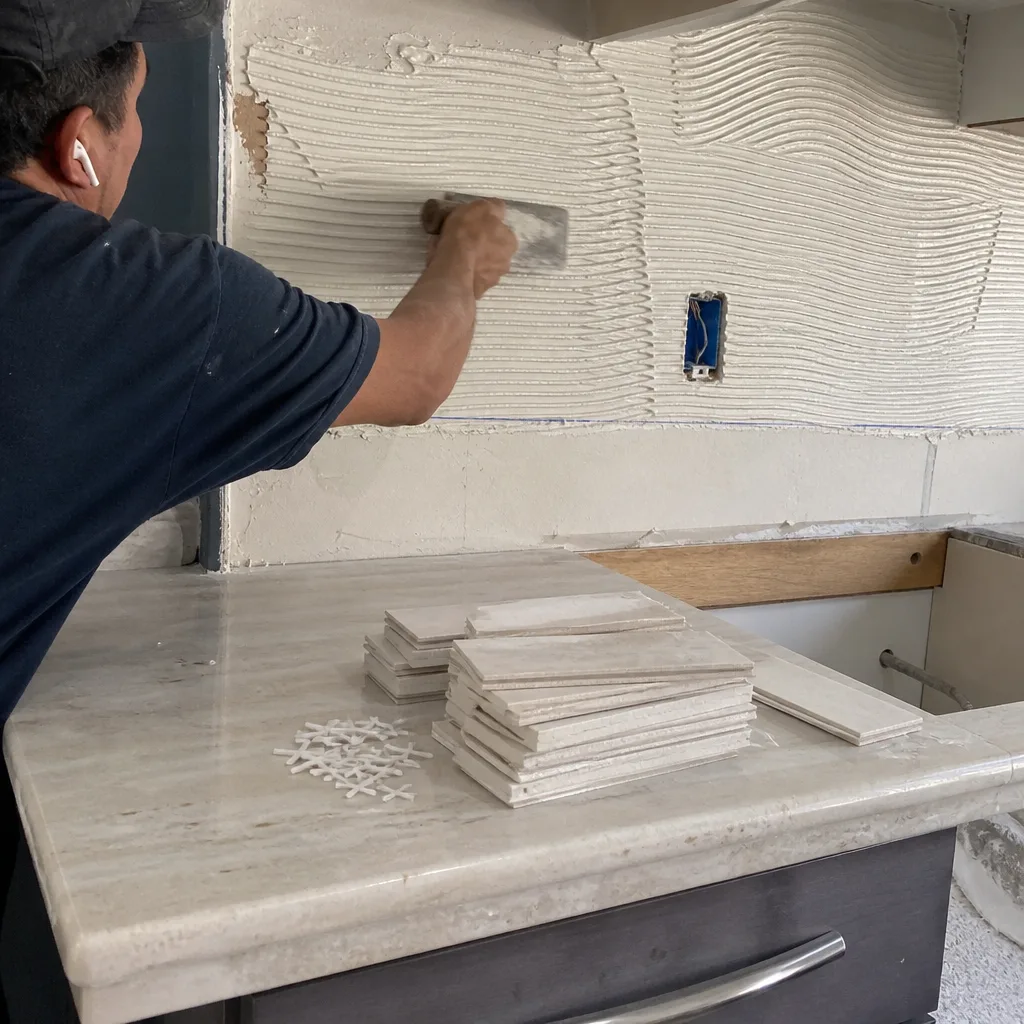
There’s also a climate point. Long Beach sits close enough to the water that moisture management matters on every bathroom and kitchen remodel. A tile job set over the wrong substrate – or without a waterproofing layer – will fail in this climate. Our crews install cement board substrate (the moisture-resistant layer behind the tile) and a waterproofing membrane on every wet area; if a contractor skips that step, they’re skipping the part that matters most. For a deeper look at how that plays out in this market, see our page on bathroom remodeling in Long Beach.
How to review a contract in under an hour
You don’t need to be a lawyer to read a construction contract. You need to know what to look for, and to check it in a specific order. Here’s how to do it in under an hour:
- Start with the scope. Read the scope out loud. If any line says “as needed,” “as discussed,” or “TBD,” it’s not a scope – it’s an open question. Get it in writing before you sign.
- Find the price. It should be one number for the work in the scope, plus a written description of what a change order looks like and how it gets priced. If the price is a range with “TBD” at the end, you don’t have a price yet.
- Check the schedule. Look for a start date and an end date, not a range. And look for a description of what happens if the schedule slips – on either side.
- Check the materials list against the brands. Every product line should name a brand and a model. If “or equal” appears anywhere, ask what “equal” means and who decides.
- Find the guarantee. Two questions: how long is it, and who pays for a return visit? Get the answer in writing.
- Find the payment schedule. A deposit is normal in this market, but the schedule should track progress: deposit, then payments at defined milestones, then a final payment on completion. A schedule that front-loads more than a third of the total before demo is a warning sign.
- Check the license and insurance attachments. If they aren’t attached to the contract, ask for them to be.
One last test: read the contract and ask yourself whether you could hand it to a stranger and have them explain your job. If they can, you have a real contract. If they can’t, you have a form. That’s the standard: a written price, a written timeline, a written guarantee, and a name attached to each. The kitchen remodeling in Long Beach page shows how that reads in practice.
Common Mistakes to Avoid
- Hiring on price alone. The lowest bid in Long Beach is rarely the cheapest job. It’s typically the one with the most room to add change orders, or with allowances set low enough that every finish choice triggers a markup. Compare written prices with written scopes, not totals.
- Accepting a verbal guarantee. “We’ll always take care of our customers” is not a guarantee. Ask for the term in writing, and ask who pays for the return visit.
- Skipping the CSLB check. It takes thirty seconds on the state website. Homeowners who skip it are the ones who find out later that the license was suspended or never existed.
- Paying too much up front. A deposit is fine, but a contractor asking for more than a third of the total before demo is funding a different job – or a different month’s payroll – with your money.
- Letting the contractor pull the permit in your name. That shifts the liability for the work to you. Pulling permits is the contractor’s responsibility, and the permit should be in their name.
- Ignoring material lead times. A kitchen or bath that starts before cabinets and windows have been ordered is a kitchen or bath that will sit open. Ask when the materials were ordered, and where.
- Not asking how many jobs are running. Overcommitment is the quiet timeline killer. Ask who controls the schedule, and how many projects your contractor is running right now.
See the difference
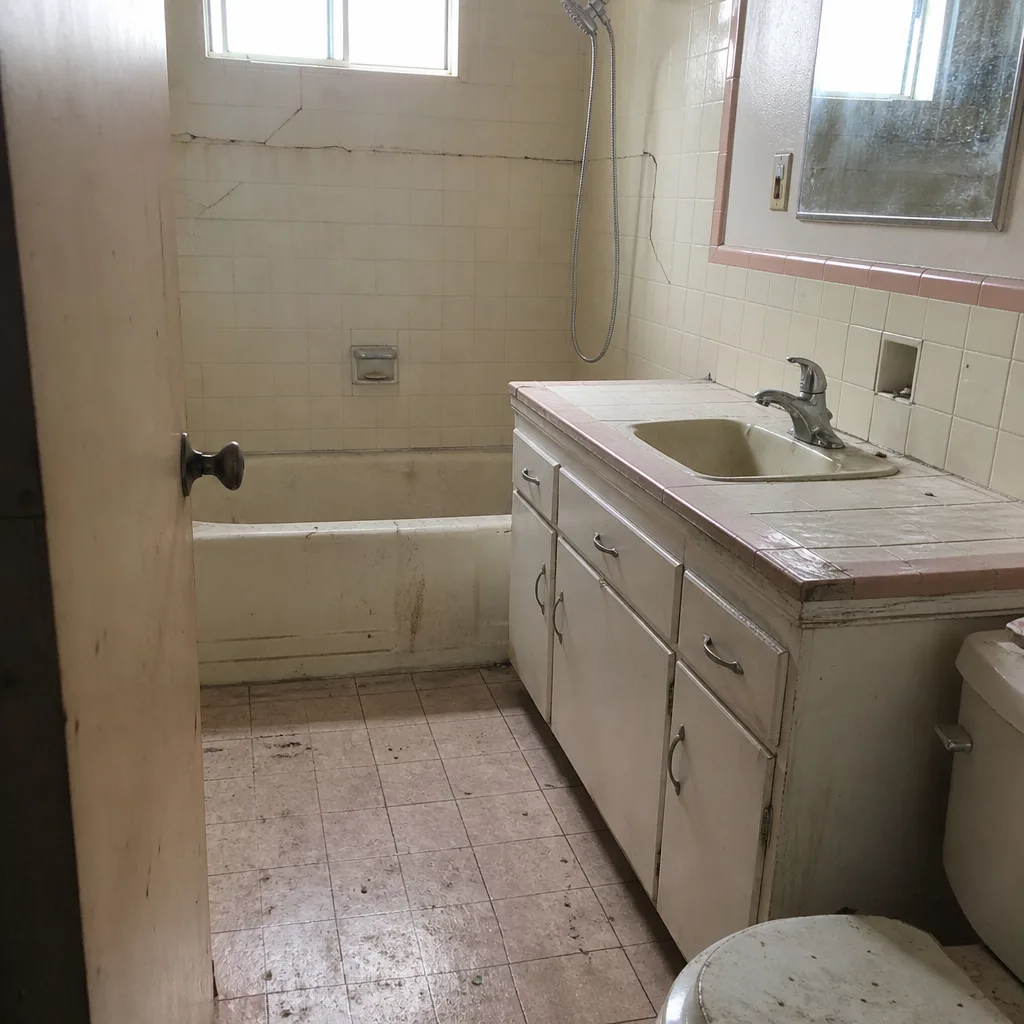 Before
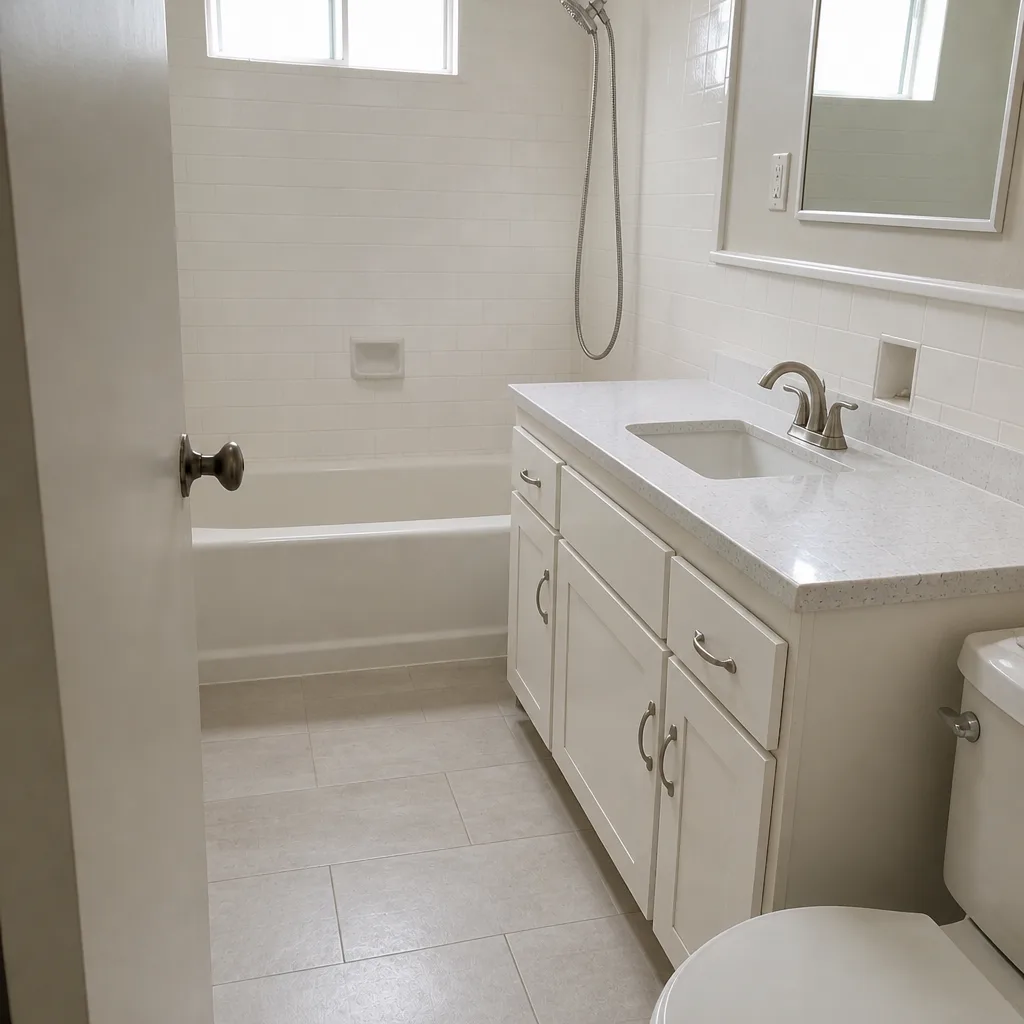 After
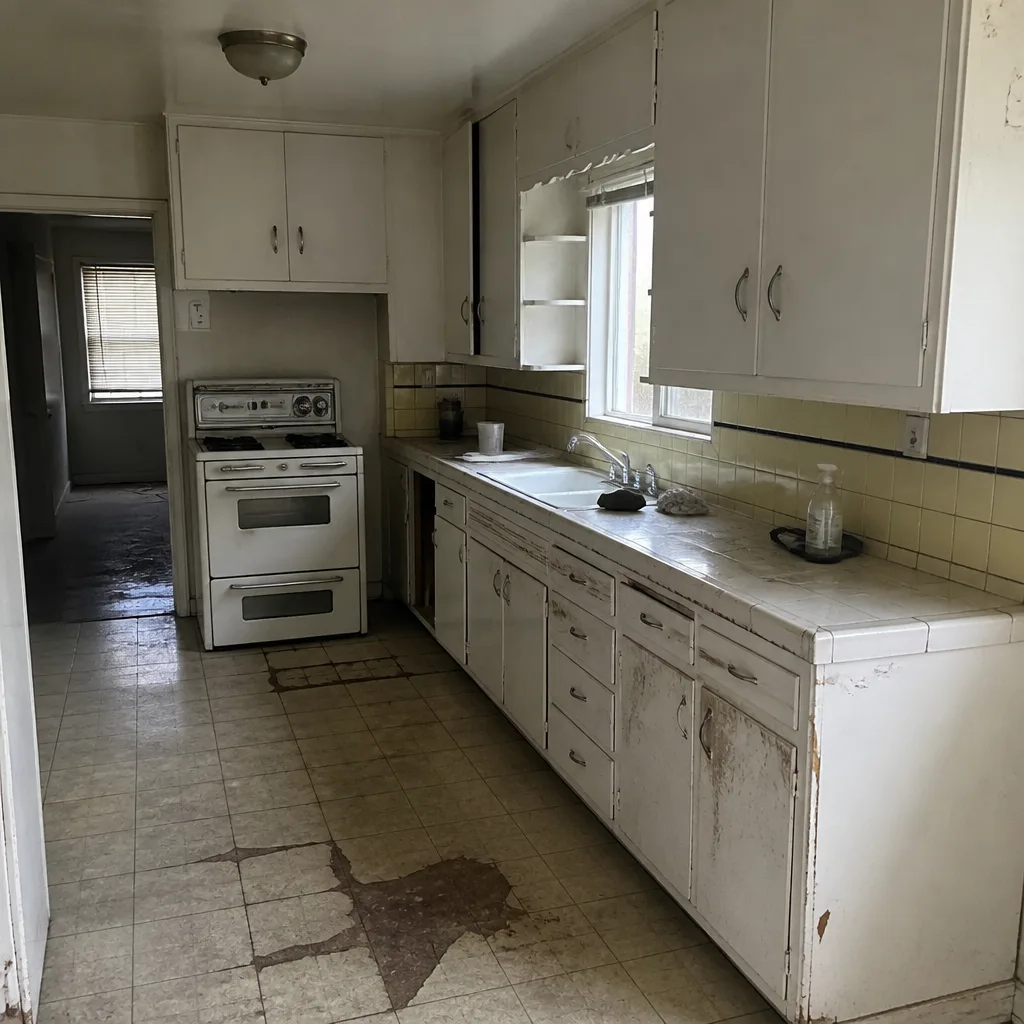 Before
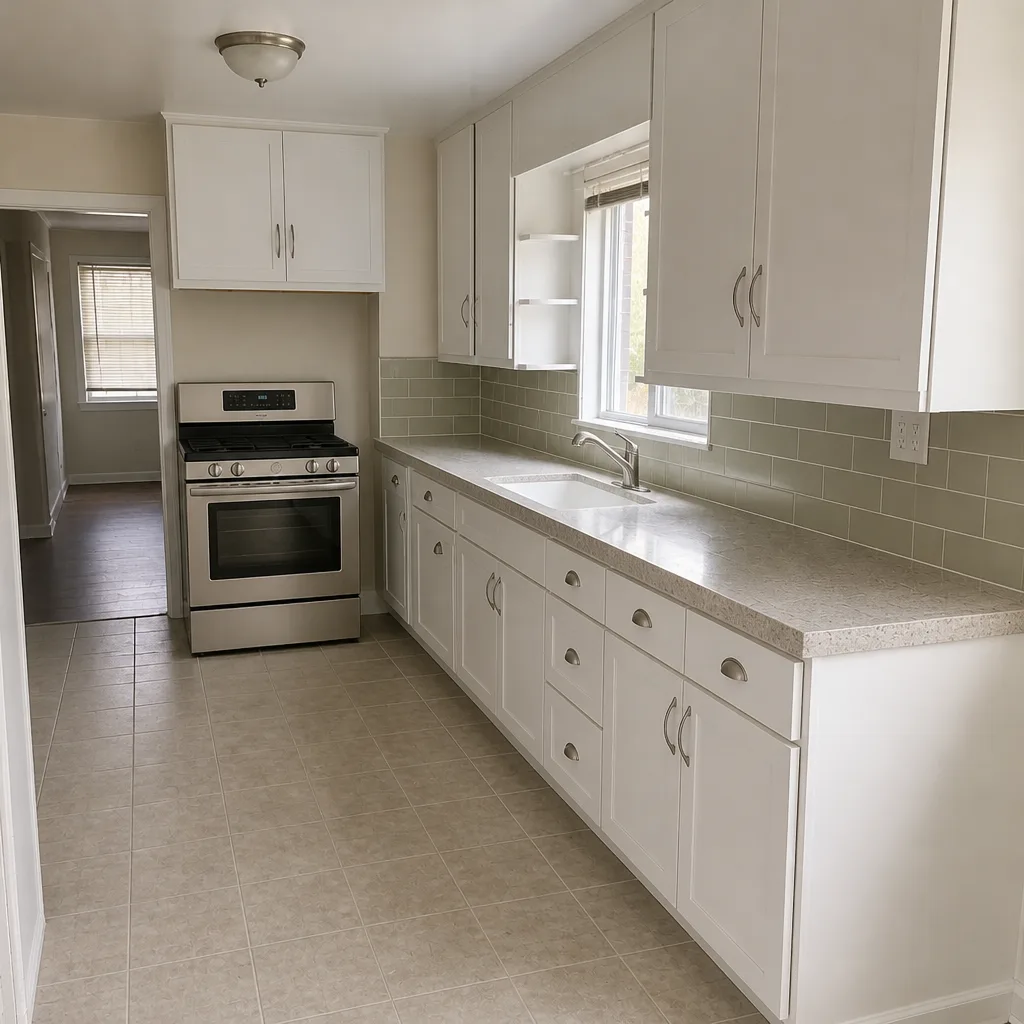 After
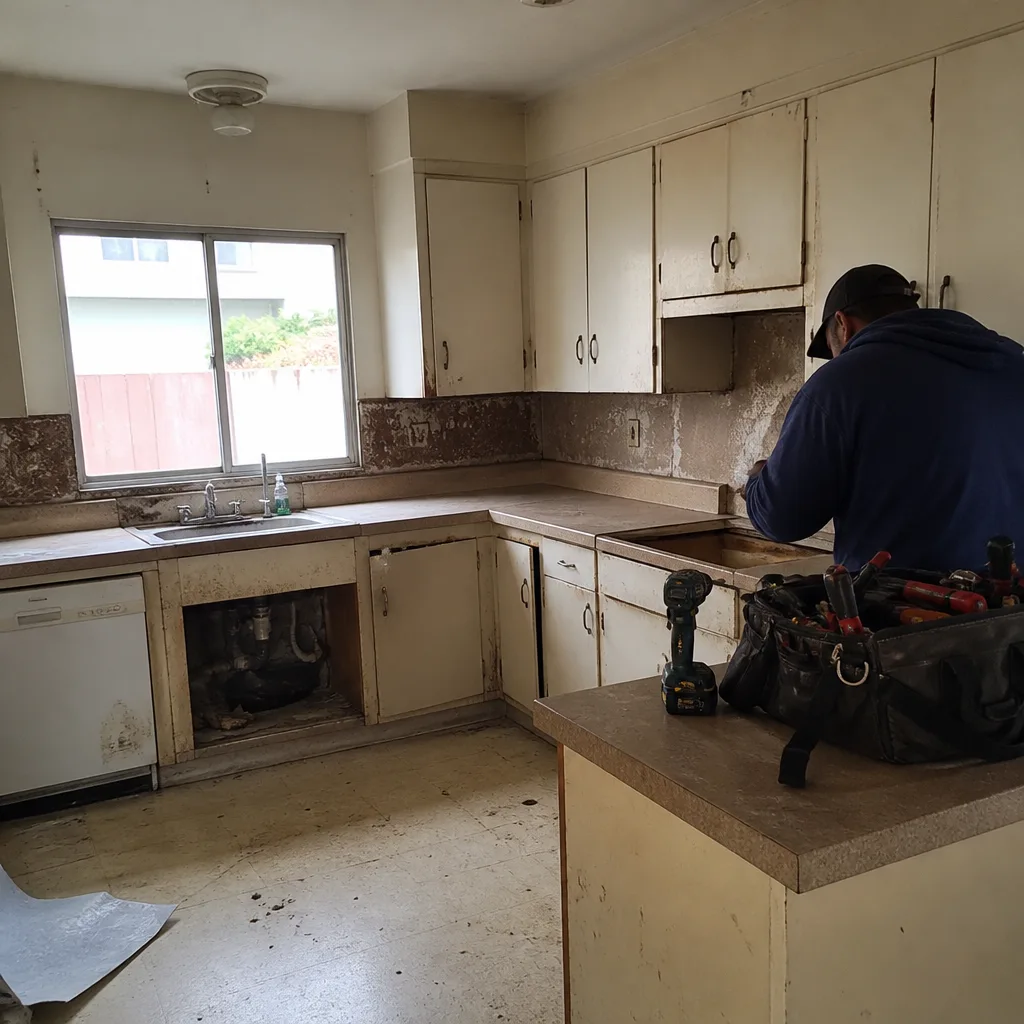 Before
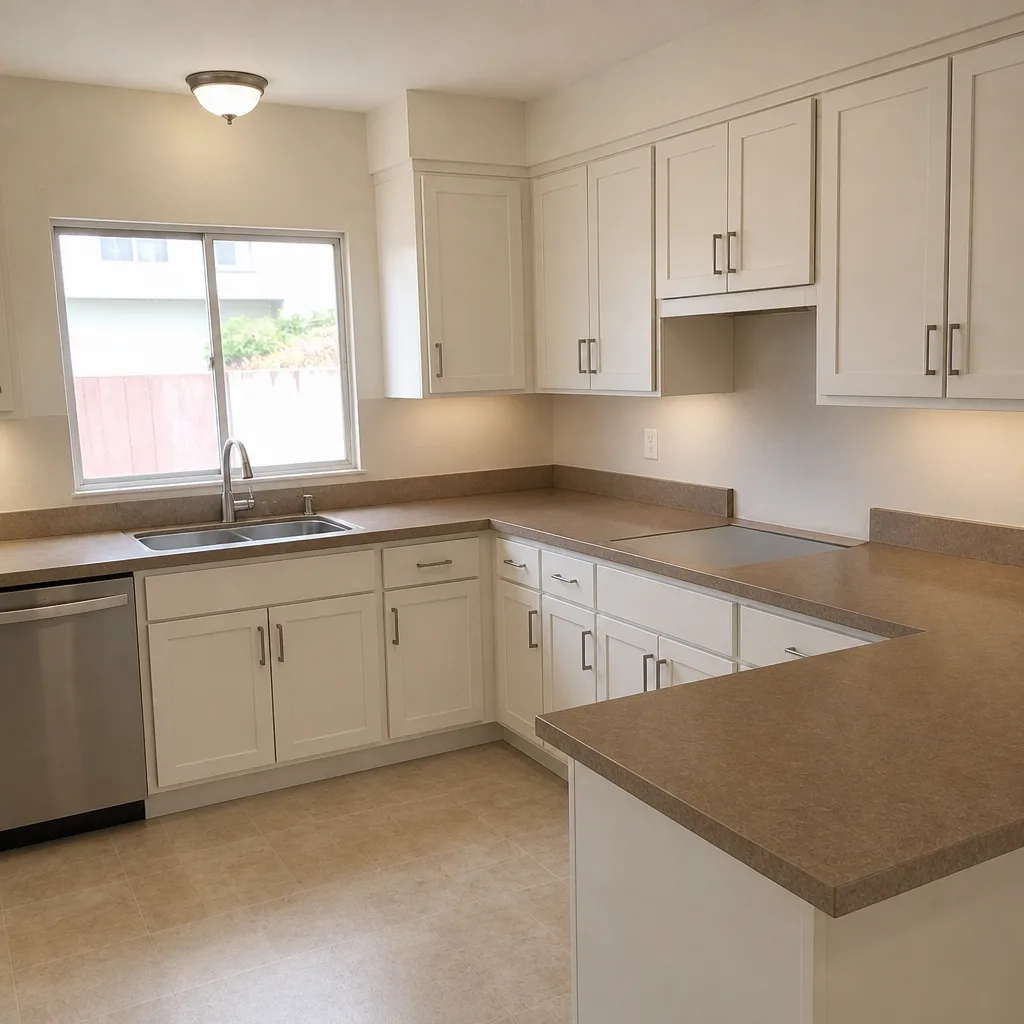 After
When to Call a Professional
Some of what this guide covers, you can check yourself – the CSLB license, the insurance certificate, the contract language. But there are moments where a real conversation with a competent local team saves you weeks: you’re comparing three bids and can’t tell which is honest, you’ve had a contractor walk off a job and need an assessment before continuing, you’re planning an ADU or a major remodel and want a written number with a scope you can actually read, or you’re working with a home where the hidden conditions are the whole question. That’s where we come in. Penhallow Remodeling Long Beach offers free estimates in Long Beach – call (833) 510-6967 to schedule yours. You’ll get a written price before any work starts, and the number on day one will be the number on the invoice. Our technicians have up to 22 years of experience and are background-checked, and a real person answers the phone 24/7.
Frequently Asked Questions

No written price before work starts. A verbal estimate with “we’ll see what we find” attached to it isn’t a price – it’s a placeholder, and placeholders are where change orders live. If a contractor won’t commit to a written number before demo day, there is no number you can hold them to. Call (833) 510-6967 for an exact written quote – estimates are free.
Bathroom remodels in Long Beach typically run $12,000 – $35,000 depending on scope, tile, and whether the plumbing or electrical has to move. Kitchen remodels typically run $18,000 – $55,000 depending on layout, cabinet line (KraftMaid and Wellborn both sit in a range of options), and countertop material – Cambria, Silestone and Caesarstone all price differently. ADU additions and full-home remodels are larger projects and are quoted individually. Call (833) 510-6967 for an exact written quote on your project.
It shouldn’t, and the contract should guarantee it. The only legitimate price changes are (a) a hidden condition the contract specifically addresses in writing, or (b) a change order you approve, in writing, before the work is done. Everything else is a price change you didn’t agree to. Ask every contractor you interview: “Does the price I sign change, and if so, how?” If the answer is vague, the answer is yes.
Permits in Long Beach run on a real timeline through the city’s Development Services, and the length depends on the scope – an ADU takes longer than a bathroom. A contractor promising a permit in a week or two is either not pulling the permit or not being honest with you. Both are warnings. Ask for the permit number once it’s issued, and confirm it’s in the contractor’s name, not yours.
Ask two questions: how long is it, and who pays for a return visit? A real guarantee names the term in writing and covers the labor for the fix – not just the diagnosis. A manufacturer’s warranty on a product (Cambria’s lifetime warranty, for instance) sits alongside the workmanship guarantee, and the two together are what actually protects you. Call (833) 510-6967 and ask about our 365-Day Done Right Promise in plain terms – we’ll walk you through exactly what it covers.
Yes. Every permit on a project we run is pulled in our name, and we close it out at final inspection. Permits are the contractor’s responsibility, not yours, and a permit that’s never finalized is worse than no permit at all. Call (833) 510-6967 to talk through what a permit looks like for your project – estimates are free.
The Bottom Line
The contractor warning signs in Long Beach come down to a single question: does this contractor put a number, a timeline, and a guarantee in writing before the work starts? If they do, the rest of the project is a conversation about scope. If they don’t, the rest of the project is a series of conversations about money. The warning signs we’ve covered – verbal pricing, fast permit promises, vague material language, overcommitment, guarantees that won’t survive a second read – are all versions of that same question. Read the contract. Ask the questions. Get the number in writing. Everything else gets easier from there.
Our technicians have up to 22 years of experience, we’re part of the Kingswell family of companies operating to The Kingswell Way, and every project comes with a written price before work starts, a background-checked and uniformed crew, and the 365-Day Done Right Promise. For a broader look at how we approach a whole home, start with the Penhallow Remodeling Long Beach home page.
Contact

Ready to get a real number on paper? Call (833) 510-6967 for a free estimate on your Long Beach remodel. A real person answers 24/7, and every estimate includes a written price, a written scope, and the guarantee in plain terms – so you know exactly what you’re buying before any tool comes out of the truck. We’ll walk you through the warning signs you should be watching for, and we’ll show you why a written number before demo day is the only number that matters.
Written by the team at Penhallow Remodeling Long Beach.