Last updated November 17, 2026

Free written scope consultation - allowances, timeline, and change-order rules on paper before a single trade is scheduled
DIY vs Professional Bathroom Remodeling: What’s Safe to Do Yourself
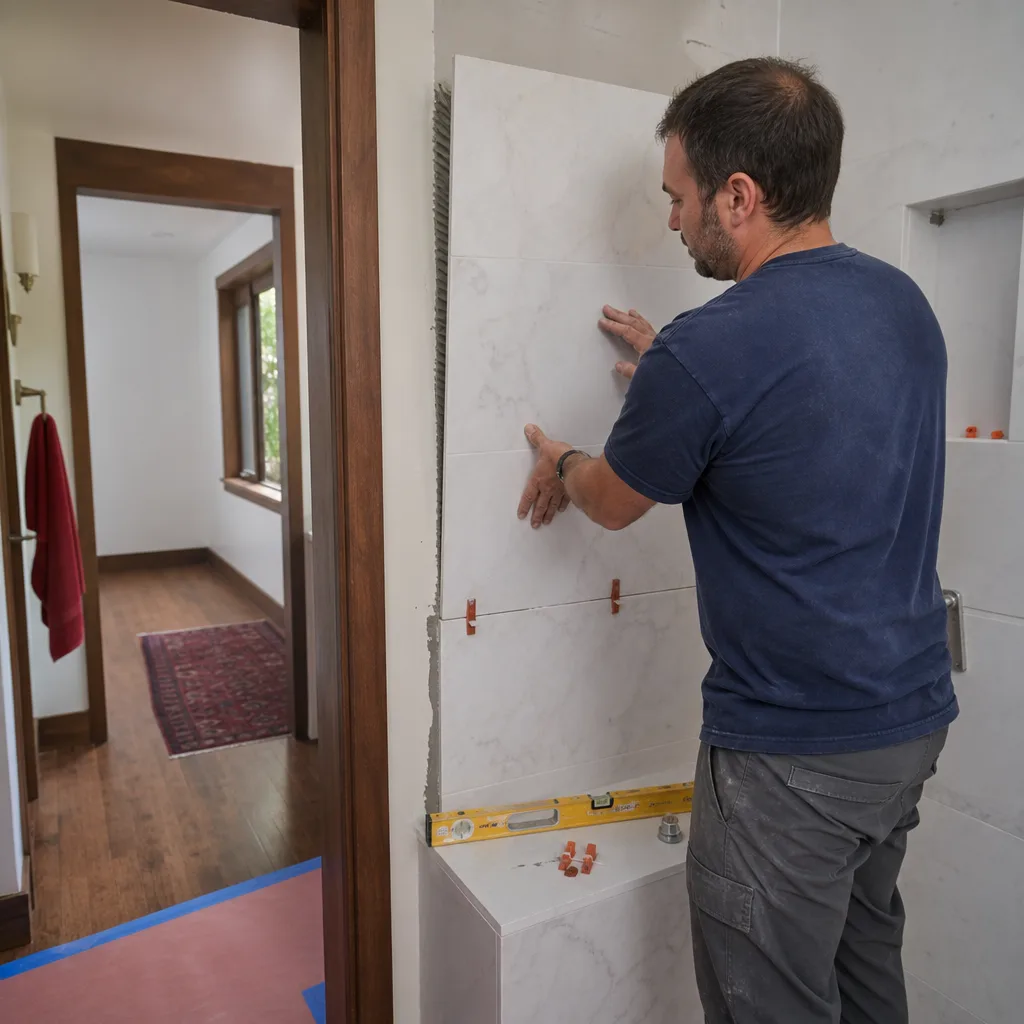
Tiling your own shower walls can save $800 – $1,200 in labor. Then the waterproofing membrane underneath fails, the ceiling below stains, and the insurance adjuster asks who pulled the permit. Homeowners in Long Beach who call us after a DIY gone sideways almost always say the same thing: the visible work looked fine, the hidden work didn’t. Bathrooms concentrate plumbing, electrical, and waterproofing in one wet, heavily inspected space, which gives this room the highest ratio of “looks doable, legally isn’t” tasks in the house. This guide separates the genuine weekend wins from the jobs that create liability long after the last tile is set.
Quick Answer
In Long Beach, you can safely and legally do finish work yourself: vanity swaps where plumbing already exists, toilet replacement, paint, mirror and accessory installation, and light cosmetic tile if you’re confident in your prep. You cannot legally do new or relocated plumbing or electrical work yourself in California without a permit and the proper license, and shower waterproofing is the single task most DIYers get wrong. Hire out anything behind the wall, anything that requires a permit, and anything where a failure causes water damage. Everything else is fair game.
Styles & brands we work with
- Kitchen remodeling
- Bathroom remodeling
- Home additions & ADU
- Roofing
- Windows & doors
- Driveway & pavers
- Fence
Table of Contents
- What California Law Actually Lets You Do Yourself
- Why Shower Waterproofing Is the Task DIYers Get Wrong
- The Safe DIY Wins: Vanity, Toilet, Paint, and Mirrors
- How Unpermitted Plumbing Affects Your Insurance
- The Long Beach Permit Process, Step by Step
- When a GC Supervising Your DIY Is Cheaper Than Redoing It
- Long Beach Climate, Older Housing Stock, and What They Change
What California Law Actually Lets You Do Yourself
Here’s the part that surprises people: California gives homeowners more room than most states, but the room has firm edges. The California Contractors State License Board allows a homeowner to perform work on their own owner-occupied single-family residence without a contractor’s license. What it doesn’t allow is skipping the permit. Depending on your scope, bathroom work can require a building permit, a plumbing permit, an electrical permit, or all three, and the permit is what triggers inspection of the hidden work.
Two categories are effectively off-limits to a homeowner regardless of skill:
- New or relocated plumbing. Moving a drain, adding a supply line, or rerouting a shower valve usually requires a licensed plumber to pull and sign off on the plumbing permit. You can swap a faucet cartridge or replace a toilet that sits where the old one did; you can’t relocate the flange and have it pass inspection.
- New or extended electrical circuits. Adding a GFCI outlet, running a circuit for a heated towel bar, or relocating an existing outlet requires a licensed electrician. Replacing a light fixture on an existing circuit is a reasonable DIY task. Pulling wire behind drywall is not.
What’s genuinely open to you: cosmetic surfaces, fixtures on existing connections, paint, and finish work. The line is always the same – if it’s behind the wall, under the floor, or requires a permit that names a licensed trade, it’s a professional job. Everything you can see and touch without opening a wall is a job you can probably handle.
Why Shower Waterproofing Is the Task DIYers Get Wrong
A shower is a wet box built inside a dry house, and the waterproofing is what keeps the two separated. The professional standard is a full waterproofing membrane over cement board substrate (the moisture-resistant layer behind your tile) or a bonded sheet membrane applied over the tile substrate, with a sloped shower pan that moves water toward the drain. Water finds the path of least resistance, and any gap, pinhole, or unsealed screw through the membrane becomes that path.
What we see on DIY showers in Long Beach is consistent:
- Backer board installed without the manufacturer’s sealant at seams and corners, so water wicks into the wall cavity.
- A shower pan that’s flat instead of sloped, holding a shallow puddle that never drains and eventually softens the framing.
- Nails or screws driven through the membrane to hold backer board, each one a leak waiting for its first test.
- No pre-slope under the traditional mortar bed, which means the liner above it holds standing water permanently.
The visible problem shows up six to eighteen months later: a hairline crack in the grout, a swollen baseboard on the other side of the wall, or a ceiling stain in the room below. By then the mold has established, the framing has softened, and the repair cost usually exceeds what the homeowner saved by tiling it themselves. In our experience, a shower rebuild that fails waterproofing is a $2,500 – $6,000 tear-out on top of the original labor and material. If you want to tile, by all means tile – but have a professional build and water-test the pan and set the membrane. That division of labor saves real money without putting your framing at risk.
The Safe DIY Wins: Vanity, Toilet, Paint, and Mirrors
These are the jobs where DIY pays off and the risk stays low. Each has a short list of tools and a clear stopping point if you discover something that needs a professional.
Vanity replacement (existing plumbing location)
- Turn off both supply valves under the sink and confirm the water stops.
- Disconnect the supply lines and the P-trap; set a shallow pan underneath.
- Remove the old vanity – check the wall behind it for soft drywall or staining before installing the new one.
- Level the new cabinet, reconnect the existing supplies and drain, and check for leaks over 24 hours.
Tools: adjustable wrench, bucket, level, caulk gun, and a helper. You’ll spend $120 – $350 on tools and supplies. If the existing supply lines are brittle or the shutoff valves won’t fully close, stop and call a plumber – that’s a $150 – $250 repair, not a DIY hill to die on.
Toilet replacement
Swapping a toilet in the same location is one of the cleanest DIY jobs in the house. A new toilet runs $200 – $450 for a mid-range model from a recognized brand like Toto, plus $15 – $30 for a new wax ring and bolts. The job takes under two hours. The skill test is the wax ring seal and the supply line connection – if neither winds up leaking after a day, you did it right.
Paint, mirrors, and accessories
Bathroom paint is a weekend job, with one caveat: use a satin or semi-gloss finish rated for moisture. A basic 100-square-foot bathroom costs $60 – $120 in paint and supplies. Mirror hanging, towel bar installation, and accessory placement are all straightforward, provided you find the studs or use rated anchors for anything over 15 pounds. Tile baseboards, backsplashes, and floor tile on a flat concrete slab are also reasonable DIY – but do the layout dry before you mix thinset.
How Unpermitted Plumbing Affects Your Insurance
This is the cost nobody calculates upfront. Homeowners insurance generally covers sudden, accidental water damage – a burst supply line, a failed toilet seal, a slow leak from a supply fitting. But virtually every policy contains an exclusion tied to unpermitted work. If a water-damage claim traces back to a plumbing change you did without a permit, the adjuster can deny the claim, and in some cases the denial extends to the entire water-damage loss, not just the plumbing work itself.
Consider the numbers. A slow leak behind a vanity that travels into the subfloor and warps the flooring in the adjacent bedroom commonly runs $8,000 – $18,000 to remediate in Long Beach – drywall, flooring, baseboards, mold treatment, and refinishing. If that leak traces back to an unpermitted vanity relocation, you’re paying that out of pocket. A permit for a bathroom plumbing alteration typically runs $200 – $500 depending on scope and inspection count. You’re insuring a five-figure downside for a three-figure fee.
There’s a second layer. When you sell a home in California, unpermitted work must be disclosed. Buyers and their agents know what that means, and many will negotiate a credit or walk away entirely. Lenders can also balk. The permit isn’t paperwork for its own sake – it’s the record that lets an inspector confirm the work is safe, and the record that lets your insurance company and a future buyer know it was done right.
The Long Beach Permit Process, Step by Step
Long Beach handles permits through its Development Services Center, and for a bathroom remodel the sequence usually looks like this:
- Define scope. A cosmetic renovation (paint, fixtures in place, no wall movement) often requires no permit. Anything involving plumbing rough-in, electrical rough-in, or structural changes does.
- Submit plans. A basic bathroom plan showing layout, fixture locations, and (if applicable) electrical and plumbing changes. Simple projects can sometimes be permitted over the counter.
- Pay fees and pull the permit. Permit costs climb with scope – a like-for-like fixture replacement costs less than a relocation with new DWV (drain-waste-vent) work.
- Open-wall inspection. The rough plumbing and electrical are inspected before drywall goes up. This is where unpermitted work usually fails – the inspector wants to see the pipe, the wire, and the waterproofing before they disappear.
- Final inspection. Fixtures installed, waterproofing set, electrical live, and the job signed off.
The timeline is typically two to four weeks from submission to first inspection for a straightforward bathroom, though older Long Beach housing stock – and much of the city is pre-1960 – can extend the process if plans examiners want additional detail about how the new work ties into legacy plumbing or older wiring. Budget for that. A permit pulled on the front end is a permit you’re not scrambling to obtain after an inspector knocks. If you hire through our General Contractor in Long Beach service, we pull the permit, schedule every inspection, and hand you the signed card at the end.
When a GC Supervising Your DIY Is Cheaper Than Redoing It
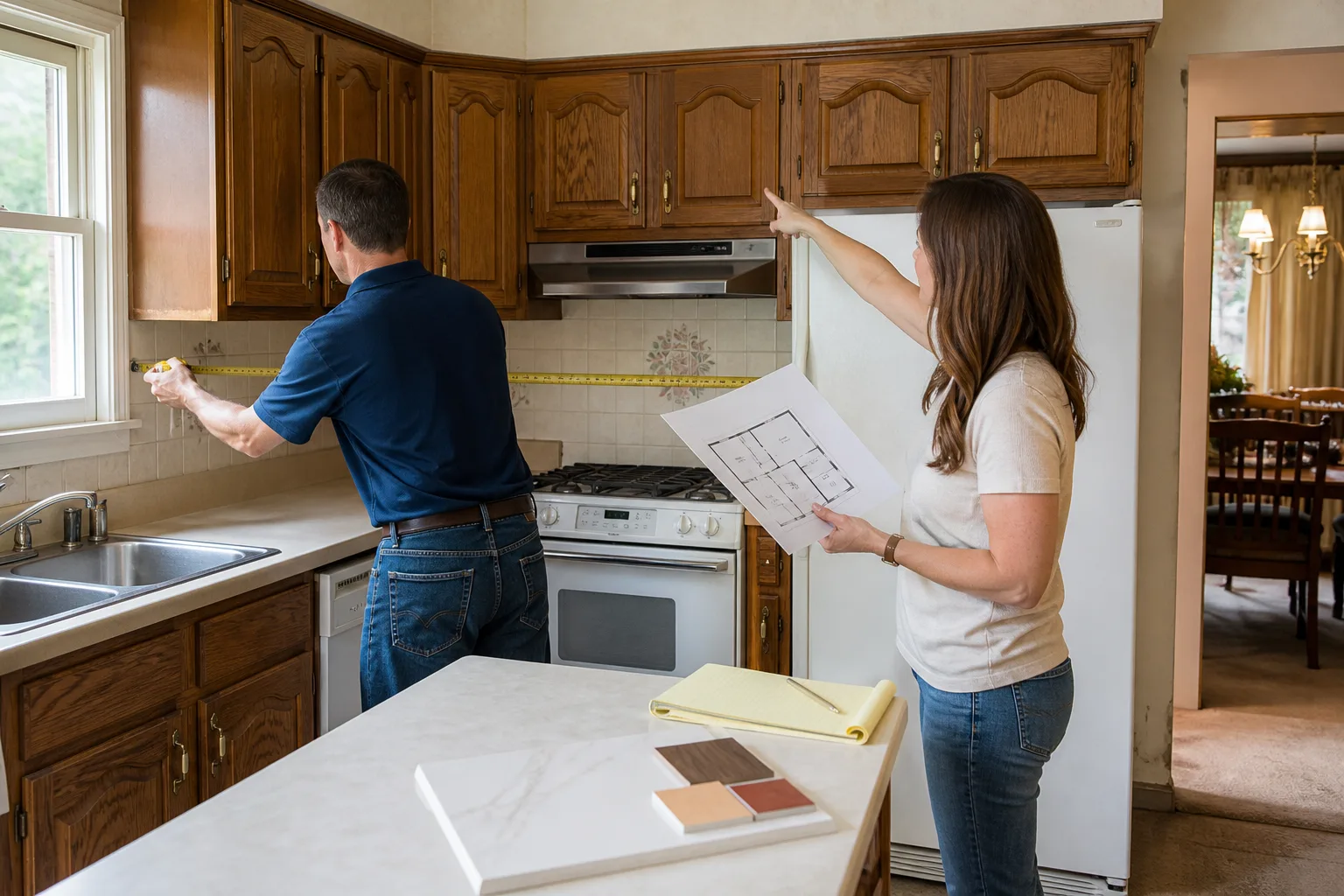
There’s a middle path that most DIY-versus-hire articles skip: you do the finish work, a general contractor pulls the permits, handles the rough trades, and supervises the sequencing. It looks expensive on paper, and it almost always costs less than doing the whole job yourself and redoing the parts that fail inspection.
Consider what a supervised approach typically looks like on a mid-size Long Beach bathroom renovation running $18,000 – $35,000 all-in:
- GC handles: permits, plumbing rough-in by a licensed plumber, electrical rough-in by a licensed electrician, shower pan and waterproofing, and inspections.
- You handle: tile setting (once the membrane has been water-tested and signed off), paint, vanity installation, mirror and accessory hanging, and final cleanup.
- Net savings vs full-service: typically $2,500 – $5,500 in labor, with a fully permitted, fully inspected, insured job behind it.
That structure works because it matches the actual risk. The rough work is where the danger lives, and that’s what the GC and licensed trades cover. The finish work is where the visible satisfaction lives, and that’s what you get to do yourself. It’s also the fastest path to the professional result you’re after – the reason most DIY bathrooms look amateur isn’t the tile craft, it’s the prep underneath. If you’re curious what the full-service version of that number looks like in the current market, our Bathroom Remodeling in Long Beach page walks through realistic line items.
Long Beach Climate, Older Housing Stock, and What They Change
Long Beach is a marine climate. The coastal humidity sits higher than inland Southern California most of the year, which means a bathroom with poor ventilation develops surface mold faster and any hidden moisture problem shows itself sooner. That raises the stakes on exhaust fan sizing, on the membrane seal, and on wall cavity ventilation. It’s not a reason to avoid DIY, it’s a reason to be exceptionally careful about waterproofing and ventilation if you do.
Housing stock matters just as much. Much of Long Beach – Belmont Shore, Bluff Park, Rose Park, and the older blocks of Bixby Knolls – was built before 1960, which usually means galvanized supply lines, cast iron drain stacks, and framing that’s been wet at least once already. A vanity swap in one of these homes sometimes surfaces a brittle shutoff valve or a supply line that won’t reconnect cleanly. A tile install can reveal that the subfloor wasn’t level to begin with. The visible job you signed up for is usually 15% to 25% smaller than the job you actually have once you open the wall. Budget for the surprise, and if a surprise turns into structural work or a plumbing relocation, that’s when the permit and the licensed trade come in.
Down in newer pockets of the city and in some of the condos near downtown, the issues are different – shared walls, HOA rules on inspections, and tight plumbing chases that make a modest relocation cost more than expected. If you’re in a condo, check whether your HOA requires its own inspection and whether the association’s master policy or your HO-6 policy covers water damage from the wall outward vs inward. That distinction is worth $200 in a phone call and can save you the cost of an uninsured claim.
Wherever you are in Long Beach, the pattern is the same: the finish work is more forgiving than it looks, and the rough work is less forgiving than it looks. Plan around that split and you’ll get the savings without the failure.
Common Mistakes to Avoid
- Starting demo before confirming the permit scope. Homeowners frequently tear out a shower wall before checking whether the project requires a permit. Once the wall is open, the inspector wants to see the rough plumbing and the membrane, and if the plumbing was moved without a permit, you’re paying to open the job back up and redo it.
- Waterproofing without a slope test. A shower pan needs a visible slope toward the drain and a water test of at least 24 hours. Skipping the test is how homeowners find out in month eight that the pan is flat.
- Using regular drywall behind tile. Green board is not waterproofing; it’s moisture-resistant. In a wet area, it’s cement board or a bonded membrane over the proper substrate, or the substrate will fail.
- Relocating a toilet flange without a plumber. Off by half an inch and the toilet rocks, the seal fails, and you’ve got water under the floor. Drains rely on the slope and the vent, and both are licensed work for a reason.
- Hanging a heavy mirror on drywall anchors. A 40-pound mirror needs studs or a rated anchoring system. In older Long Beach homes, lath-and-plaster walls don’t hold anchors the same way modern drywall does.
- Undersizing the exhaust fan. The bathroom fan should be rated for the room’s cubic footage, and it should vent outside, not into the attic. A 60 CFM fan in a 100-square-foot bathroom is doing nothing.
- Painting over moisture damage. If the paint on the ceiling above the shower is bubbling or flaking, that’s a moisture signal, not a paint signal. Find the source before you re-paint; the next coat fails the same way.
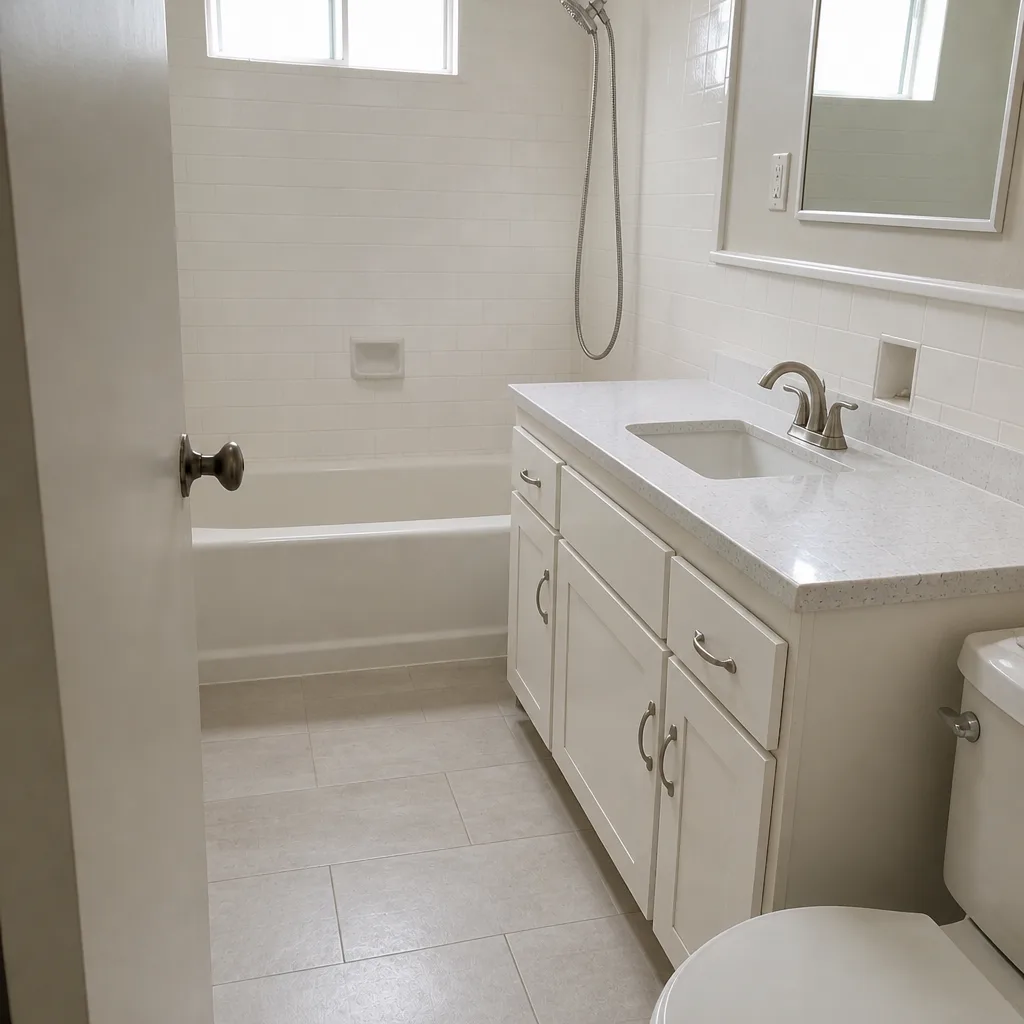
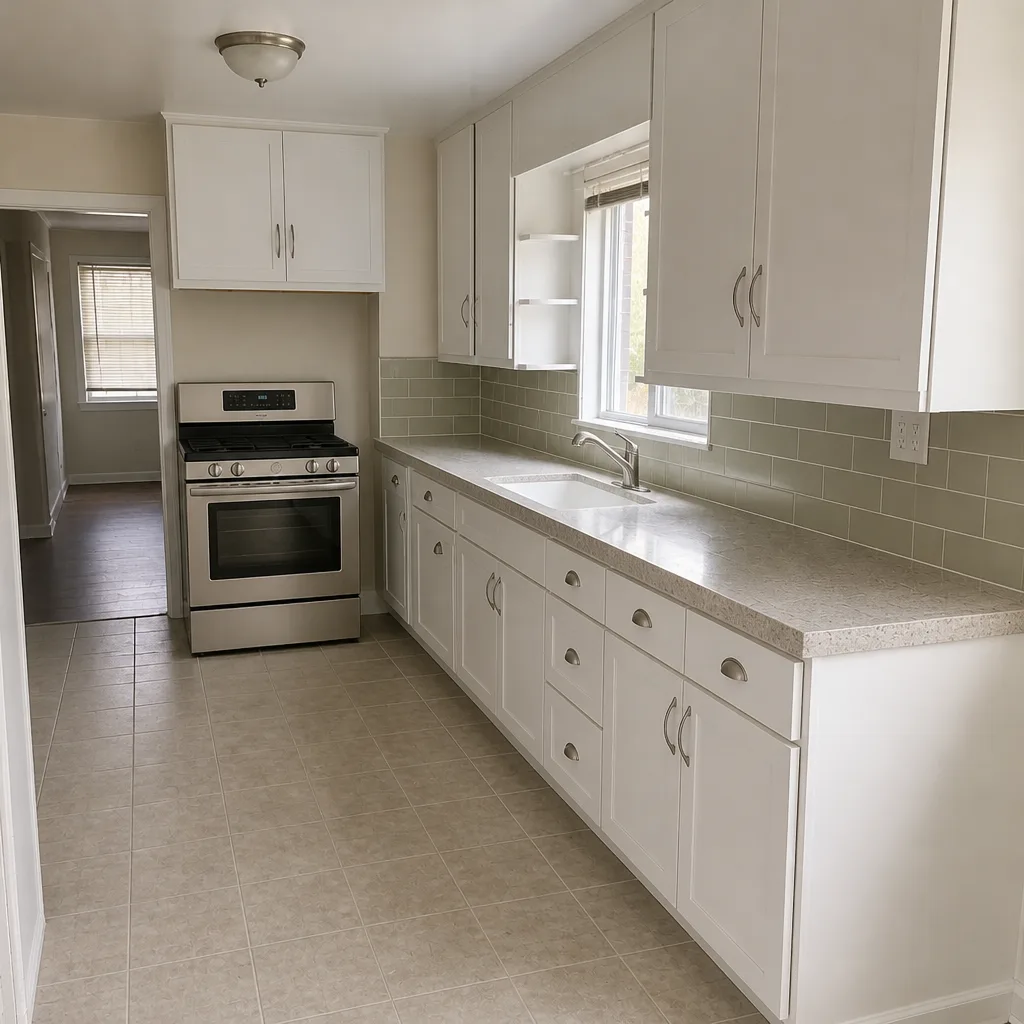
See the difference
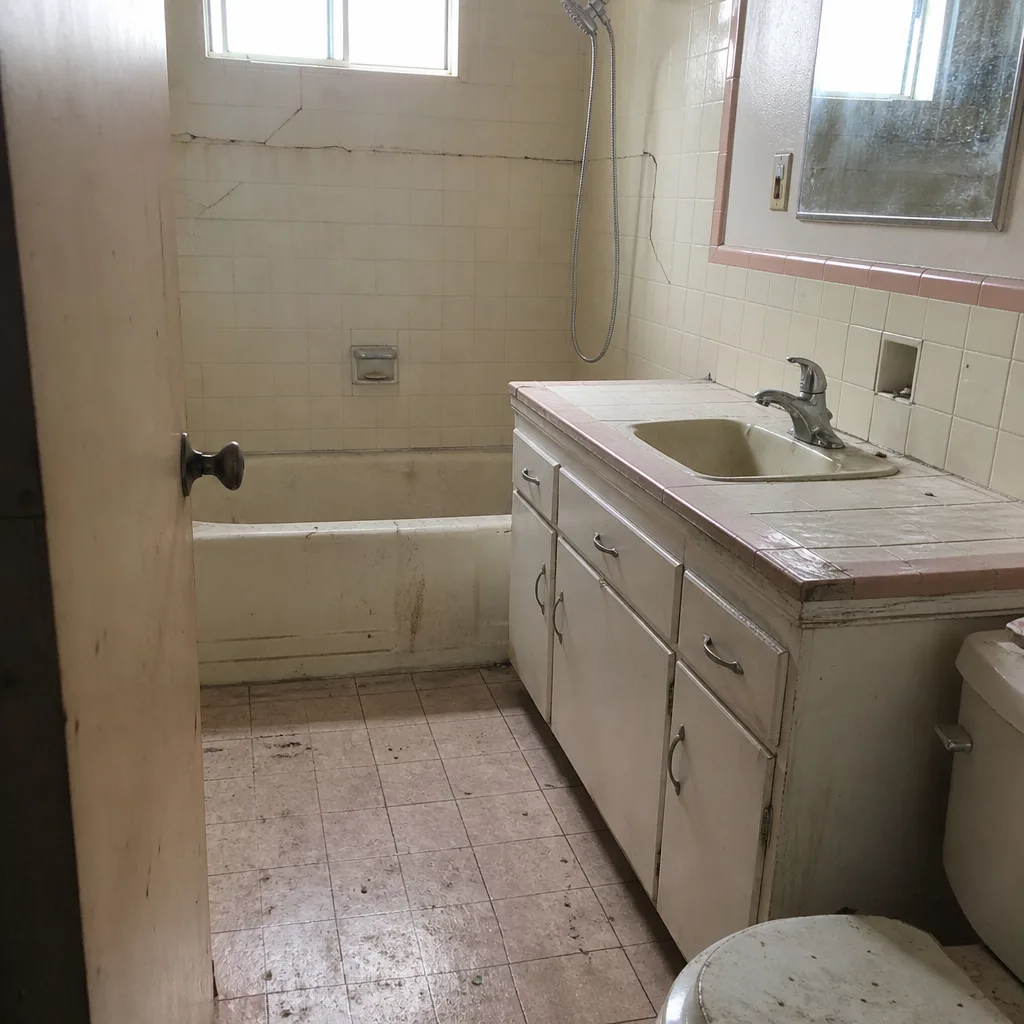 Before
 After
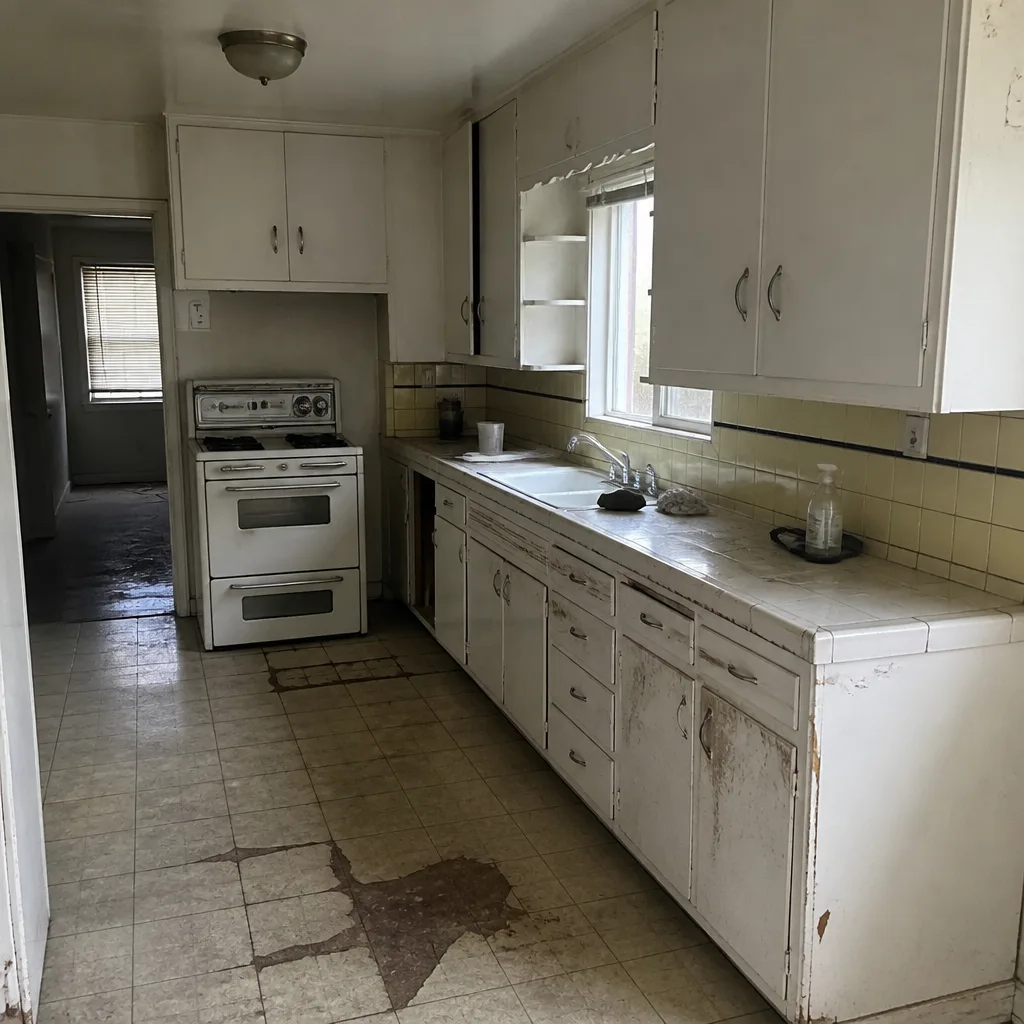 Before
 After
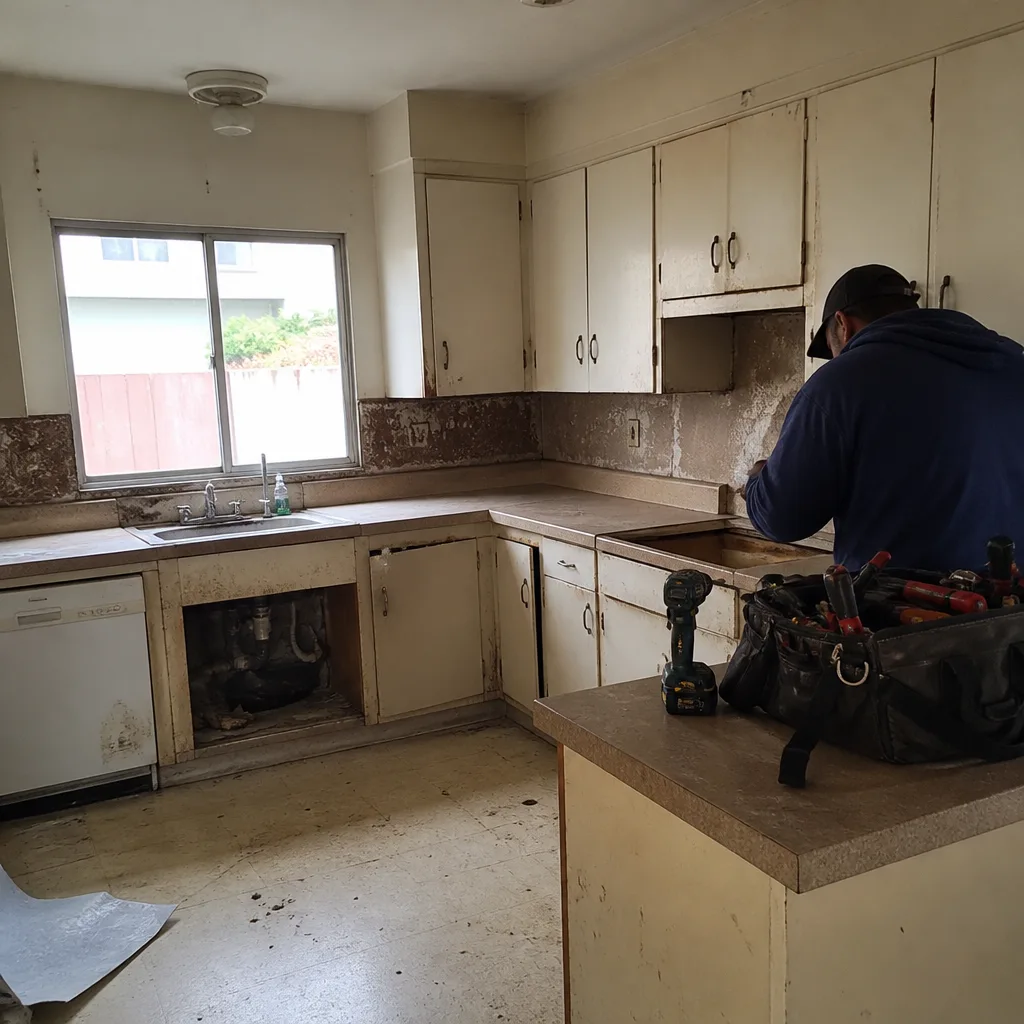 Before
 After
When to Call a Professional
Call a professional – the licensed trade or a general contractor – for anything behind the wall, anything that requires a permit, and anything where a failure causes water damage or electrical risk. That means plumbing rough-in, electrical rough-in, shower waterproofing and pan, structural changes, and any work where you discover older wiring, galvanized supply lines, or previous unpermitted work under the surface. It also means anything that requires moving a fixture or opening a wall you’re not prepared to close up correctly yourself. The judgment call is simple: if you can see the finished surface and the failure mode is cosmetic, you can do it. If the finished surface hides the work and the failure mode is water or fire, you shouldn’t.
Penhallow Remodeling Long Beach offers free estimates in Long Beach – call (833) 510-6967. We pull the permits, schedule every inspection, and provide a written price before any work starts, so the number on day one is the number on the invoice. Background-checked, uniformed technicians arrive on every job, and every project carries our 365-Day Done Right Promise in writing. If you want a supervised hybrid plan or a full-service remodel, our Kitchen Remodeling in Long Beach team handles multi-room work in the same house, and our Penhallow Remodeling Long Beach home page lists the full scope. Fixtures and finishes come from brands like Kohler and Moen, and cabinets from KraftMaid and Wellborn, so the products behind the guarantee match the promise itself.
Frequently Asked Questions
Yes, for your own owner-occupied single-family home, California allows you to perform the work yourself without a contractor’s license. What you cannot do is skip the permit or perform new plumbing and electrical work that requires a licensed trade to sign off. If your project involves moving a drain, adding a circuit, or changing the shower pan, those components require a licensed plumber or electrician and a permit. Call (833) 510-6967 for a free estimate if you’d like a professional opinion on your specific scope before you start.
The safe DIY list includes vanity swaps where plumbing stays in place, toilet replacement in the same location, paint, mirror and accessory installation, and light cosmetic tile work with proper prep. These are jobs where the failure mode is cosmetic and correctable. The unsafe list includes anything behind the wall: waterproofing, plumbing rough-in, electrical rough-in, structural changes, and shower pan construction. That list is where DIY work creates liability that outlasts the project.
A mid-size Long Beach bathroom remodel typically runs $18,000 – $35,000 all-in, depending on layout changes, fixture grade, tile selection, and whether the rough plumbing and electrical need to be replaced. A cosmetic refresh with paint, new fixtures, and a vanity lands closer to $4,500 – $9,000. A full gut with layout changes runs $35,000 – $55,000 or more. Call (833) 510-6967 for an exact quote specific to your bathroom – estimates are free and the written price covers the scope before any work starts.
Yes. Most policies exclude losses tied to unpermitted work, and a water-damage claim that traces back to plumbing you changed without a permit can be denied in whole or in part. In Long Beach, a plumbing alteration permit typically runs $200 – $500 depending on scope. The tradeoff is a three-figure permit fee against a five-figure uninsured repair, which is why we pull permits on every project that needs one. Call (833) 510-6967 to talk through the permit scope on your project.
Because waterproofing is hidden work with an invisible failure mode. The membrane has to be continuous, the pan has to be sloped, and any screw hole through the membrane becomes a future leak. Most DIY failures come from skipped water testing, backer board seams set without the manufacturer’s sealant, or a pan that’s flat instead of sloped. The visible failure – a cracked grout line, a swollen baseboard – shows up six to eighteen months later, by which point the tear-out cost exceeds the original labor savings.
Yes, and in many cases it’s the most cost-effective path. A GC pulls permits, handles rough plumbing and electrical through licensed trades, and sets the waterproofing – you handle tile, paint, and finish. That structure typically saves $2,500 – $5,500 in labor while keeping a fully permitted, inspected, insured job behind the work. We offer that hybrid model; call (833) 510-6967 to talk through what it looks like for your bathroom.
The Bottom Line
Bathroom remodeling in Long Beach is more DIY-friendly than it looks, provided you respect the split between finish work and rough work. Paint, vanity swaps, toilet replacement, and mirrors are safe, satisfying wins that save real money. Waterproofing, plumbing rough-in, electrical rough-in, and anything that requires a permit are not. The two rules that matter: get the permit when the scope requires it, and hire out the hidden work so the visible work lasts. Do both and you’ll get the savings without the liability. Call (833) 510-6967 for a free estimate, a written price, and a plan – we’re a licensed general contractor with 365-Day Done Right Promise coverage on every project.
Written by the team at Penhallow Remodeling Long Beach.