Last updated November 17, 2026







Free written scope consultation - allowances, timeline, and change-order rules on paper before a single trade is scheduled
Bathroom Remodeling Troubleshooting: Common Problems and How to Fix Them
Grout cracking within a year of a bathroom remodel is almost never a grout problem. In our experience, it’s a deflection problem in the substrate beneath, one that a tile setter working over an inadequate backer board can’t fix by switching brands. The crack will come back because the surface wasn’t the issue. What failed is below the tile, behind the waterproofing, in the layers nobody sees once the job is finished. Homeowners across Long Beach call us about the same handful of symptoms, and roughly eight in ten trace back to a decision made before the first tile was set. This guide covers how to tell a cosmetic flaw from a structural one, which repairs are honest and which are band-aids, and what recourse you actually have.
Quick Answer
Most bathroom remodel problems come down to three causes: inadequate substrate (the rigid layer the tile sits on), failed waterproofing (the moisture barrier behind or beneath tile), or poor moisture management in a room that stays damp. Cosmetic failures are surface-level and repairable. Structural failures – cracking that returns, soft spots, mold reappearing – usually require opening the wall or floor to fix correctly. If the work was done under a written guarantee, a defect may be a warranty claim rather than a new charge.
Styles & brands we work with
- Kitchen remodeling
- Bathroom remodeling
- Home additions & ADU
- Roofing
- Windows & doors
- Driveway & pavers
- Fence
Table of Contents
- Cosmetic vs. Structural: How to Tell Them Apart
- Substrate Choices: Schluter, Cement Board, and Mud Bed
- The Mold-Behind-Tile Diagnostic
- How to Document a Defect So Your Guarantee Holds
- Repair or Tear Back to the Studs?
- Why Long Beach Bathrooms Fail Differently
- Common Mistakes to Avoid
Cosmetic vs. Structural: How to Tell Them Apart
Before you call anyone, you can sort most problems into two buckets with a few low-tech checks. This matters because cosmetic fixes are cheap and structural fixes are not, and paying structural money for a cosmetic issue – or the reverse – is how homeowners get burned. Here’s how to run the tests.
- The tap test. Tap along the wall with the handle of a screwdriver. A sharp, solid tap means the tile is bonded to a firm backing. A hollow or dull thud means the tile has separated from its substrate, and that void will eventually let water in.
- The flex test. Press firmly on the floor near a grout line. If the tile rocks or you feel movement, the subfloor is deflecting. Grout and caulk cannot fix a floor that moves.
- The stain test. Look for a rust or brown ring around a screw or fixture base. That’s usually water tracking down a fastener behind the wall, not a surface stain.
- The repeat test. If you’ve had the same crack patched twice, it isn’t cosmetic. Recurring failure is the clearest sign that the cause is deeper than the surface.
Surface grout haze, a single hairline crack along a change of plane, or a caulk line that’s shrunk in dry weather are cosmetic. Movement you can feel, tiles you can push, and cracks that return after repair point to the substrate. For homeowners near the coast, our bathroom remodeling in Long Beach page explains how we approach substrate when we build a shower from scratch.
Substrate Choices: Schluter, Cement Board, and Mud Bed
The layer under your tile is where durability is decided, and there are three common approaches. Knowing which one you have tells you a lot about how long the bathroom will last.
- Mud bed. A thick layer of cement over a wire lath, built by hand. It’s heavy, labor-intensive, and slower to install, but it’s rigid and it’s been the standard for generations. Fewer crews build them now because they take more skill and time.
- Cement board. A moisture-resistant sheet – you’ll hear it called cement board substrate – screwed to the wall behind tile. It’s a step up from drywall. Where crews cut corners is in the joints and waterproofing over it: cement board resists water but is not itself a waterproof barrier.
- Schluter system. A bonded waterproof membrane system installed over the substrate, with prefabricated corners, bands, and a sloped shower tray. It’s designed to keep water off the framing entirely, and it’s a common spec in newer remodels.
What you want to know is whether your shower has both a rigid backing and a continuous waterproof layer – bonded membrane, a properly lapped vapor barrier, or a sealed mud bed. Some Long Beach contractors skip the bonded membrane and rely on cement board plus a painted-on sealer, which is not the same protection. When we build a bathroom, the waterproofing is specified in writing before work begins, and the materials are drawn from trade brands we trust, including fixtures from Kohler and Moen. If your contractor’s quote names the tile and the vanity but never mentions the waterproofing, ask them to put it in writing.
The Mold-Behind-Tile Diagnostic
Mold on your caulk is one thing. Mold that keeps returning after cleaning, or a musty smell you can’t place, is a different problem. Here’s how to tell whether it’s living behind the tile.
- Smell test. A musty odor that lingers in the bathroom even after cleaning usually means hidden moisture – often in the wall cavity behind a shower.
- Grout discoloration. Dark staining that spreads along grout joints, rather than sitting on top of them, suggests water moving under the tile.
- Soft substrate. Around the shower valve or near the base of the tub, press on the wall. Softness or a spongy feel means the framing or subfloor has taken on water.
- Bubbling paint or loose trim. On the outside wall of a shower, paint that bubbles or trim that pulls loose points to moisture behind the wall.
If you find soft substrate or a spreading smell, the safe call is to have it opened and inspected. When that hidden moisture traces back to a waterproofing failure from a recent remodel, it’s often a warranty claim rather than a new remediation bill. Which brings us to documentation, because a written guarantee only helps if you use it correctly.
How to Document a Defect So Your Guarantee Holds
A guarantee backed in writing means something only if you can show the defect falls inside it. Most disputes we hear about come down to a homeowner with no documentation and a contractor who says the problem is unrelated to the work. Fair or not, records decide. Here’s how to build a case that a contractor with a written guarantee is obligated to respond to.
- Photograph early and often. Take clear photos with a ruler or coin for scale, from multiple angles, starting the day you first notice the issue. Include wider shots showing where it is in the room.
- Keep a dated log. Note when the problem started, what you cleaned or changed, and when you called. A simple list in your phone notes is enough.
- Keep the paper trail. Your written quote, the guarantee document, and any invoices are the foundation. If the waterproofing spec was written into the quote, save it – it’s your proof of what was promised.
- Report within the guarantee window. The 365-Day Done Right Promise covers defects for a full year after the work is done, so don’t wait for the problem to grow. Report the defect while you’re still inside the window.
When you file, describe the defect plainly and reference the guarantee. A contractor operating under a written standard has to respond, and if the work fails, they come back and fix it at no charge. For a good breakdown of how a written guarantee should read, see our general contractor in Long Beach page.
Repair or Tear Back to the Studs?
The blunt test: if the problem is above the tile, it’s a repair. If the problem is behind or beneath the tile and water or movement is involved, it’s usually a teardown. Here’s how to tell before you pay for the wrong fix.
- Repair territory. A single hairline crack in a grout line, failed caulk at a joint, a loose tile or two with no soft substrate around them, or surface mold on caulk that cleans up and stays clean. These are the low-cost fixes.
- Teardown territory. Any felt movement in the floor, hollow tap over a wide area, soft substrate, musty smell, or moisture behind the wall. These undermine the whole assembly, and patching the visible symptom just delays the bigger repair.
- The gray zone. A single loose tile over a solid wall, or a small area of failed waterproofing near a valve, can sometimes be opened, repaired, and re-tiled locally. A qualified contractor can tell the difference after a careful look.
What we won’t do is sell you a cosmetic reseal over a failing substrate and call it fixed. Our Penhallow Remodeling Long Beach home page lays out how we price a job and what the guarantee covers. If you’re comparing a repair quote against a full rebuild, ask each bidder the same question: what are you doing about the waterproofing under the tile?
Why Long Beach Bathrooms Fail Differently
Long Beach sits close to the ocean, and the marine air matters. Bathrooms here live in steady humidity with a lot of salt in the air, and that combination pushes grout, caulk, and exterior-facing walls differently than a dry inland climate would. Showers that never fully dry between uses are the common thread. A few specific things we watch for:
- Cross-ventilation gaps. Older Long Beach homes often have bathrooms with weak exhaust fans or none at all. A fan that runs a few minutes after a shower is not enough. Long, steamy sessions need real airflow, and a bath fan should run a good 20 minutes after the shower to pull moisture out.
- Salt-driven fastener corrosion. In coastal neighborhoods, screws and anchors around a shower valve can rust faster than inland. That rust ring is a tell that water is tracking where it shouldn’t.
- Soil movement in older neighborhoods. Long Beach has plenty of homes on older foundations, and slight settling shows up as movement in tiled floors. A floor that felt flat a few years ago can deflect enough to crack grout.
None of this is unique to any one address – it’s the general humidity and age pattern across Long Beach. When we spec a shower in Long Beach, we plan for continuous waterproofing and a vent fan sized to the room, not just enough to satisfy a builder’s minimum. You can see how that plays into our kitchen remodeling in Long Beach work too – same principle of keeping moisture where it belongs.
Common Mistakes to Avoid
- Re-grouting over a flexing floor. If the floor moves underfoot, fresh grout will crack within weeks. Fix the deflection first – grout is never the repair.
- Painting over mold instead of finding the moisture. A stain-blocking primer hides the symptom and traps the cause. Mold that returns after cleaning is a moisture problem, not a paint problem.
- Cleaning grout with an acid-based product on natural stone. Tub-and-tile acids etch marble and travertine. Stick to a pH-neutral cleaner unless you know the stone can take it.
- Skipping ventilation because the exhaust fan is loud. An undersized or ignored fan is one of the most common causes of long-term humidity damage in Long Beach bathrooms.
- Accepting a verbal guarantee. If the guarantee isn’t written on the quote, it doesn’t exist when it matters. Get it in writing before work starts.
- Paying for a full teardown when a targeted repair would do. A careful inspection should tell you which you need – get a second opinion if a quote assumes the worst without opening anything up.
- Ignoring a small crack in year one. A problem reported inside the guarantee window is covered. The same problem discovered in year three usually isn’t.
We’ve built the way we work around avoiding these. The Kingswell Way is simple: say the price before the work, show up in the window we gave, and leave the place cleaner than we found it. That’s backed by the 365-Day Done Right Promise on every project.
See the difference
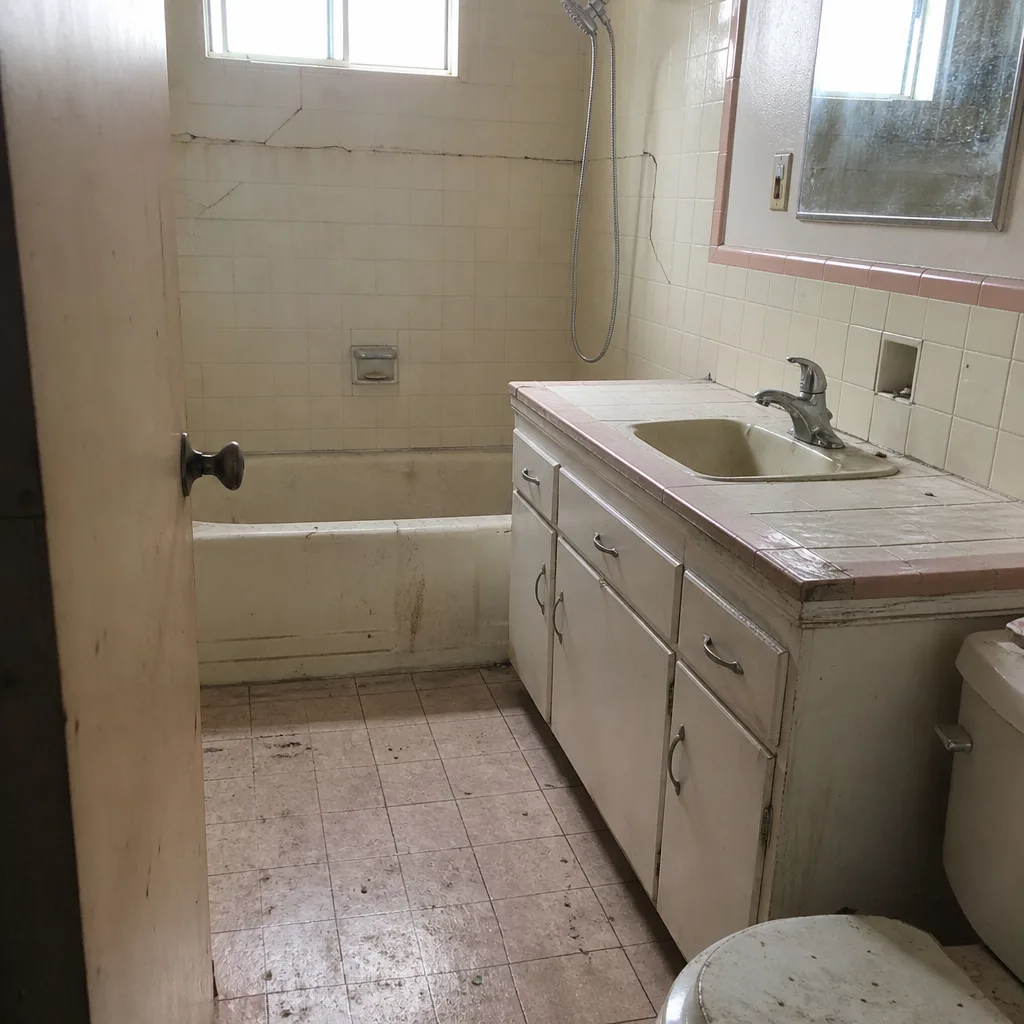 Before
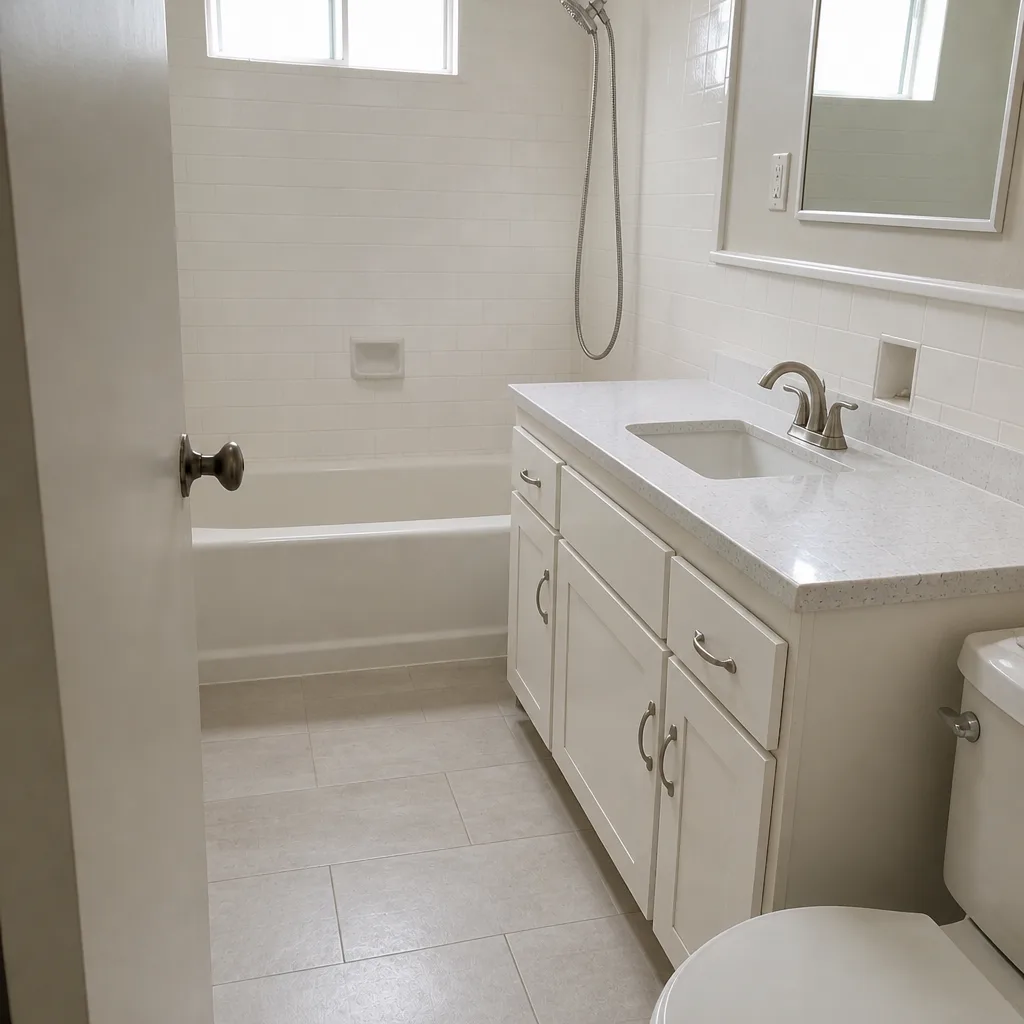 After
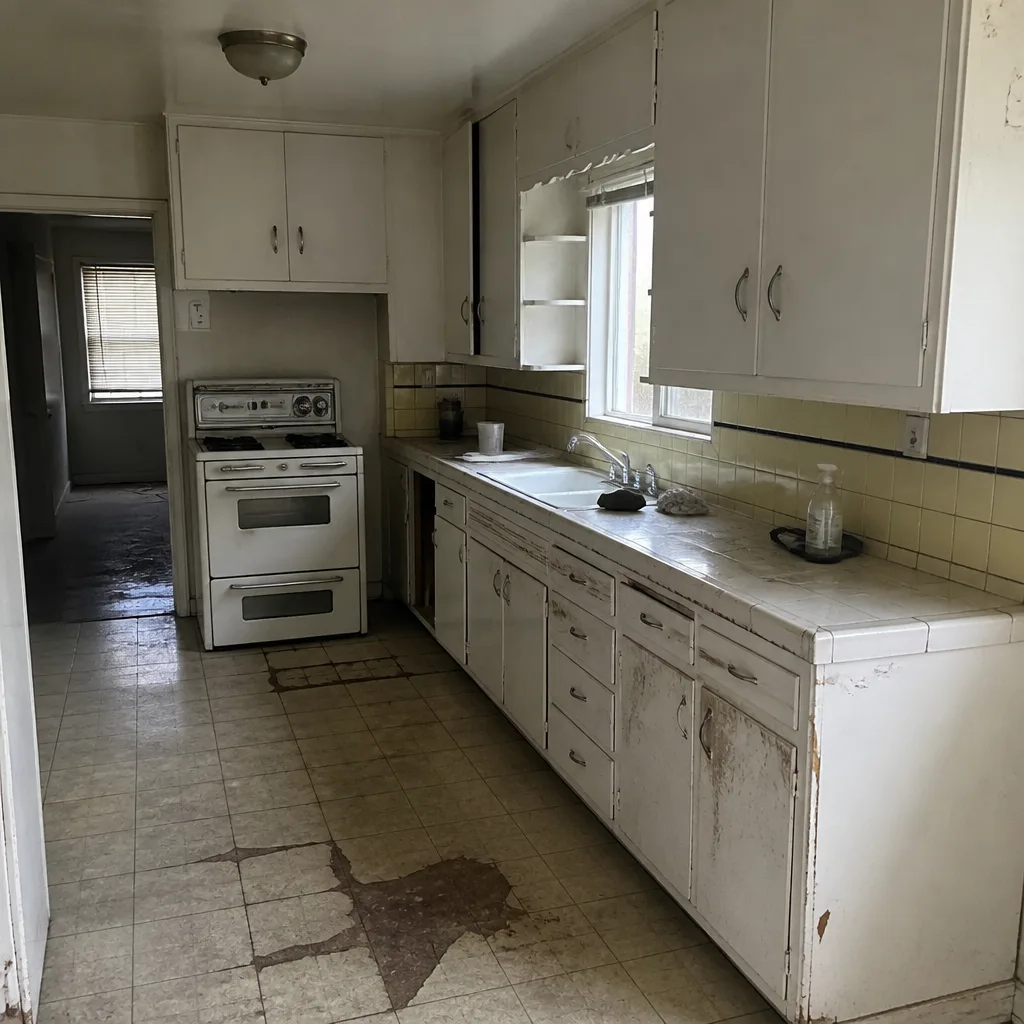 Before
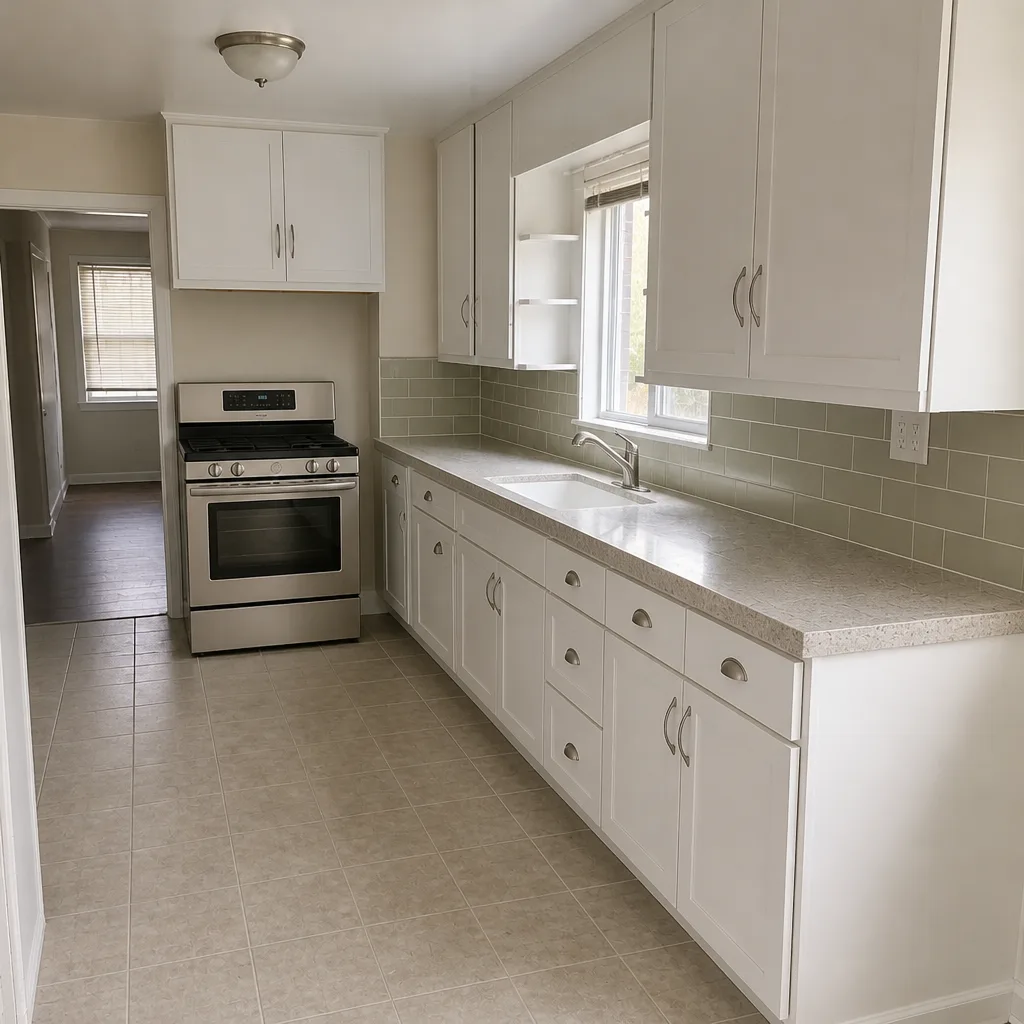 After
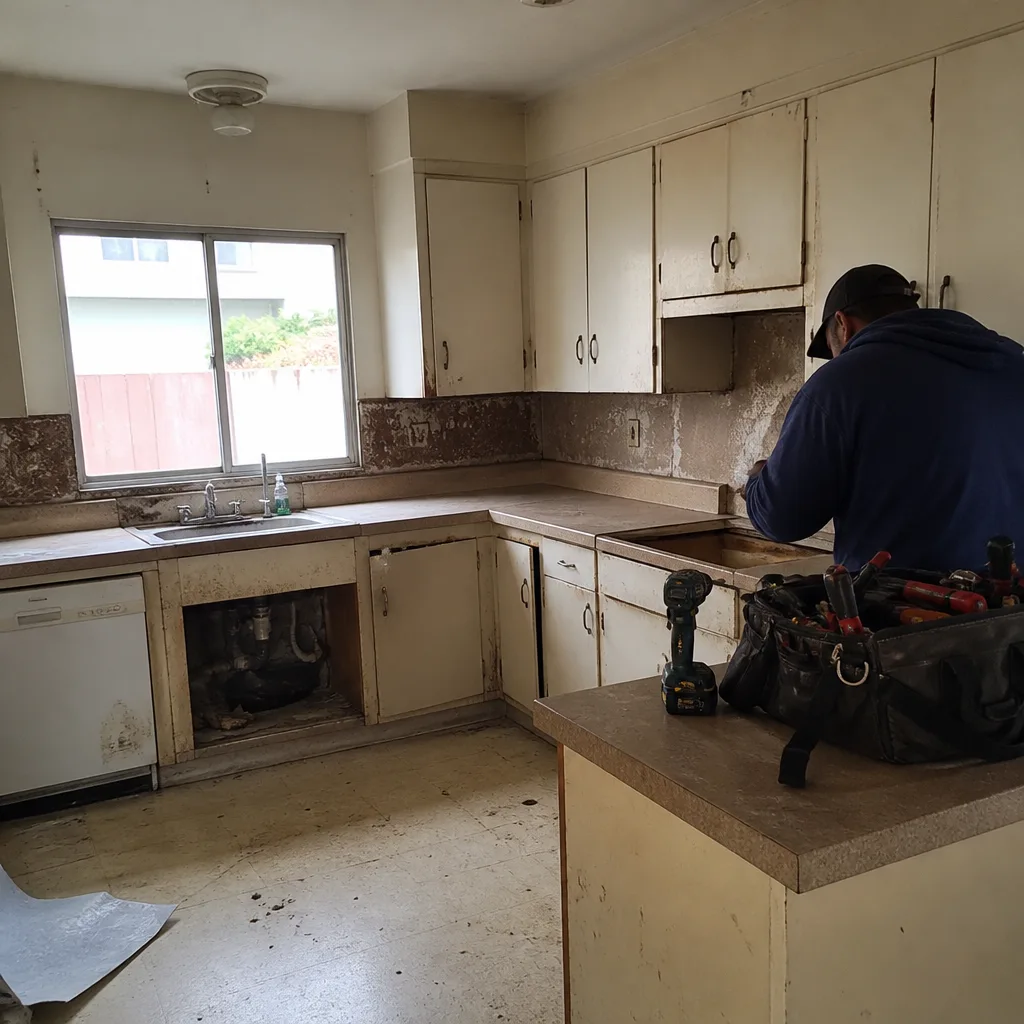 Before
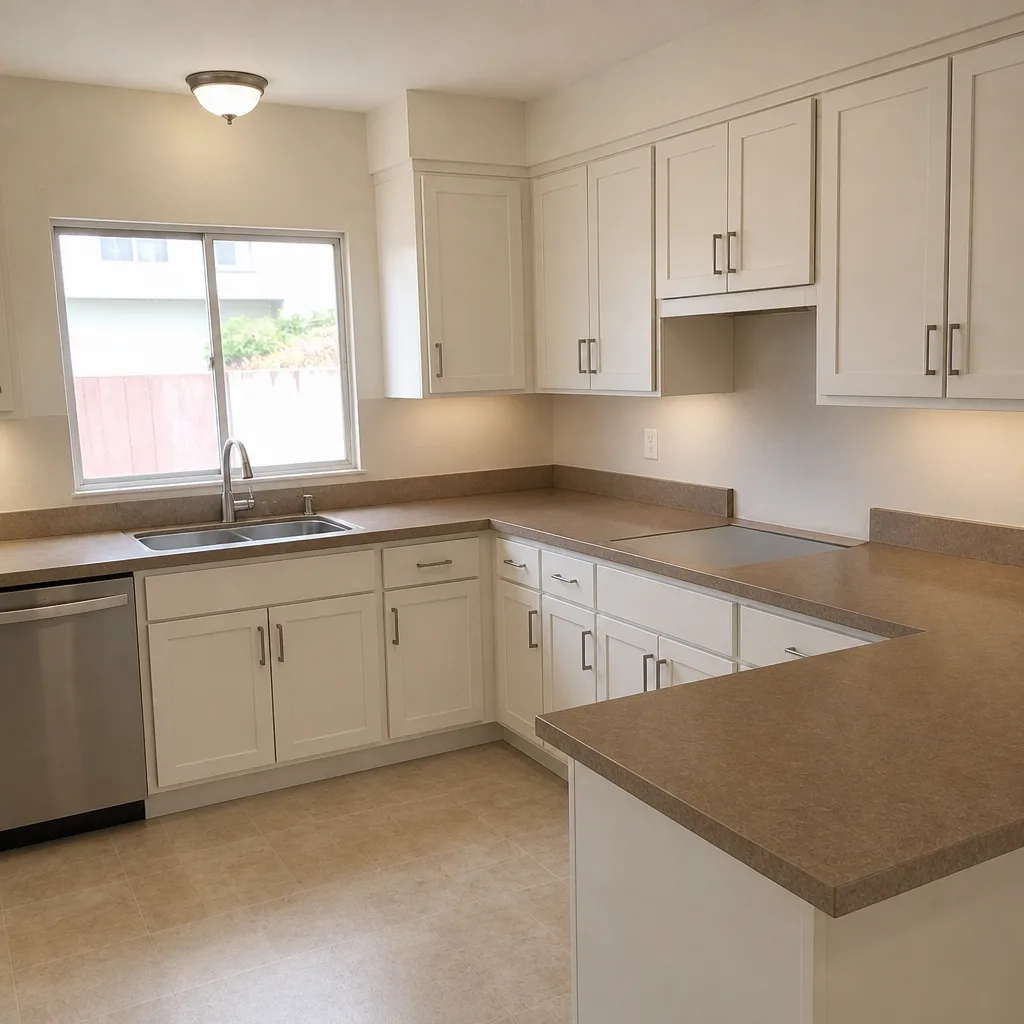 After
When to Call a Professional
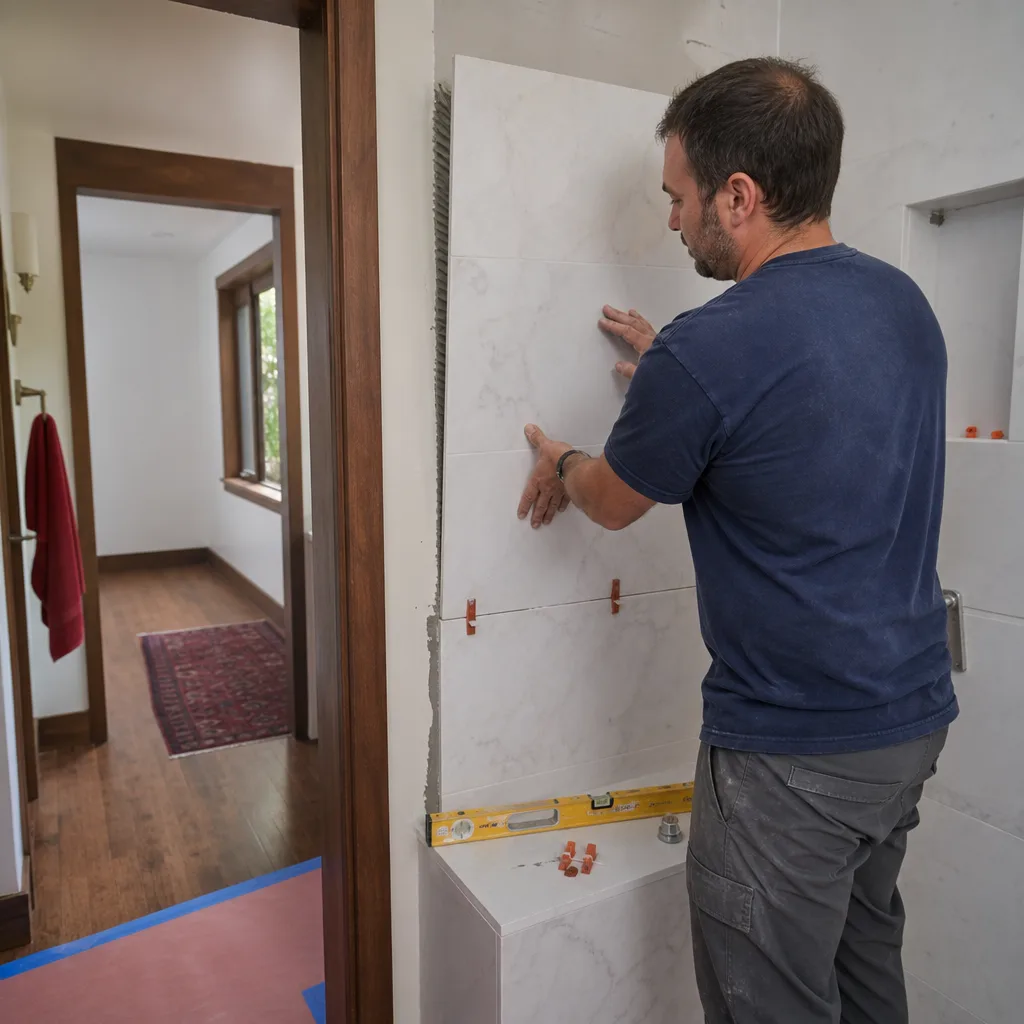
Call a professional if you feel movement in a tiled floor, if a crack in your grout has come back after a repair, if you smell mustiness that won’t clear, or if you find softness around a shower valve or tub base. Any of those point to a problem behind the surface, and patching over it will cost more later. A less obvious case: your remodel is under a year old and something has failed. That’s the moment to document and call while you’re inside the guarantee window.
Penhallow Remodeling Long Beach offers free estimates in Long Beach – call (833) 510-6967. A real person answers the phone around the clock, so you won’t be routed through a voicemail maze. We send background-checked, uniformed technicians, and our technicians have up to 22 years of experience. If the work doesn’t hold up, our written guarantee means we come back and fix it at no charge, and the free return visit if a repair fails is part of every job.
Frequently Asked Questions
Recurring grout cracks usually mean the substrate beneath the tile is moving, not that the grout itself is bad. Grout is brittle and can’t bridge movement in the floor or wall. If a crack comes back after one repair, the fix is under the tile, not on top of it. Call (833) 510-6967 for a free estimate on diagnosis and repair.
It can be, if the crack traces back to failed workmanship like improper substrate or thin-set and the failure happens inside the guarantee window. A crack that shows up because of ordinary settling may fall outside it. The key is documenting the defect with photos and dates and reporting it while you’re still covered. Call (833) 510-6967 to check whether your issue is covered.
Three signs point to it: a musty smell that doesn’t clear, soft or spongy substrate around the valve or tub base, and dark staining that spreads under the grout lines. Hollow tapping over a wide area also suggests water has gotten behind the tile. When any of those show up, the wall should be opened and inspected before you spend money on surface fixes. Call (833) 510-6967 for a free estimate.
Cement board is a moisture-resistant backing that still needs a waterproof layer over it, while a Schluter system uses a bonded waterproof membrane to keep water off the framing entirely. Both can work. What matters in Long Beach’s humid, coastal climate is that your shower has a continuous waterproof layer and a rigid backing, not just one or the other. Ask your contractor to name the waterproofing in the written quote. Call (833) 510-6967 if you’d like us to review one.
Surface mold on caulk or grout can often be cleaned with a proper cleaner and better ventilation. Mold that lives behind the tile, or that returns after cleaning, means moisture is trapped in the wall, and it usually needs to be opened up to be removed correctly. If it traces to a recent remodel’s waterproofing, it may be a warranty claim rather than a new bill. Call (833) 510-6967 for a free estimate.
Yes. We handle bathroom troubleshooting and repairs on bathrooms we didn’t originally build, and every repair comes with a written guarantee. If the repair fails inside the guarantee period, we come back and fix it at no charge, no service call and no re-inspection fee. Call (833) 510-6967 for a free estimate.
The Bottom Line

Most bathroom remodel failures trace back to a decision made below the surface, in the substrate and waterproofing, rather than to the tile, grout, or caulk you can see. The low-tech tests – tap, press, look for stains, watch for repeat cracks – will tell you whether a problem is cosmetic or structural, and that’s the difference between a small repair and a teardown. Document defects with photos and dates while you’re inside a guarantee window, and demand the waterproofing be named in writing before work starts. If you’re in Long Beach and a problem has come back after a repair, that’s the moment to get it looked at.
Penhallow Remodeling Long Beach stands on a written price before work starts, a defined arrival window, and the 365-Day Done Right Promise on every project. Call (833) 510-6967 for a free estimate.
Written by the team at Penhallow Remodeling Long Beach.