
Last updated November 17, 2026





Free written scope consultation - allowances, timeline, and change-order rules on paper before a single trade is scheduled
Kitchen Remodeling Warning Signs Every Homeowner Should Know
If a contractor gives you a price range instead of a price, you don’t have an estimate – you have permission to spend the top of that range. A range is a placeholder, not a commitment, and the gap between the low end and the high end is where budgets quietly die. The costliest kitchens we’ve seen weren’t ruined by expensive stone or imported tile. They were ruined by contracting habits that left every cost decision open until demolition was already done and the crew was standing in the studs. This guide walks through the specific documents, line items, and behaviors that predict a runaway project, so you can spot them before you sign. We’re writing from Long Beach, and the examples lean local, but the patterns travel anywhere.
Quick Answer
The biggest kitchen remodeling red flags are price ranges instead of a written fixed price, vague “allowances” that balloon later, undisclosed subcontractors, and a verbal “we’ll take care of it” standing in for a written workmanship guarantee. If a contractor won’t put a firm number, a defined scope, and a signed guarantee on paper before work starts, the project is open-ended – and you’re the one carrying the risk.
Styles & brands we work with
- Kitchen remodeling
- Bathroom remodeling
- Home additions & ADU
- Roofing
- Windows & doors
- Driveway & pavers
- Fence
Table of Contents
- The Written Quote vs. Estimate vs. Fixed-Price Contract
- Allowance Line Items: Where $500 Becomes $2,000
- Subcontractor Disclosure: Who’s Actually Doing the Work
- Change Order Culture: Tight Scope vs. Scope Gaps
- What a Real Workmanship Guarantee Looks Like in Writing
- Behavioral Red Flags Before the Contract Even Arrives
- Long Beach-Specific Problems: Permits, Coastal Moisture, and Older Housing Stock
The Written Quote vs. Estimate vs. Fixed-Price Contract
These three documents sound interchangeable and they are not. Knowing which one you’re holding is the single most important kitchen remodeling skill a homeowner can develop. If you take one thing from this guide, make it this distinction.
A written quote
A quote is a firm offer to do a defined scope of work for a stated price. It’s a commitment. If the quote says the job costs $34,500 and the scope doesn’t change, that’s the number on the invoice.
A written estimate
An estimate is a good-faith projection. It’s more than a verbal ballpark, but it usually includes language like “estimated at” or “subject to final measurements.” That escape hatch is legal and common, which is why an estimate is not the same protection as a fixed price.
A fixed-price contract
This is the document that actually protects you when costs shift. It combines a tight scope of work with a firm number and a defined process for what happens if the scope genuinely changes (a change order). The key is that change orders are written and signed before the extra work happens – not handed to you after the fact.
In our experience across Long Beach, the runaway projects almost always start with a homeowner holding an estimate that felt like a quote. The moment demo reveals something unexpected – and in a 1920s bungalow off Rose Park, it usually does – the estimate language lets a contractor reopen every number. A fixed-price contract with a clear change-order clause forces the conversation to happen before the extra spend. That’s the whole game.
Allowance Line Items: Where $500 Becomes $2,000
Allowances are the quietest budget killer in remodeling. An allowance is a placeholder dollar amount for a material the contractor hasn’t selected yet – cabinet hardware, light fixtures, tile, faucets. The contract says “cabinet hardware allowance: $500.” Then you walk into the showroom and discover the hardware you actually want costs $1,900 installed. The $1,400 difference becomes a change order. Multiply that across a half-dozen allowances and you’ve added $8,000 to a project you thought was locked.
Allowances aren’t inherently dishonest. They exist because you genuinely may not have picked your faucet on signing day. The problem is an allowance that’s set artificially low to make the headline price look better. Here’s how to neutralize them before you sign:
- Ask for the allowance list in writing, itemized. Every material with a placeholder dollar figure should be its own line, not buried in “miscellaneous.”
- Compare allowances to real showroom prices before signing. If the tile allowance is $6 per square foot but the tile you like runs $11, you already know your true overage.
- Convert allowances to selections wherever you can. Pick the cabinets, the counter, and the fixtures up front. A selected material becomes a fixed price – no allowance, no surprise. We install lines like KraftMaid and Wellborn cabinetry and Cambria and Silestone quartz, and once the line and finish are chosen, the number locks.
- Cap the overage in writing. Ask the contractor to state that allowance overages will be billed at documented cost, not at a marked-up rate.
The cleanest kitchen contracts we’ve seen have zero allowances by the time they’re signed, because every material was chosen first. That takes a couple of extra showroom visits. It’s worth every one of them.
Subcontractor Disclosure: Who’s Actually Doing the Work
Many remodeling companies don’t employ every trade on your kitchen. They bring in licensed subcontractors for plumbing, electrical, and sometimes tile or drywall. That’s normal and often smart. What’s a red flag is a contractor who won’t tell you, in writing, which trades are subcontractors – and who your warranty actually runs through.
Ask these questions before signing, and get the answers in the contract, not just in conversation:
- Which parts of my kitchen will be done by subcontractors? A straightforward answer is a good sign. Evasion is the warning.
- Are those subs licensed and insured, and can I see proof? In California, licensed contractors carry a state license you can verify. A company that can’t produce it for its subs is outsourcing risk to you.
- Whose warranty covers the subcontracted work? This matters enormously. If your tile fails in three years and the tile setter was a sub who’s now unreachable, does the general contractor still stand behind it? The answer should be yes, in writing.
Here’s the principle that protects you: your guarantee should run through the general contractor, not the individual trades. You hired one company to deliver one kitchen. If a sub does poor work, the company you signed with is the one who makes it right. At Penhallow Remodeling Long Beach, our general contractor in Long Beach role means we own the outcome across every trade, and the guarantee is written on the project – not on the sub. Locally, that matters because Long Beach job sites on older homes frequently involve unexpected plumbing and electrical, and the last thing you want is to be caught between two contractors pointing at each other.
Change Order Culture: Tight Scope vs. Scope Gaps
Every kitchen project has change orders. The question is whether they come from your decisions or the contractor’s gaps. There’s a real difference between a contractor who writes a tight scope to avoid change orders and one who uses a loose scope to generate them.
Here’s how the two look side by side:
- Tight scope: The contract names the cabinet line and finish, the countertop material and edge profile, the backsplash tile, the light fixtures, the floor covering, and the sink and faucet brands. You can read the scope and picture a specific kitchen. Change orders only arise when you genuinely change your mind or when a hidden condition (rotted subfloor, out-of-code wiring) is discovered – and even that comes with a written price before work continues.
- Loose scope: The contract says “cabinets,” “countertops,” “tile,” “lighting.” Nothing is specific. The price feels lower because the contractor priced the least expensive version of everything. Every upgrade becomes a change order, and suddenly the project is 30% over budget with half the selections still to come.
The test is simple. Before you sign, read the scope and ask yourself: could I hand this document to a stranger and would they build the same kitchen I’m imagining? If the answer is no, the gaps will become change orders. We write scopes that way on purpose, because a number you can hold us to is worth more than a number that looks good on day one.
What a Real Workmanship Guarantee Looks Like in Writing
Nearly every contractor will tell you they stand behind their work. Very few will hand you a document that says what that means. The verbal “we’ll take care of it” is the most common thing homeowners discover they don’t have in writing the day something cracks.
A real workmanship guarantee should answer five questions in writing:
- What’s covered? Installation defects, leaks, cracking grout, sagging cabinet boxes, doors that don’t sit right – the failures that come from how the work was done.
- For how long? A clear period, stated on the page. “Call us if there’s a problem” with no timeframe isn’t a guarantee.
- What’s the remedy? Repair? Replacement? At whose cost? The guarantee should say explicitly that a covered failure is fixed at no charge to you.
- Is a return visit free if the first repair fails? Ask this directly. A guarantee that costs you a service call to enforce isn’t much of a guarantee.
- Does a manufacturer warranty stack on top? It should. Products like Cambria quartz countertops carry their own lifetime warranty from the manufacturer, which runs alongside the workmanship guarantee covering how it was installed.
The 365-Day Done Right Promise at Penhallow is written into every Long Beach project: if the work fails within the guarantee period, the company comes back and fixes it at no charge, with a free return visit if a repair doesn’t hold the first time. That’s a written commitment, not a slogan, and you can compare it line for line against any other contractor’s paperwork.
Behavioral Red Flags Before the Contract Even Arrives
Document patterns matter, but behavior does too. Some of the clearest warnings show up in the weeks before you ever sign anything. In our experience, these behaviors predict a runaway kitchen more reliably than any single line in a contract:
- They won’t put a price in writing during the estimate visit. A contractor who leaves with “I’ll get you a number in a few days” and then sends a range has already told you how the project will go: nothing firm, everything negotiable.
- They answer the phone inconsistently. If reaching them at the sales stage is a struggle, imagine reaching them when a cabinet arrives damaged six weeks in. Live phone coverage matters more than it sounds.
- They can’t tell you who’s arriving or when. A defined arrival window is a baseline courtesy on a first visit and a real signal about the whole project.
- They push you to sign before you’ve seen a written scope. Urgency on a planned kitchen remodel is a manipulation tactic. Nobody remodels a kitchen same-day. If a contractor wants a deposit today before you’ve read a scope, walk.
- They name-drop brands without specifying which line. “We use Kohler” means nothing if they won’t name the line, finish, and price on your scope. Specificity is credibility.
Long Beach-Specific Problems: Permits, Coastal Moisture, and Older Housing Stock
Some kitchen problems are weighted to the Long Beach market. Long Beach has a lot of pre-war and mid-century housing stock – bungalows, California ranchos, and post-war tracts – and a lot of it has been remodeled at least once by someone who didn’t pull a permit. When you open a kitchen wall here, you find knob-and-tube wiring, galvanized plumbing, and 1950s electrical panels with no space for a modern kitchen’s appliance load. Those are the surprises that turn a fixed price into a change order, which is exactly why discovering them early (during a proper estimate walk-through with a licensed contractor who knows what to look for) matters so much in Long Beach.
Coastal moisture is the second Long Beach-specific factor. In neighborhoods like Belmont Shore and Naples, a mile from the water, cabinet boxes and grout lines battle humidity and salt air year-round. Cheap particleboard cabinets and poorly sealed substrates don’t last. That’s why substrate matters – the moisture-resistant layer behind tile, often cement board, keeps water away from the structural layer beneath. Specifying it on the scope is the difference between tile that lasts and tile that cracks in two years.
Permits are the third. Long Beach requires permits for structural changes, electrical work, plumbing relocations, and gas line changes in a kitchen. A contractor who suggests skipping the permit is suggesting you take on the liability. Ask for the permit line on the written price, and ask who pulls it – the answer should be the contractor, in writing, before work begins. That single question sorts serious companies from the rest. If you want to see the full scope of what a proper kitchen remodeling in Long Beach project looks like with permits and written pricing, that’s the place to start.
Common Mistakes to Avoid
- Accepting a price range as an estimate. A range is permission to spend the top of it. Insist on a firm written number before signing, or ask what would make the price firm.
- Signing with allowance line items you haven’t walked through. Every undocumented allowance is a change order waiting to happen. Convert them to selections or cap the overage in writing.
- Not asking who the subcontractors are. In Long Beach, electrical and plumbing subs are on most kitchen jobs. Know their licensing status and confirm your warranty runs through the general contractor, not the sub.
- Accepting a verbal guarantee. “We’ll take care of it” is not a guarantee. Get the covered scope, the duration, and the remedy in writing, and confirm whether a return visit is free.
- Skipping the permit to save money. In Long Beach, unpermitted electrical and plumbing work can block a future sale or trigger a costly inspection discovery. The permit line belongs on the written price.
- Choosing the low bid without reading the scope. A lower price with a loose scope often costs more than a higher price with a tight one. Compare the scope line by line, not just the bottom number.
- Not confirming the arrival window and job-site standard. A contractor who won’t commit to an arrival window and a clean job site is telling you something about the whole project.
See the difference
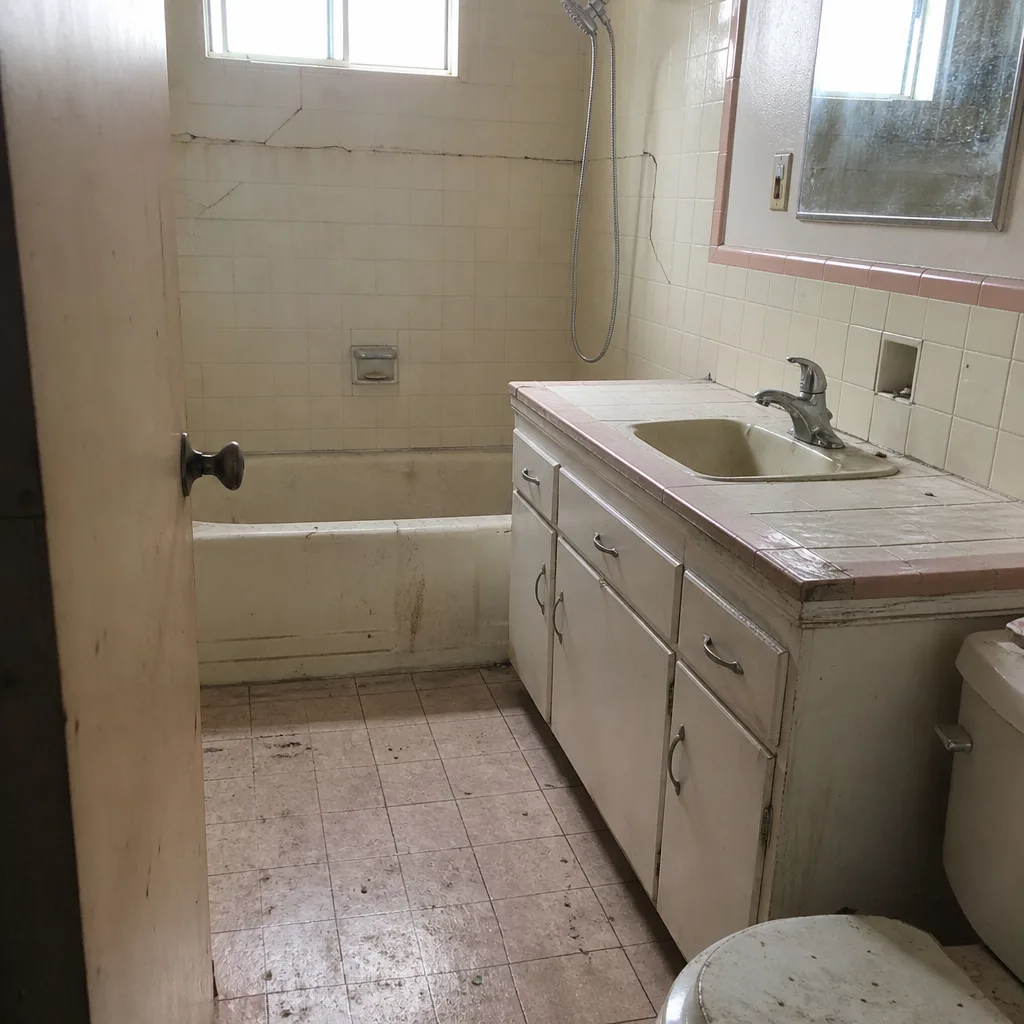 Before
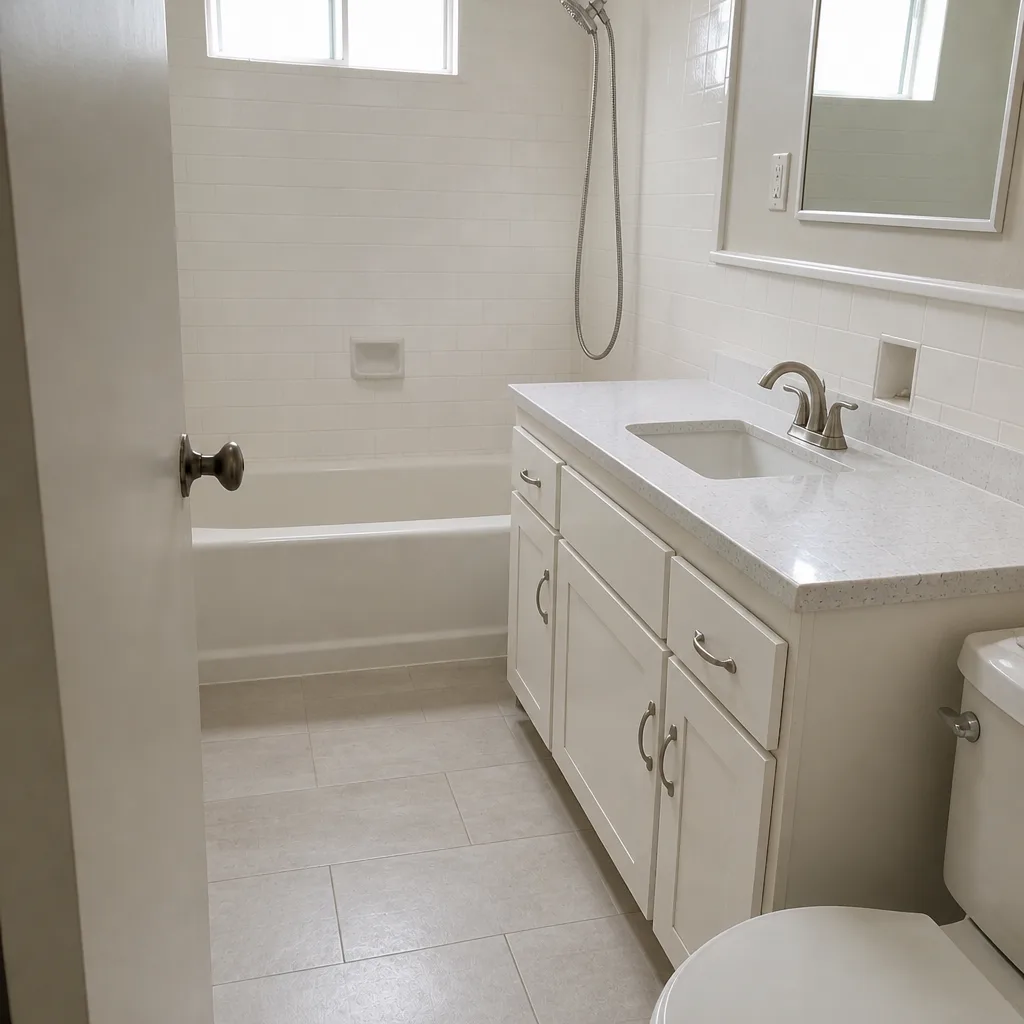 After
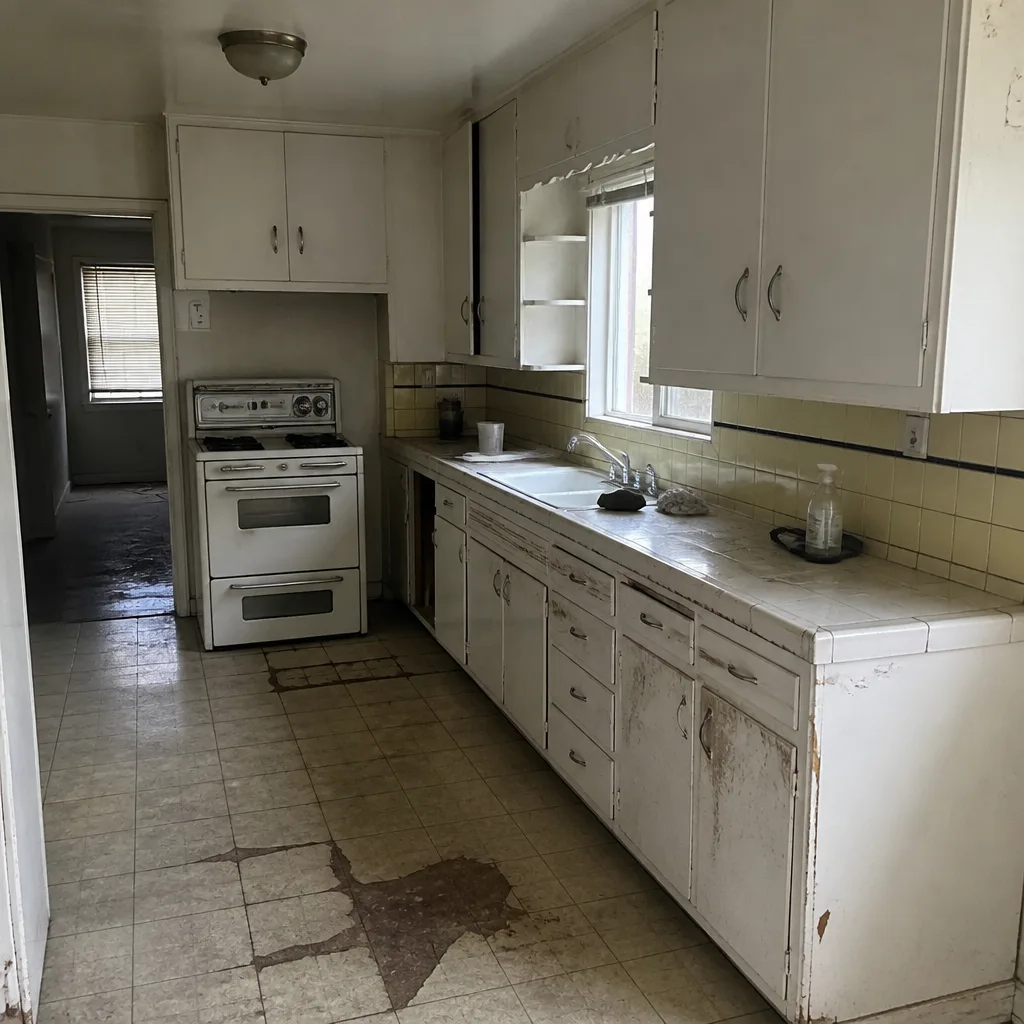 Before
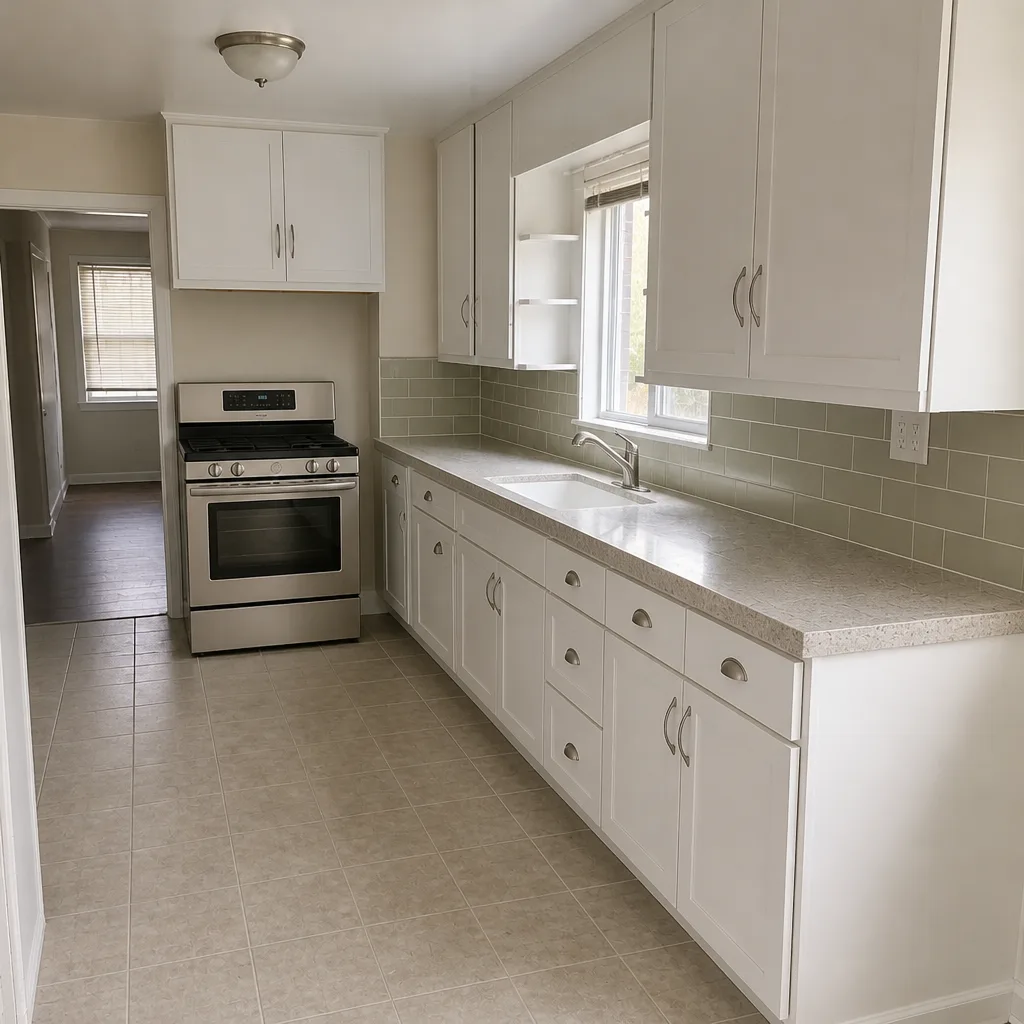 After
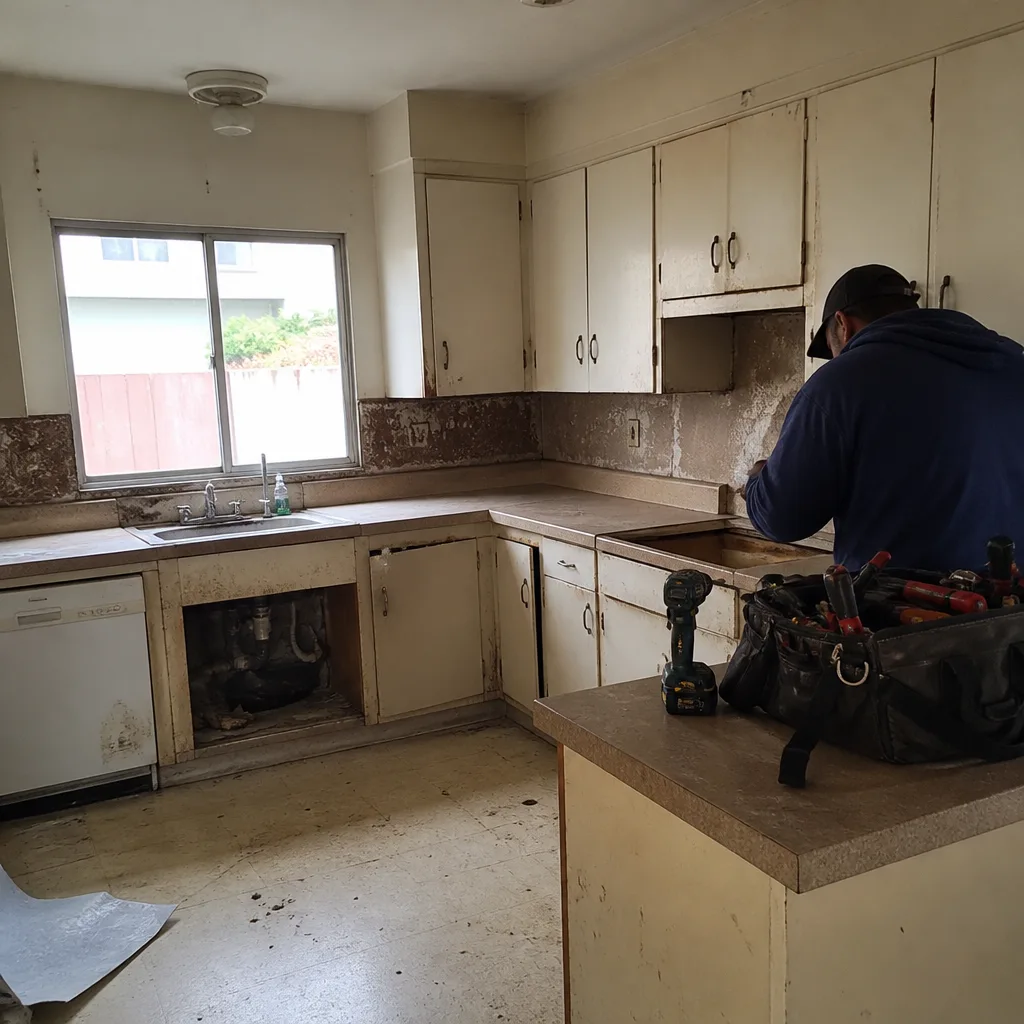 Before
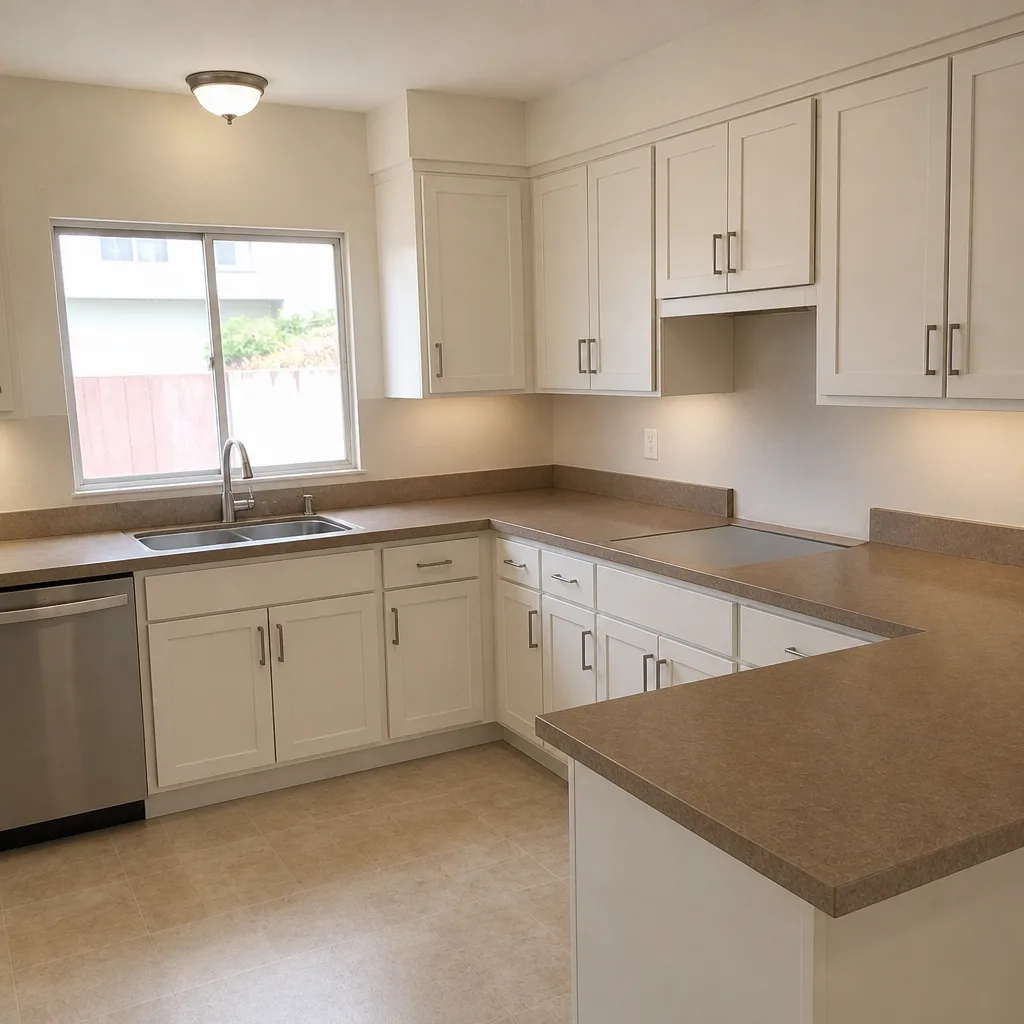 After
When to Call a Professional
Call a licensed contractor before you sign, not after demo starts. Specifically: when a bid comes in as a range instead of a number; when the scope is vague enough that you can’t picture the finished kitchen; when allowances outnumber fixed selections; when you can’t get a straight answer on subcontractors or permits; or when the only guarantee offered is verbal. In Long Beach, that’s also the moment to ask about permits, since anything involving electrical, plumbing, or structural work in a kitchen will need them. If a contractor won’t pull permits or won’t disclose subs, the project is open-ended and you’re carrying the risk. Penhallow Remodeling Long Beach offers free estimates in Long Beach – call (833) 510-6967 to schedule yours, with a written price and a written guarantee before any work begins.
Frequently Asked Questions

Kitchen remodels in Long Beach typically run $18,000 – $55,000 depending on layout, cabinet line, and countertop material – a modest refresh with stock cabinets and laminate sits near the low end, while a full remodel with custom cabinetry and quartz countertops runs toward the upper range. Layout changes, moving plumbing or gas lines, and pre-war electrical upgrades all push the number up. Call (833) 510-6967 for an exact written price – estimates are free.
A written estimate is a good-faith projection that can shift; a fixed-price contract is a firm number tied to a defined scope, with change orders required in writing before extra work happens. The fixed-price contract is what actually protects you when costs shift. If you’re only being offered an estimate, ask what it would take to make the price firm – and get that answer in writing.
With a fixed-price contract and a tight scope, the price only changes when you genuinely change the scope or when a hidden condition is discovered – and even then, the change is written and priced before work continues. The runaway projects almost always trace back to an estimate or a loose scope that left decisions open. Call (833) 510-6967 to see a written price with a defined scope before you sign anything.
Yes – licensed and insured subcontractors are a standard, and every sub’s status can be disclosed in writing before work starts. What matters most is that your workmanship guarantee runs through the general contractor, not the individual trade, so a sub’s failure becomes the company’s problem to fix. Long Beach electrical and plumbing subs are on most kitchen jobs; ask for the disclosure in writing.
Yes, for structural changes, electrical work, plumbing relocations, and gas line changes. Long Beach requires permits for these, and the permit line belongs on your written price. A contractor who suggests skipping the permit is suggesting you take on the liability – and unpermitted work can complicate a future sale. Ask who pulls the permit and get the answer in writing.
It should – a defined arrival window and a clean job site are baseline standards, not extras, and they’re written into the contract. Inconsistent arrival, unexplained no-shows, and a mess left behind are early behavioral warnings about the whole project. Ask any contractor to commit to an arrival window in writing before you sign.
It covers workmanship failures – installation defects like leaking grout, sagging cabinet boxes, doors that don’t sit right, and similar problems that come from how the work was done – for a full year, with a free return visit if the first repair doesn’t hold. It runs alongside any manufacturer warranty on products. Call (833) 510-6967 to see the written guarantee before you commit.
The Bottom Line
The costliest kitchen remodels are rarely the ones with expensive materials – they’re the ones where the contractor’s habits left every cost decision open until the project was half-done. Protect yourself by insisting on four things in writing before you sign: a firm price (not a range), a tight scope with allowances converted to real selections, disclosed subcontractors whose work your guarantee covers, and a written workmanship guarantee with a defined remedy and a free return visit. In Long Beach, add permits and coastal-moisture substrate to that list. If a contractor can’t deliver those four documents, the project is open-ended and you’re carrying the risk. A written price on day one is the number on the invoice – and a written guarantee is the difference between a promise and a plan. When you’re ready to see what that paperwork looks like, our bathroom remodeling in Long Beach and kitchen teams write it the same way on every project. For anything beyond the kitchen, start at the Penhallow Remodeling Long Beach home page.
Ready to see a firm number and a written guarantee before anyone picks up a tool? Call (833) 510-6967 for a free estimate in Long Beach.
Written by the team at Penhallow Remodeling Long Beach.